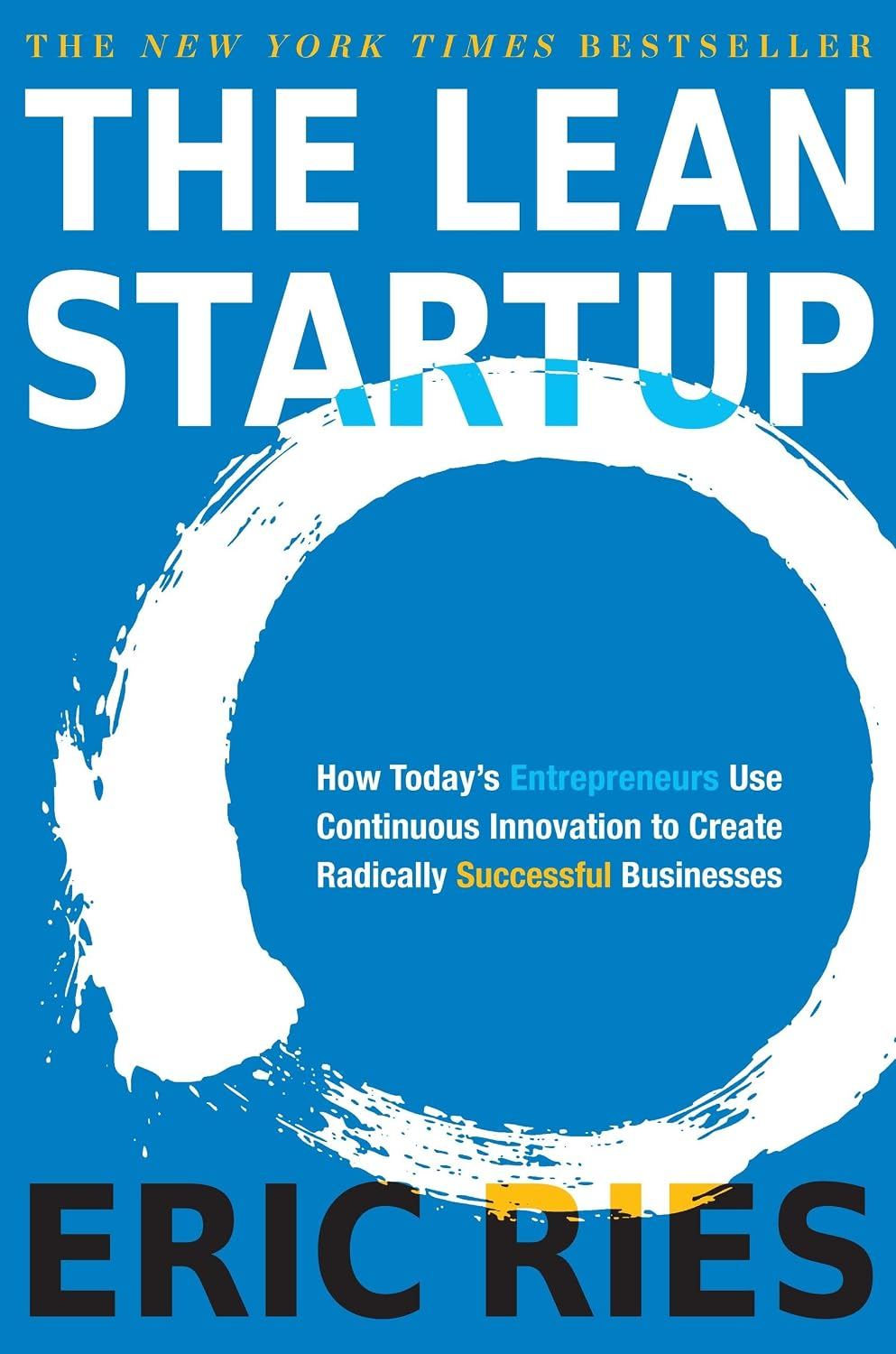
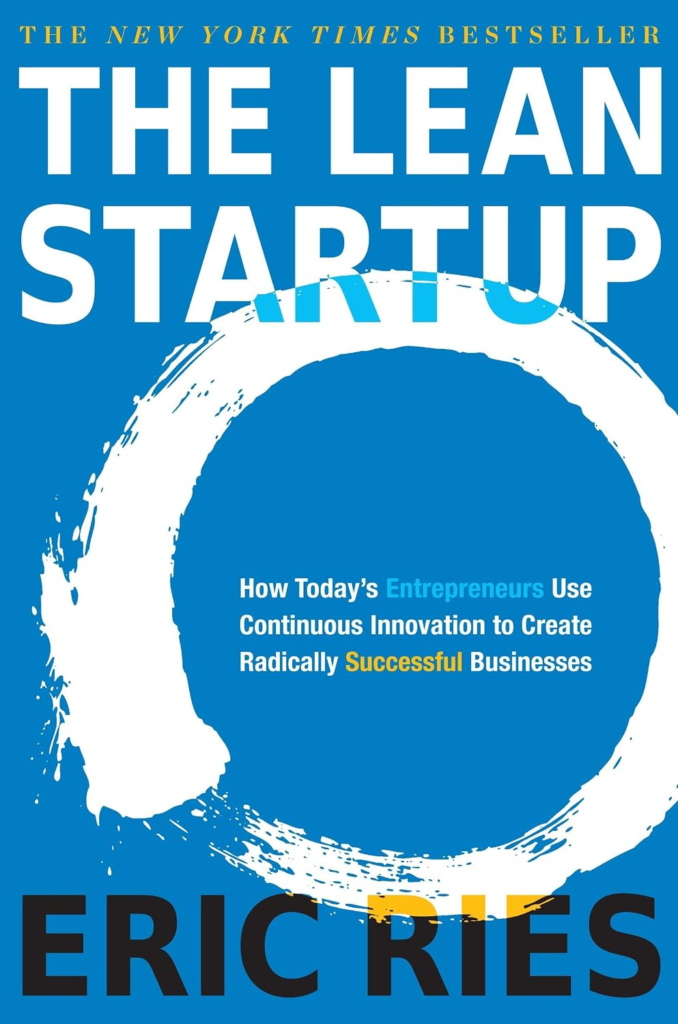
The Lean Startup: How Today’s Entrepreneurs Use Continuous Innovation to Create Radically Successful Businesses is a business and entrepreneurship book by American entrepreneur and author Eric Ries. First published by Crown Business on September 13, 2011, the book presents a methodology for developing products and businesses under conditions of extreme uncertainty. Its central concepts include validated learning, the minimum viable product (MVP), the Build–Measure–Learn feedback loop, innovation accounting, actionable metrics, and the pivot-or-persevere decision.
Rather than treating a startup primarily as a small version of a conventional company, Ries defines a startup as an organization attempting to create something new under conditions of significant uncertainty. This definition allows the Lean Startup method to apply not only to technology startups but also to new ventures inside established corporations and other organizations.
The book’s central proposition is that entrepreneurship can be treated as a form of empirical learning. Instead of spending long periods developing a product based on untested assumptions, entrepreneurs should formulate hypotheses, conduct experiments, measure customer behavior, learn from evidence, and adjust the strategy accordingly.
The resulting process is commonly summarized as:
              IDEA
                │
                ▼
              BUILD
                │
                ▼
             MEASURE
                │
                ▼
              LEARN
                │
        ┌───────┴───────┐
        ▼               ▼
      PIVOT          PERSEVERE
        │               │
        └───────┬───────┘
                ▼
             REPEAT
The methodology became one of the most influential frameworks associated with modern startup management and product development. The official Lean Startup organization describes its principles around entrepreneurship, validated learning, innovation accounting, and the Build–Measure–Learn cycle.
Book information
| Field | Details |
|---|---|
| Title | The Lean Startup |
| Full title | The Lean Startup: How Today’s Entrepreneurs Use Continuous Innovation to Create Radically Successful Businesses |
| Author | Eric Ries |
| Genre | Business, Entrepreneurship, Management |
| Subject | Startups, innovation, product development, entrepreneurship |
| Original publisher | Crown Business |
| Publication date | September 13, 2011 |
| Original language | English |
| Pages | 336 pages in the Crown edition |
| ISBN | 9780307887894 |
| Major concepts | MVP, validated learning, Build–Measure–Learn, pivot, innovation accounting |
| Primary methodology | Continuous experimentation and validated learning |
The publisher’s catalog lists the Crown edition as a 336-page book published September 13, 2011, with ISBN 9780307887894.
Overview
The Lean Startup challenges a traditional assumption about entrepreneurship: that the principal challenge is simply to execute a predetermined business plan efficiently.
Ries argues that startups face a fundamentally different problem.
They are operating in an environment where many of the most important facts are unknown.
The entrepreneur may not know:
- exactly who the customer is,
- what the customer wants,
- which features matter,
- what price customers will accept,
- which distribution channel will work,
- what business model is sustainable,
- or whether the original idea is commercially viable.
Consequently, a startup’s early work is not merely product development.
It is discovery.
The entrepreneur is trying to discover a sustainable business model.
That leads to one of the book’s most important conceptual shifts:
A startup is not simply building a product. It is searching for a repeatable and sustainable business model.
What is the Lean Startup?
The Lean Startup is a methodology for operating in conditions of uncertainty by using rapid experimentation, customer feedback, measurement, and iterative development.
Its underlying logic can be represented as:
ASSUMPTION
    ↓
HYPOTHESIS
    ↓
EXPERIMENT
    ↓
CUSTOMER RESPONSE
    ↓
DATA
    ↓
LEARNING
    ↓
DECISION
    ↓
NEW EXPERIMENT
The process is deliberately iterative.
The entrepreneur does not assume that the initial strategy is correct.
Instead, the strategy becomes a hypothesis that must survive contact with reality.
Eric Ries
Eric Ries
Eric Ries is an American entrepreneur, author, and business thinker best known for developing and popularizing the Lean Startup methodology.
Before writing The Lean Startup, Ries was involved in several startup ventures and co-founded IMVU, where he served as chief technology officer. His experiences—including startup failures and the challenges of developing products under uncertainty—helped shape the methodology presented in the book. Penguin Random House’s author biography describes Ries as a co-founder and former CTO of IMVU and notes his work advising startups, established companies, and venture capital firms.
His work grew partly from his blog Startup Lessons Learned, where he developed and discussed ideas concerning startup management and product development.
The Lean Startup methodology subsequently attracted attention from entrepreneurs, technology companies, established corporations, and management thinkers. The methodology’s official site presents it as a framework for both individual entrepreneurs and enterprise teams.
Ries later expanded his thinking beyond startups in his 2017 book The Startup Way, which applies entrepreneurial management principles to established organizations.
The problem Ries was trying to solve
Traditional business thinking often assumes that a company can proceed through a relatively predictable sequence:
BUSINESS PLAN
      ↓
PRODUCT DEVELOPMENT
      ↓
LAUNCH
      ↓
MARKETING
      ↓
CUSTOMERS
      ↓
GROWTH
The problem is that this sequence assumes the original plan contains reasonably accurate assumptions.
For an established business operating in a familiar market, this may sometimes be reasonable.
For a startup, it can be dangerous.
A startup may spend months or years building something that customers never wanted.
Ries therefore asks a different question:
What if the entrepreneur could discover the truth earlier?
That question lies at the heart of Lean Startup thinking.
The central problem: uncertainty
Ries defines a startup as an organization dedicated to creating something new under conditions of extreme uncertainty. This can describe a two-person technology company, an entrepreneur working alone, or a new venture operating inside a large corporation.
This definition is important because it removes the assumption that a startup must:
- be small,
- operate from a garage,
- use venture capital,
- develop software,
- or have a particular legal structure.
The defining characteristic is uncertainty.
The five principles of the Lean Startup
The official Lean Startup methodology identifies five major principles:
- Entrepreneurs are everywhere
- Entrepreneurship is management
- Validated learning
- Innovation accounting
- Build–Measure–Learn
These principles provide the conceptual foundation for the entire book.
1. Entrepreneurs are everywhere
Ries deliberately broadens the meaning of entrepreneurship.
An entrepreneur does not necessarily have to be:
- a young technology founder,
- a venture-backed CEO,
- a Silicon Valley engineer,
- or someone working independently.
A large corporation can contain entrepreneurial teams.
A government organization can experiment with new services.
A nonprofit can develop a new delivery model.
A single individual can test a new business.
The defining characteristic is the presence of uncertainty and the need to discover what works.
2. Entrepreneurship is management
Traditional management theory often emphasizes predictable execution.
But managing a startup is different because the organization is still searching for a viable model.
Ries therefore argues that entrepreneurship requires a distinctive form of management.
The manager must create an environment in which teams can:
- formulate hypotheses,
- experiment,
- measure results,
- learn,
- change direction,
- and repeat the process.
This turns entrepreneurship into a disciplined managerial activity rather than an exercise in intuition alone.
3. Validated learning
Validated learning is perhaps the book’s most important concept.
A startup makes progress when it obtains reliable evidence about what works.
Simply producing more features does not necessarily mean progress.
Simply hiring more people does not necessarily mean progress.
Simply acquiring more website visitors does not necessarily mean progress.
The critical question is:
What have we learned that has been demonstrated through evidence?
The official Lean Startup methodology describes validated learning as a rigorous method of demonstrating progress in conditions of extreme uncertainty.
Validated learning versus ordinary learning
There is a difference between:
Ordinary learning
“We think customers like this feature.”
and:
Validated learning
“We tested the feature with customers and observed a measurable behavioral response.”
The second statement is stronger because it is based on evidence.
4. Innovation accounting
Traditional accounting measures established businesses through familiar financial indicators.
A startup needs additional measurements because revenue and profit may not yet provide enough information about whether the business model is working.
Ries calls this innovation accounting.
It is intended to make startup progress measurable by identifying:
- the assumptions being tested,
- the baseline,
- the experiments,
- the relevant metrics,
- and the improvement achieved.
The official Lean Startup methodology describes innovation accounting as a system for measuring progress, establishing milestones, and prioritizing work.
5. Build–Measure–Learn
The most recognizable component of the Lean Startup methodology is the:
Build → Measure → Learn
feedback loop.
             ┌─────────────┐
             │    IDEA     │
             └──────┬──────┘
                    ↓
             ┌─────────────┐
             │    BUILD    │
             └──────┬──────┘
                    ↓
             ┌─────────────┐
             │   MEASURE   │
             └──────┬──────┘
                    ↓
             ┌─────────────┐
             │    LEARN    │
             └──────┬──────┘
                    ↓
              NEXT IDEA
                    │
                    └──────────→ BUILD
The official methodology describes this loop as the fundamental activity through which startups turn ideas into products, measure customer response, and decide whether to pivot or persevere.
The goal: shorten the feedback loop
The faster a startup can move through:
Build → Measure → Learn
the faster it can discover whether its assumptions are correct.
This produces another important Lean Startup concept:
The speed of learning matters.
The entrepreneur is not merely trying to build quickly.
The entrepreneur is trying to learn quickly.
That distinction is subtle but fundamental.
Minimum Viable Product
One of the concepts most strongly associated with The Lean Startup is the:
Minimum Viable Product (MVP)
An MVP is an early version of a product designed to generate validated learning with the least amount of development necessary.
The phrase is frequently misunderstood.
An MVP does not necessarily mean:
- a bad product,
- an unfinished product,
- a cheap product,
- a product with every feature removed,
- or a product that customers are expected to tolerate despite being unusable.
The central question is:
What is the smallest experiment that can test an important assumption?
MVP as an experiment
Suppose an entrepreneur believes:
“People will pay for an online service that helps them organize their finances.”
The entrepreneur does not necessarily need to spend two years building a complete financial platform.
A smaller experiment might test whether potential customers:
- understand the problem,
- want the solution,
- sign up,
- pay,
- use the service,
- or recommend it.
The MVP therefore exists to reduce uncertainty.
MVP infographic
BIG IDEA
   │
   ▼
List assumptions
   │
   ▼
Identify the riskiest assumption
   │
   ▼
Design smallest useful experiment
   │
   ▼
MVP
   │
   ▼
Customer behavior
   │
   ▼
Evidence
   │
   ▼
Learning
The “minimum” in MVP
The word minimum does not mean “minimum quality.”
It means minimum effort necessary to obtain meaningful learning.
This distinction is crucial.
A badly designed experiment may generate meaningless data.
Therefore:
Minimum ≠ careless
Instead:
Minimum = deliberately limited scope.
Validated learning and customer feedback
The Lean Startup approach places customers at the center of product discovery.
The entrepreneur should not merely ask customers what they want.
Customers may have difficulty predicting what they will actually use or purchase.
Therefore, behavioral evidence can be more informative than opinions alone.
For example:
Customer says:
"I would definitely buy this."

             ↓

Weak evidence


Customer actually:
SIGNS UP
    +
PAYS
    +
USES
    +
RETURNS

             ↓

Stronger evidence
The book therefore encourages entrepreneurs to design experiments that reveal actual behavior.
Vanity metrics
A startup can generate impressive-looking numbers that do not necessarily demonstrate meaningful progress.
These are commonly called vanity metrics.
Examples might include:
- total registered users,
- total downloads,
- total page views,
- social-media followers,
- cumulative website traffic.
Such numbers are not automatically useless.
The problem occurs when they fail to explain cause and effect.
Actionable metrics
Ries contrasts vanity metrics with actionable metrics.
An actionable metric helps an entrepreneur determine:
- what caused a result,
- whether a hypothesis is supported,
- and what decision should follow.
For example:
100,000 visitors
       ↓
Sounds impressive
       ↓
But only 0.2% purchase
       ↓
What caused the conversion problem?
A better measurement system might track:
Visitor
  ↓
Signup
  ↓
Activation
  ↓
First use
  ↓
Repeat use
  ↓
Payment
  ↓
Retention
This allows the entrepreneur to understand the customer journey.
Cohort analysis
One of the book’s important analytical ideas is the use of cohorts.
Instead of looking only at total numbers, entrepreneurs can examine groups of customers based on when or how they entered the system.
For example:
| Customer cohort | Month 1 retention | Month 2 retention | Month 3 retention |
|---|---|---|---|
| January | 40% | 28% | 20% |
| February | 45% | 33% | 25% |
| March | 52% | 41% | 34% |
The numbers above are illustrative rather than data from the book.
The important principle is that cohort analysis can reveal whether new customers are behaving differently from earlier customers.
This can show whether an experiment actually improved the product.
The Five Whys
Ries also discusses the Five Whys, a technique associated with root-cause analysis and lean manufacturing.
When something goes wrong, instead of immediately treating the visible symptom, the team repeatedly asks why.
Example:
Problem
Customers cannot complete checkout.
Why?
The payment page fails.
Why?
The payment integration is producing errors.
Why?
A new API change was not handled.
Why?
The team has no automated integration testing.
Why?
Testing was never incorporated into the deployment process.
The point is not that exactly five questions must always be asked.
The purpose is to move from symptom → root cause.
The Lean Startup methodology explicitly identifies Five Whys as an investigative development method.
Leap-of-faith assumptions
Every startup begins with assumptions.
Some assumptions are relatively harmless.
Others can destroy the entire business if they are wrong.
Ries refers to critical assumptions as leap-of-faith assumptions.
Examples include:
- Customers have this problem.
- Customers consider the problem important.
- Customers will pay for a solution.
- Customers can be reached economically.
- Customers will continue using the product.
- The business can acquire customers profitably.
The entrepreneur’s job is to identify these assumptions and test them.
The riskiest assumption
A practical Lean Startup approach is to ask:
Which assumption, if false, would cause the entire business model to collapse?
That assumption deserves early testing.
This produces an important strategic sequence:
ALL ASSUMPTIONS
       ↓
Identify critical assumptions
       ↓
Rank by risk
       ↓
Test highest-risk assumption
       ↓
Learn
       ↓
Continue / Modify / Abandon
Pivot
A pivot is a significant change in strategy while retaining enough of the existing learning or foundation to continue the entrepreneurial effort.
It is not simply “changing your mind.”
A pivot is a structured course correction based on evidence.
Examples might include changing:
- customer segment,
- product architecture,
- revenue model,
- distribution channel,
- product scope,
- technology,
- or the problem being addressed.
The Lean Startup methodology describes a pivot as a structural course correction based on evidence that the current strategy is not adequately moving the business model forward.
Persevere
The opposite of a pivot is to persevere.
If experiments provide sufficient evidence that the fundamental assumptions are working, the company continues improving the existing strategy.
The decision can therefore be represented as:
                 EXPERIMENT
                     │
                     ▼
                  MEASURE
                     │
                     ▼
                  LEARN
                     │
            ┌────────┴────────┐
            ▼                 ▼
     Evidence supports    Evidence rejects
       hypothesis           hypothesis
            │                 │
            ▼                 ▼
       PERSEVERE             PIVOT
Pivot or Persevere?
This is one of the book’s central management decisions.
A company can become trapped in either direction.
Pivot too quickly
The company may abandon a promising idea before it has enough evidence.
Persevere too long
The company may continue investing in an idea that the market has already rejected.
The objective is therefore not to pivot frequently.
It is to make informed decisions at the appropriate time.
Engines of growth
Ries identifies three broad engines of growth:
- Sticky growth
- Viral growth
- Paid growth
These describe different mechanisms through which a startup acquires and retains customers.
Sticky engine of growth
A sticky business grows by retaining customers.
The key variables include:
- acquisition,
- retention,
- churn,
- and customer lifetime.
If new customers enter faster than existing customers leave, the customer base can grow.
NEW CUSTOMERS
      +
CUSTOMER RETENTION
      ↓
NET CUSTOMER GROWTH
Viral engine of growth
A viral business grows when existing customers help bring in new customers.
This can occur through:
- referrals,
- social sharing,
- invitations,
- network effects,
- or product-based distribution.
The important point is that growth becomes part of the product experience.
Paid engine of growth
A paid-growth model acquires customers through expenditure on acquisition.
For example:
Revenue per customer
        >
Cost to acquire customer
        ↓
Potential sustainable growth
The exact economics depend on the business model.
Growth accounting
A startup should understand where growth actually comes from.
Suppose customer numbers increase from 10,000 to 20,000.
That sounds positive.
But why?
Was it:
- advertising?
- referrals?
- improved retention?
- a viral feature?
- one temporary publicity event?
Without understanding the mechanism, the company may not know how to reproduce the growth.
Small batches
Another major concept is small-batch production.
The idea comes partly from lean manufacturing.
Traditional thinking may suggest producing large quantities because large batches appear efficient.
But large batches can create hidden costs:
- errors accumulate,
- feedback arrives late,
- inventory builds,
- problems become expensive,
- and teams become committed to incorrect assumptions.
Small batches allow problems to be discovered earlier.
LARGE BATCH

Plan → Build → Build → Build → Launch
                           ↓
                    Problem discovered


SMALL BATCH

Build → Test → Learn
  ↓
Improve
  ↓
Build → Test → Learn
The smaller cycle can reduce the time between an error and its discovery.
Lean manufacturing and Toyota
The Lean Startup methodology was influenced by ideas associated with lean manufacturing, including the Toyota Production System.
Ries adapts these ideas to a fundamentally different problem.
Manufacturing asks:
How can we produce the right product efficiently with minimal waste?
A startup asks:
What product should we build in the first place?
This distinction is essential.
The Lean Startup is therefore not simply “manufacturing lean applied to software.”
It is an adaptation of lean thinking to the problem of entrepreneurial uncertainty.
Waste
Ries uses a broader definition of waste than simply wasted materials.
For a startup, waste can include:
- building features nobody uses,
- excessive documentation,
- premature scaling,
- unnecessary meetings,
- inefficient processes,
- delayed feedback,
- and work that does not contribute to validated learning.
The fundamental question becomes:
What work are we doing that does not help us learn or create value?
The Build–Measure–Learn loop as a management system
The loop is sometimes incorrectly interpreted as a product-development sequence only.
It is actually a management system.
The entrepreneur must decide:
- What assumption should we test?
- What should we build?
- What should we measure?
- What result would validate or invalidate the hypothesis?
- What decision follows?
That means the loop connects:
Strategy → Product → Data → Learning → Strategy
Infographic: The complete Lean Startup system
                     VISION
                       │
                       ▼
             LEAP-OF-FAITH ASSUMPTIONS
                       │
                       ▼
                       MVP
                       │
                       ▼
                    BUILD
                       │
                       ▼
                   MEASURE
                       │
                       ▼
                    LEARN
                       │
             ┌─────────┴─────────┐
             ▼                   ▼
        VALIDATED             INVALIDATED
        ASSUMPTION             ASSUMPTION
             │                   │
             ▼                   ▼
        PERSEVERE               PIVOT
             │                   │
             └─────────┬─────────┘
                       ▼
                  NEXT EXPERIMENT
                       │
                       └──────────→ BUILD
The startup as an experiment
Perhaps the most profound change proposed by the book is the idea that the entire startup can be treated as an experiment.
Traditional question:
“Can we build this product?”
Lean Startup question:
“What must be true for this business to work, and how can we test it?”
This changes the entrepreneur’s role.
The entrepreneur becomes part:
- strategist,
- scientist,
- product manager,
- experiment designer,
- analyst,
- and organizational leader.
Product development versus learning
Consider two startups.
Startup A
Builds 50 features in 18 months.
At launch, it discovers that customers do not want the product.
Startup B
Builds three small experiments in three months.
The first two fail.
The third reveals a strong customer need.
From a conventional product-development perspective, Startup A may appear more productive.
From the Lean Startup perspective, Startup B may have created more valuable knowledge.
This is the meaning of validated learning.
The accounting of learning
The methodology attempts to transform vague progress into measurable progress.
Instead of saying:
“We’re getting closer.”
the startup asks:
- What was our baseline?
- What did we change?
- What happened?
- What did the customers do?
- Did the metric improve?
- What did we learn?
This creates a more disciplined decision-making environment.
The Lean Startup and failure
The book does not argue that entrepreneurs should simply “fail fast” for its own sake.
That slogan can be misleading.
The real goal is:
Learn fast.
Failure is valuable only when it generates useful information.
A failed experiment that teaches nothing is simply failure.
A failed experiment that invalidates a major assumption can prevent a much larger failure later.
Failure as information
The process can be represented as:
EXPENSIVE FAILURE
       ↓
After months/years
       ↓
Business collapses


LEAN EXPERIMENT
       ↓
Small cost
       ↓
Early evidence
       ↓
Strategic correction
The objective is to move uncertainty from the end of the process toward the beginning, when it is cheaper to respond.
The importance of speed
Lean Startup does not mean rushing blindly.
It means shortening the time between:
Idea → Experiment → Evidence → Decision
The faster this cycle becomes, the more experiments a company can conduct with the same resources.
This creates a compounding learning advantage.
1 experiment / year
       ↓
Slow learning


12 experiments / year
       ↓
More opportunities to discover
what works
The quality of experiments still matters.
Speed without good experimental design simply produces bad information faster.
Continuous innovation
The subtitle of the book refers to continuous innovation.
Innovation is therefore not treated as one dramatic event.
Instead, it becomes an ongoing organizational capability.
Experiment
   ↓
Learn
   ↓
Improve
   ↓
Experiment
   ↓
Learn
   ↓
Improve
   ↓
Repeat
A company that institutionalizes this cycle can continually test assumptions rather than relying entirely on occasional strategic planning exercises.
Lean Startup in established companies
A notable feature of Ries’s framework is that it is not restricted to newly founded companies.
A large company can create a startup-like team when it is attempting to develop:
- a new product,
- a new market,
- a new business model,
- a new technology,
- or a radically different customer experience.
The official Lean Startup methodology explicitly presents the approach as relevant to organizations of different sizes.
Why large companies struggle with innovation
Established companies are often optimized for:
- efficiency,
- predictable revenue,
- risk management,
- operational consistency,
- and existing customers.
Innovation introduces uncertainty.
A new venture may need:
- different metrics,
- different timelines,
- different incentives,
- different decision-making processes,
- and permission to experiment.
This is why Ries treats entrepreneurship as management rather than simply product invention.
The Lean Startup versus the traditional business plan
| Traditional approach | Lean Startup |
|---|---|
| Detailed plan first | Hypotheses first |
| Build according to plan | Test assumptions |
| Long development cycle | Short experiments |
| Launch after development | Launch experiments early |
| Forecast-based progress | Evidence-based learning |
| Product completion | Validated learning |
| Large batches | Small batches |
| Fixed assumptions | Adaptable assumptions |
| Growth as objective | Sustainable growth as objective |
| Execution emphasis | Discovery + execution |
Neither approach is universally appropriate for every business.
The Lean Startup is most relevant where uncertainty is high and assumptions need to be tested.
Lean Startup and product-market fit
Although the phrase “product-market fit” has a broader history in startup culture, the Lean Startup framework provides a practical mechanism for moving toward it.
The process is:
CUSTOMER PROBLEM
      ↓
HYPOTHESIS
      ↓
MVP
      ↓
CUSTOMER RESPONSE
      ↓
ITERATION
      ↓
BETTER PRODUCT
      ↓
STRONGER CUSTOMER RESPONSE
The entrepreneur is progressively reducing uncertainty about whether the product genuinely satisfies a meaningful market need.
Lean Startup and customer development
The methodology is closely associated with the broader startup movement that emphasizes:
- customer discovery,
- experimentation,
- iterative product development,
- and business-model testing.
Rather than treating customers as people who appear only after a product is finished, the Lean Startup approach places customer learning much earlier in the process.
The scientific method analogy
Ries frequently frames startup experimentation in scientific terms.
A simplified representation is:
OBSERVATION
    ↓
QUESTION
    ↓
HYPOTHESIS
    ↓
EXPERIMENT
    ↓
DATA
    ↓
CONCLUSION
    ↓
NEW HYPOTHESIS
The startup equivalent becomes:
CUSTOMER PROBLEM
    ↓
BUSINESS HYPOTHESIS
    ↓
MVP
    ↓
CUSTOMER BEHAVIOR
    ↓
DATA
    ↓
LEARNING
    ↓
PIVOT / PERSEVERE
The analogy should not be taken to mean that business experiments possess the precision of controlled laboratory science. Markets contain human behavior, changing circumstances, and numerous uncontrolled variables.
The value of the analogy lies in disciplined hypothesis testing.
The role of hypotheses
A startup’s assumptions can be divided into different categories.
Customer hypothesis
Who has the problem?
Problem hypothesis
Is the problem important enough to solve?
Solution hypothesis
Will the proposed solution address it?
Pricing hypothesis
Will customers pay enough?
Distribution hypothesis
Can customers be reached economically?
Retention hypothesis
Will customers continue using the product?
Growth hypothesis
Can the business grow sustainably?
Each hypothesis represents uncertainty.
Lean Startup decision tree
START
  │
  ▼
What is the riskiest assumption?
  │
  ▼
Design an experiment
  │
  ▼
Build minimum test
  │
  ▼
Measure behavior
  │
  ▼
Did the evidence support the hypothesis?
  │
 ┌┴─────────────┐
YES             NO
 │               │
 ▼               ▼
PERSEVERE       PIVOT
 │               │
 └───────┬───────┘
         ▼
   NEW EXPERIMENT
Examples associated with Lean Startup thinking
The book discusses or references companies and products including IMVU, Dropbox, Grockit, Wealthfront, Intuit, and others in illustrating experimentation, product development, and growth.
These examples are important not because they constitute a universal recipe for startup success, but because they demonstrate different ways in which entrepreneurs can test assumptions and learn from customers.
IMVU and the origins of the methodology
Ries’s experience at IMVU played an important role in the development of his ideas.
At IMVU, the team faced the challenge of creating a new product in a market where many assumptions were uncertain.
The experience helped Ries formulate principles around:
- rapid experimentation,
- customer feedback,
- MVPs,
- validated learning,
- and iterative development.
His earlier startup failures were also part of the intellectual background from which the methodology emerged. Penguin Random House describes Ries as having experienced several startup failures and later applying those lessons to his work.
Dropbox and the demonstration of demand
Dropbox is frequently associated with Lean Startup discussions because demonstrating customer interest in a product can sometimes be easier than building the complete technical infrastructure first.
A demonstration or prototype can help test whether customers understand and want the proposed solution.
The broader lesson is:
The experiment should match the uncertainty being tested.
If the question is “Will customers want this?”, building the entire production system may be unnecessary.
What makes a good experiment?
A strong experiment should have:
A clear hypothesis
What exactly are you testing?
A measurable outcome
What evidence would support or reject the hypothesis?
A defined customer group
Whose behavior matters?
A limited scope
How little can you build to obtain useful evidence?
A decision rule
What will you do depending on the result?
Example of a Lean experiment
Imagine an entrepreneur wants to create an online course.
Assumption
People will pay ₹5,000 for a structured course on a particular skill.
Traditional approach
- record 40 lessons,
- build a website,
- create a logo,
- develop an app,
- spend months preparing.
Lean approach
Test the proposition first.
Course idea
   ↓
Landing page
   ↓
Clear description
   ↓
Early-access offer
   ↓
Customer response
   ↓
Payment / signup
   ↓
Evidence
If nobody purchases, the entrepreneur has learned something important before spending months producing the complete course.
Lean Startup and artificial intelligence
Although The Lean Startup predates the current generation of generative artificial intelligence, its underlying logic is highly applicable to AI-based products.
AI can potentially reduce the cost and time required to create prototypes.
A modern experimental cycle might look like:
IDEA
 ↓
AI-assisted prototype
 ↓
USER TEST
 ↓
BEHAVIORAL DATA
 ↓
LEARNING
 ↓
ITERATION
 ↓
NEW PROTOTYPE
However, AI can also create a new problem: the ability to build products extremely quickly may encourage entrepreneurs to build too much before validating demand.
The Lean Startup principle remains relevant:
The ability to build something is not evidence that someone wants it.
Common misconceptions
“Lean means cheap”
Not necessarily.
Lean means reducing waste and shortening the learning cycle.
A company can spend substantial money and still operate according to Lean Startup principles if it is using resources to test meaningful hypotheses.
“MVP means an unfinished product”
Not necessarily.
An MVP should be appropriate for the experiment being conducted.
A poorly designed MVP can create misleading results.
“Lean means never planning”
Incorrect.
Planning remains useful.
The difference is that Lean Startup treats plans as hypotheses rather than unquestionable predictions.
“Lean means launch everything immediately”
Not necessarily.
The timing and form of an experiment depend on the risk being tested.
“Pivoting means failure”
No.
A pivot can represent learning.
If evidence shows that an assumption is wrong, changing strategy can be rational.
“Failure is always good”
No.
Failure becomes useful when it produces learning that changes future decisions.
Criticism and limitations
The Lean Startup framework has been highly influential, but it is not universally applicable.
MVP ambiguity
The concept of an MVP can be interpreted too loosely.
Some companies may release products that are genuinely poor and then attribute negative customer reactions to the idea itself rather than to inadequate execution.
A meaningful experiment must distinguish:
“Customers don’t want this.”
from:
“Customers might want this, but our experiment was badly executed.”
Not every product can be tested cheaply
Certain industries have high development costs or regulatory barriers.
Examples include:
- pharmaceuticals,
- aerospace,
- medical devices,
- infrastructure,
- advanced hardware,
- and certain financial products.
In such fields, a meaningful MVP may still require substantial resources.
Customer feedback can be misleading
Customers do not always know what they will buy.
People may express enthusiasm but fail to purchase.
They may purchase once but never return.
They may like a feature without considering the overall product valuable.
Consequently, Lean Startup experimentation must distinguish between:
opinions
and
behavior.
Metrics can also be manipulated
Actionable metrics are better than vanity metrics, but metrics themselves can still be selected or interpreted poorly.
A team can optimize a metric that does not correspond to genuine customer value.
Therefore, measurement requires judgment.
Excessive experimentation
A company can become so obsessed with experimentation that it struggles to commit to a coherent strategy.
Not every decision requires an A/B test.
Some strategic choices involve:
- long-term vision,
- ethics,
- brand,
- regulation,
- organizational culture,
- or technological constraints.
These cannot always be resolved through short experiments.
Lean Startup and long-term vision
One of the book’s most important subtleties is that experimentation does not mean abandoning vision.
The framework can be represented as:
VISION
  │
  ▼
ASSUMPTIONS
  │
  ▼
EXPERIMENTS
  │
  ▼
LEARNING
  │
  ▼
ADAPT STRATEGY
  │
  ▼
VISION
The vision can remain relatively stable while the strategy changes repeatedly.
That is why a pivot does not necessarily mean abandoning the mission.
Lean Startup as a philosophy of uncertainty
The deepest contribution of the book may be psychological rather than technical.
Entrepreneurs often feel pressure to appear certain.
Investors want confidence.
Employees want direction.
Customers want reliability.
But startups are inherently uncertain.
Ries’s methodology offers a way to manage uncertainty without pretending that it does not exist.
Instead of saying:
“We know this will work.”
the entrepreneur can say:
“This is our hypothesis. Here is how we are going to test it.”
That is a very different management culture.
Infographic: From guessing to knowing
             TRADITIONAL GUESSING
                    │
                    ▼
              "I THINK..."
                    │
                    ▼
                 BUILD
                    │
                    ▼
                  LAUNCH
                    │
                    ▼
               HOPE IT WORKS


              LEAN STARTUP
                    │
                    ▼
              "WE ASSUME..."
                    │
                    ▼
                TEST IT
                    │
                    ▼
                MEASURE
                    │
                    ▼
                 LEARN
                    │
             ┌──────┴──────┐
             ▼             ▼
           PIVOT        PERSEVERE
The Lean Startup equation
The methodology can be summarized conceptually as:
Hypothesis → Experiment → Evidence → Learning → Decision
Or:
Build → Measure → Learn → Repeat
The objective is to maximize:
Validated learning per unit of time and resources.
This is an interpretation of the methodology rather than a mathematical formula stated by Ries.
The Lean Startup operating system
A modern organization using the methodology might establish the following rhythm:
Monday
Identify the most important assumption.
Tuesday
Design the experiment.
Wednesday
Build the smallest test.
Thursday
Collect customer data.
Friday
Review evidence and decide.
The exact schedule is illustrative.
The deeper idea is that learning should be part of the normal operating rhythm of the organization.
Practical Lean Startup framework
A reader can apply the methodology through the following sequence.
Step 1 — Define the problem
What customer problem are you trying to solve?
Step 2 — Identify the customer
Who experiences the problem?
Step 3 — State your assumptions
What must be true for the business to work?
Step 4 — Identify the riskiest assumption
Which assumption could destroy the business if it is wrong?
Step 5 — Design the experiment
What is the smallest useful test?
Step 6 — Build the MVP
Create only what is required to conduct the test.
Step 7 — Measure behavior
Collect meaningful evidence.
Step 8 — Learn
What does the evidence actually tell you?
Step 9 — Pivot or persevere
Change direction or continue.
Step 10 — Repeat
Continue reducing uncertainty.
A Lean Startup checklist
| Question | Purpose |
|---|---|
| What problem are we solving? | Customer discovery |
| Who has the problem? | Customer definition |
| What are we assuming? | Risk identification |
| Which assumption is riskiest? | Prioritization |
| What is the smallest test? | Experiment design |
| What behavior will we measure? | Evidence |
| What result would validate the hypothesis? | Decision rule |
| What did we learn? | Validated learning |
| Should we pivot? | Strategic correction |
| Should we persevere? | Continued execution |
Lean Startup versus traditional entrepreneurship
The difference can be summarized in one sentence:
Traditional entrepreneurship often begins with a plan and executes it; Lean Startup entrepreneurship begins with hypotheses and tests them.
This is a simplification—many successful businesses use combinations of both approaches—but it captures the philosophical difference.
The book’s structure
The 2011 edition is organized into three broad sections:
Part One — Vision
This section establishes the philosophical foundations of the methodology.
It addresses:
- startups,
- entrepreneurship,
- validated learning,
- experimentation,
- and the problem of uncertainty.
Part Two — Steer
This section explains the practical Build–Measure–Learn process.
It covers:
- MVPs,
- measurement,
- innovation accounting,
- pivots,
- and perseverance.
Part Three — Accelerate
The final section examines how organizations can speed up learning while continuing to develop and grow.
Google Books’ contents list chapters and sections including Start, Define, Learn, Experiment, Leap, Test, Measure, Pivot or Persevere, Batch, Waste Not, and Join the Movement.
Section-by-section guide
Start
The book begins by defining the startup problem and explaining why conventional management techniques can be insufficient under extreme uncertainty.
Define
Ries defines entrepreneurship, startups, and the concept of validated learning.
Learn
The focus moves toward discovering what customers actually value.
Experiment
Experimentation becomes the mechanism through which assumptions are tested.
Leap
This section deals with major assumptions—the “leaps of faith” that underpin new businesses.
Test
The entrepreneur develops ways to test those assumptions.
Measure
Measurement provides evidence about progress.
Pivot or Persevere
The organization uses evidence to decide whether the current strategy should continue or change.
Batch
Small batches reduce the delay between production and learning.
Waste Not
The organization identifies and eliminates work that does not contribute meaningfully to value or learning.
Join the Movement
The book concludes by discussing the wider implications of Lean Startup thinking.
These section headings and their sequence are documented in Google Books’ table of contents.
Why The Lean Startup became influential
The book arrived at a time when the technology industry was already experimenting with:
- rapid software releases,
- cloud computing,
- web applications,
- analytics,
- mobile applications,
- online marketplaces,
- and iterative product development.
Ries provided a vocabulary for many of these practices.
Terms such as:
- MVP,
- pivot,
- validated learning,
- Build–Measure–Learn,
- innovation accounting,
- actionable metrics
became part of the broader language of startup management.
The publisher describes the approach as having been adopted internationally and as changing how companies are built and products are launched.
The broader Lean Startup movement
The book became more than a publication.
It developed into a broader movement involving:
- startup founders,
- product managers,
- investors,
- corporate innovation teams,
- educators,
- consultants,
- and entrepreneurship programs.
The official Lean Startup website presents methodology resources, case studies, courses, and principles based on Ries’s framework.
Lean Startup and modern entrepreneurship
The methodology is particularly relevant to businesses where:
- customer preferences are uncertain,
- product development can be iterative,
- experiments can be conducted cheaply,
- digital distribution is available,
- and customer behavior can be measured.
Examples include:
- software,
- SaaS,
- online education,
- digital media,
- marketplaces,
- mobile applications,
- creator products,
- online communities,
- and many information businesses.
Lean Startup and side projects
The methodology is also applicable to small projects.
Suppose someone has an idea for:
- a website,
- an online course,
- a newsletter,
- a mobile app,
- a digital product,
- or a consulting service.
Instead of building the complete version immediately, the creator can ask:
What is the smallest experiment that can tell me whether people actually want this?
That question is arguably one of the most practical lessons of the entire book.
Lean Startup for a website
A website entrepreneur might use:
IDEA
 ↓
Landing page
 ↓
Email/signup test
 ↓
First users
 ↓
Observe behavior
 ↓
Improve
 ↓
Paid offer
 ↓
Measure retention
 ↓
Scale
The website itself becomes an experimental platform.
Lean Startup for an online course
COURSE IDEA
    ↓
Identify target learner
    ↓
Interview / research
    ↓
Pre-launch offer
    ↓
First students
    ↓
Deliver small module
    ↓
Collect feedback
    ↓
Improve curriculum
    ↓
Build full course
The principle is to validate demand before investing heavily in production.
Lean Startup for a physical product
For physical products, the process might involve:
CUSTOMER PROBLEM
      ↓
CONCEPT
      ↓
PROTOTYPE
      ↓
USER TEST
      ↓
DESIGN ITERATION
      ↓
SMALL PRODUCTION BATCH
      ↓
CUSTOMER RESPONSE
      ↓
IMPROVEMENT
      ↓
SCALE
The exact implementation varies according to manufacturing and regulatory requirements.
The relationship between innovation and efficiency
A traditional company often asks:
How can we perform this process more efficiently?
A startup often needs to ask:
Are we performing the right process at all?
This distinction is fundamental.
Efficiency is valuable only after the organization has some confidence that it is moving in the right direction.
The Lean Startup methodology therefore places learning before optimization.
The “right product” problem
One of the most expensive mistakes in entrepreneurship is building the wrong product extremely efficiently.
Imagine:
Wrong idea
   ↓
Excellent execution
   ↓
Excellent engineering
   ↓
Excellent marketing
   ↓
Excellent launch
   ↓
Nobody wants it
Lean Startup tries to move customer validation earlier:
Idea
 ↓
Assumption
 ↓
Small experiment
 ↓
Evidence
 ↓
Correct direction
 ↓
Execution
The distinction between doing things right and doing the right things is central to the methodology.
Human side of the methodology
Despite its emphasis on metrics, Lean Startup is not fundamentally about spreadsheets.
Behind every metric is human behavior.
A conversion rate represents people deciding whether something is useful.
A retention rate represents people deciding whether to return.
A purchase represents someone assigning monetary value to an outcome.
A referral represents someone deciding that the product is worth recommending.
The numbers matter because they reveal aspects of human behavior.
A human interpretation of the book
The book can ultimately be read as a warning against one of the most natural human tendencies in entrepreneurship:
falling in love with an idea.
Entrepreneurs often spend enormous emotional energy imagining what their product could become.
That emotional commitment can be powerful.
But it can also make contradictory evidence painful to accept.
Lean Startup provides a discipline for asking:
“What does reality say?”
That question can be uncomfortable.
But it can also save enormous amounts of time and money.
Major themes
1. Uncertainty
Startups operate without complete information.
2. Experimentation
Assumptions should be tested.
3. Validated learning
Progress means acquiring reliable knowledge.
4. Customer behavior
Actual behavior is often more informative than stated preference.
5. Speed
Shorter feedback cycles accelerate learning.
6. Adaptability
Strategies can change when evidence changes.
7. Efficiency
Work should reduce waste and contribute to learning or value.
8. Sustainable growth
Growth should be based on a functioning engine rather than superficial numbers.
9. Management
Entrepreneurship requires systems and organizational discipline.
10. Continuous innovation
Innovation should become a repeatable organizational capability.
Key concepts at a glance
| Concept | Core question |
|---|---|
| Startup | What are we trying to discover? |
| Hypothesis | What must be true? |
| MVP | What is the smallest useful test? |
| Build | What experiment should we create? |
| Measure | What happened? |
| Learn | What does the evidence mean? |
| Validated learning | What have we actually demonstrated? |
| Pivot | What should change? |
| Persevere | What should continue? |
| Innovation accounting | How do we measure progress? |
| Actionable metrics | What data can guide a decision? |
| Small batches | How can we shorten feedback? |
| Five Whys | What is the underlying cause? |
| Engine of growth | Why does the business grow? |
Master infographic: The Lean Startup Method
                  ┌─────────────────┐
                  │     VISION      │
                  └────────┬────────┘
                           │
                           ▼
                ┌────────────────────┐
                │    ASSUMPTIONS     │
                └─────────┬──────────┘
                          │
                          ▼
                ┌────────────────────┐
                │       MVP          │
                └─────────┬──────────┘
                          │
                          ▼
                ┌────────────────────┐
                │       BUILD        │
                └─────────┬──────────┘
                          │
                          ▼
                ┌────────────────────┐
                │      MEASURE       │
                └─────────┬──────────┘
                          │
                          ▼
                ┌────────────────────┐
                │       LEARN        │
                └─────────┬──────────┘
                          │
                 ┌────────┴─────────┐
                 │                  │
                 ▼                  ▼
             PERSEVERE            PIVOT
                 │                  │
                 └────────┬─────────┘
                          ▼
                  NEW HYPOTHESIS
                          │
                          └──────→ BUILD
The Lean Startup in one sentence
If the entire methodology had to be reduced to one sentence, it would be:
Do not spend years proving your idea to yourself; design small experiments that allow the market to teach you what is true.
That sentence captures much of the spirit of the book without reducing it to the simplistic slogan of “fail fast.”
Frequently asked questions
What is The Lean Startup about?
It is a methodology for building businesses and products under uncertainty through experimentation, customer feedback, measurement, validated learning, and iterative improvement.
Who wrote The Lean Startup?
The book was written by Eric Ries, an American entrepreneur and author known for developing the Lean Startup methodology.
When was the book published?
The Crown Business edition was published on September 13, 2011.
How long is The Lean Startup?
The publisher lists the Crown edition at 336 pages.
What is an MVP?
An MVP, or minimum viable product, is an early product or experiment designed to test important assumptions and generate validated learning with limited development effort.
What is Build–Measure–Learn?
It is the central feedback loop of the methodology:
Build → Measure → Learn.
The process is repeated continuously.
What is a pivot?
A pivot is a significant strategic change based on evidence while retaining enough learning or foundation to continue the venture.
What is validated learning?
Validated learning is evidence-based knowledge about whether important startup assumptions are correct.
Does Lean Startup mean failing quickly?
Not exactly. The goal is not failure itself. The goal is rapid learning, including learning that an assumption is wrong before the organization commits excessive resources.
Is Lean Startup only for technology companies?
No. Ries’s definition of a startup is based on uncertainty rather than industry or company size. The methodology can therefore be applied to many forms of innovation.
Is Lean Startup the same as lean manufacturing?
No. Lean Startup borrows concepts from lean manufacturing but adapts them to the problem of developing new products and business models under uncertainty.
What is the most important lesson of the book?
A strong interpretation is that the entrepreneur’s first responsibility is not merely to build efficiently, but to discover what is worth building.
Legacy and influence
The Lean Startup helped establish a vocabulary for a generation of entrepreneurs and product teams.
Terms such as:
- MVP,
- pivot,
- validated learning,
- Build–Measure–Learn,
- actionable metrics,
- innovation accounting,
- and engines of growth
became common reference points in startup and product-development discussions.
The official Lean Startup organization continues to describe the methodology as a framework for creating and managing startups and for getting products to customers more quickly.
Its influence also extended beyond newly founded companies. Ries’s later work, The Startup Way, developed the idea of entrepreneurial management for established organizations.
Reception
The book became a widely discussed work in entrepreneurship and management. Penguin Random House identifies it as a bestseller and describes the methodology as having been adopted internationally.
The approach has also been discussed in business and management publications and adopted by organizations seeking more systematic approaches to innovation. The official Lean Startup site documents its continuing use through case studies, courses, and organizational applications.
See also
- Entrepreneurship
- Startup company
- Product development
- Product-market fit
- Minimum viable product
- Agile software development
- Lean manufacturing
- Toyota Production System
- Customer development
- Innovation management
- Business model
- Design thinking
- Venture capital
- Eric Ries
- The Startup Way
- The Innovator’s Dilemma
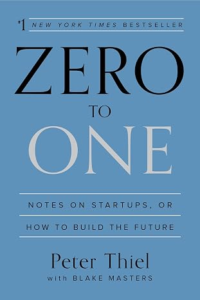
- Zero to One
- The $100 Startup
- Running Lean
References
- Ries, Eric. The Lean Startup: How Today’s Entrepreneurs Use Continuous Innovation to Create Radically Successful Businesses. Crown Business, 2011. Google Books provides bibliographic and contents information for the edition.
- Penguin Random House. The Lean Startup by Eric Ries. Publisher information, publication date, page count, ISBN, and author biography.
- The Lean Startup. “Methodology.” Official Lean Startup resource describing the principles of validated learning, innovation accounting, Build–Measure–Learn, and Five Whys.
- The Lean Startup. “The Movement That Is Transforming How New Products Are Built and Launched.” Official methodology and case-study resource.
- The Lean Startup. “The Book.” Official overview of the book’s organization into Vision, Steer, and Accelerate.
- Google Books. Bibliographic record and table of contents for The Lean Startup.
- Ries, Eric. The Startup Way: How Modern Companies Use Entrepreneurial Management to Transform Culture and Drive Long-Term Growth. Crown Business, 2017.
Further reading
By Eric Ries
- The Lean Startup
- The Startup Way
- The Leader’s Guide and related Lean Startup resources
- Eric Ries’s writings on entrepreneurial management and innovation
Related books
- The Innovator’s Dilemma — Clayton M. Christensen
- Zero to One — Peter Thiel with Blake Masters
- The $100 Startup — Chris Guillebeau
- Running Lean — Ash Maurya
- Business Model Generation — Alexander Osterwalder and Yves Pigneur
- The Four Steps to the Epiphany — Steve Blank
External links
The Lean Startup — Official Website
The Lean Startup methodology and principles
Penguin Random House — The Lean Startup
Google Books — The Lean Startup
Conclusion
The Lean Startup is ultimately a book about how to make decisions when you do not know the answer yet.
That may be its most valuable contribution.
Entrepreneurs are often told to have a vision, believe in themselves, work hard, and never give up. Those ideas can be motivating, but they do not answer a fundamental business question:
How do you know whether you are moving in the right direction?
Eric Ries’s answer is to turn uncertainty into a series of experiments.
Instead of assuming that customers want something, test the assumption.
Instead of building everything first, build the smallest meaningful experiment.
Instead of celebrating activity, measure behavior.
Instead of treating a failed assumption as a personal defeat, treat it as information.
Instead of becoming emotionally attached to a strategy, remain attached to the underlying mission while allowing evidence to change the route.
The resulting philosophy can be reduced to a simple cycle:
             BUILD
               ↓
            MEASURE
               ↓
             LEARN
               ↓
        PIVOT OR PERSEVERE
               ↓
             BUILD
               ↓
            MEASURE
               ↓
             LEARN
               ↓
             REPEAT
The genius of the Lean Startup idea is not that it eliminates uncertainty.
It makes uncertainty manageable.
A startup cannot know the future.
But it can learn.
And, in Ries’s framework, the ability to learn faster than the uncertainty grows can become one of the entrepreneur’s most important competitive advantages.