
Step
0
Introduction

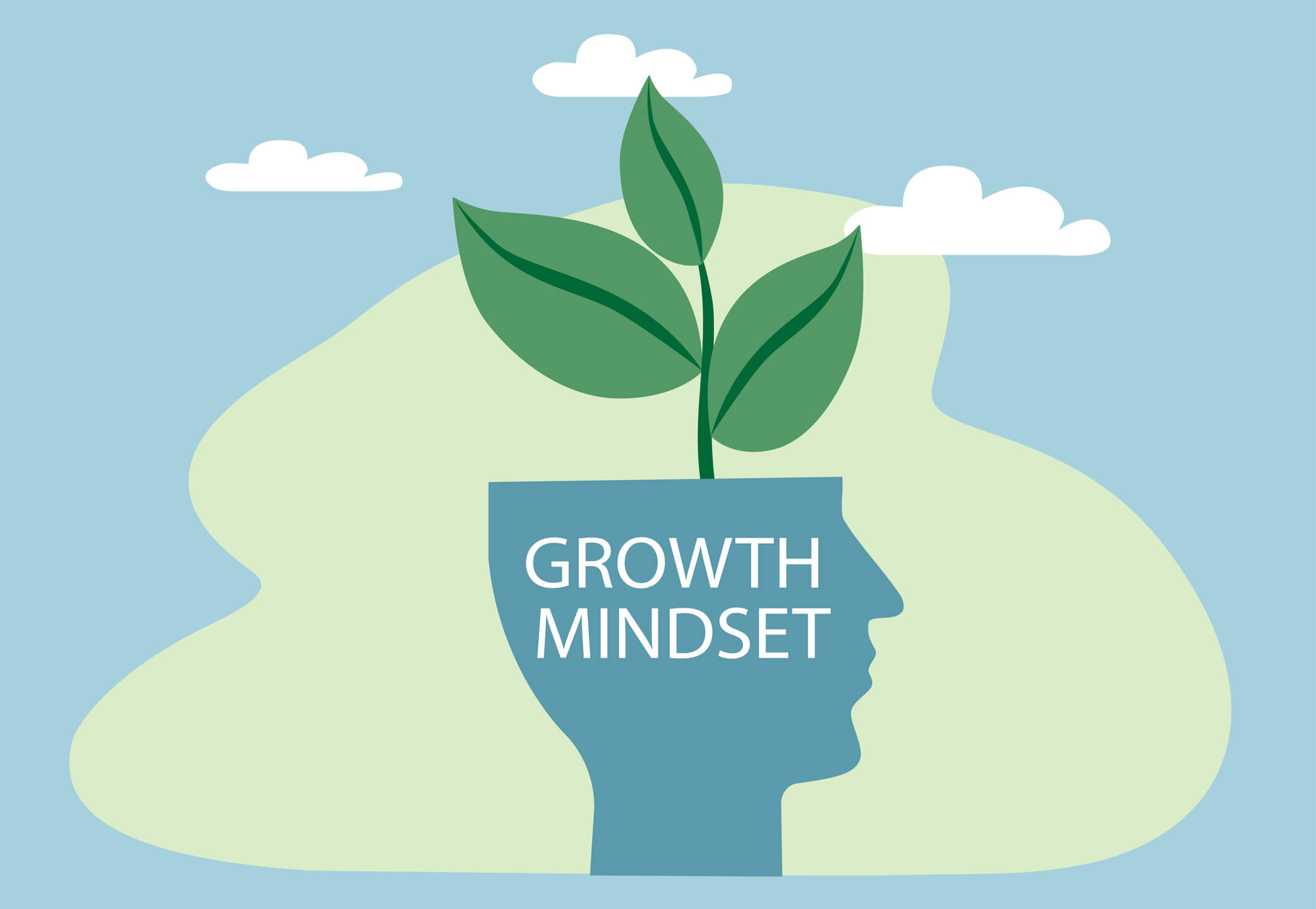
How to Develop a Growth Mindset? Imagine a world where challenges aren’t roadblocks, but stepping stones. Where effort is the pathway to mastery, and feedback isn’t criticism, but a gift. This world isn’t a fantasy; it’s the direct result of cultivating a Growth Mindset. Coined by renowned psychologist Dr. Carol Dweck, a Growth Mindset is the core belief that your abilities and intelligence can be developed through dedication, hard work, and the right strategies. It stands in contrast to a fixed mindset, where abilities are seen as static and unchangeable. This article is your definitive, step-by-step roadmap to shifting your internal narrative. By embracing the principles of a Growth Mindset, you unlock resilience, a love for learning, and the ability to achieve more than you ever thought possible. Let’s begin the transformative journey of rewiring your brain for growth.
The 10 Essential Steps to Cultivate a Growth Mindset
Step
1
Acknowledge and Embrace Your Fixed Mindset Triggers

The journey to a Growth Mindset begins with self-awareness. Your fixed mindset has a “voice,” and it often speaks loudest during challenges, after failures, or when facing criticism. It might say, “I’m not good at this,” or “If I have to try, I must not be talented.” In this step, commit to becoming a detective of your own thoughts. For one week, carry a small notebook or use a notes app. Whenever you feel frustrated, defensive, or inclined to give up, write down the exact thought. Simply recognizing this pattern is the first and most powerful step to disarming it. You cannot change what you do not see.

Intelligent Change The Five Minute Journal
Intelligent Change The Five Minute Journal, Original Daily Gratitude 2025, Reflection Manifestation for Mindfulness, Undated Daily with Gold Foiling, Plastic-Free, Green
Buy Now on Amazon
Step
2
Reframe Challenges as Opportunities, Not Threats

With your fixed mindset triggers identified, you can now consciously reframe them. This is the active practice of cognitive restructuring. When faced with a difficult task, and the thought arises, “This is too hard,” you consciously add, “…and that’s why it’s a chance to grow.” When you make a mistake, instead of thinking, “I failed,” practice thinking, “This is a data point that teaches me what doesn’t work.” This step is about building a new neural pathway by choosing a more empowering interpretation of every obstacle.

Mindset: The New Psychology of Success
This book is about how your mindset can influence your success in various areas of life, and how you can develop a growth mindset to achieve greater success.
Buy Now on Amazon
Step
3
Redefine the Word "Effort" as Your Superpower
In a fixed mindset, effort is a negative—it’s what you need when you lack natural ability. In a Growth Mindset, effort is the engine of genius. This step involves celebrating your hard work as much as, if not more than, the outcome. Start by adding the word “yet” to your vocabulary. “I can’t do this… yet.” Praise yourself and others for strategy, focus, and perseverance. Say, “I’m proud of how I stuck with that problem,” instead of just, “I’m proud I got an A.”

Atomic Habits: An Easy & Proven Way to Build Good Habits & Break Bad Ones
A proven framework for building positive habits and breaking negative ones through small, strategic changes, backed by biology, psychology, and neuroscience principles for lasting behavioral transformation.
Buy Now on Amazon
Step
4
Analyze Setbacks with a "Lesson Learned" Lens
Failure is inevitable, but its meaning is optional. Instead of allowing a setback to be a verdict on your worth, conduct a neutral post-mortem. Ask yourself: What worked? What didn’t? What would I do differently next time? Treat the experience like a scientist analyzing an experiment. This step transforms emotional pain into actionable intelligence, ensuring that no experience is ever truly wasted.

Rocketbook Core Reusable Smart Notebook
Rocketbook Core Reusable Smart Notebook, Dot Grid Pages For School, Work and Creative Projects, Executive Size 6×8.8, Black – Premium
Buy Now on Amazon
Step
5
Actively Seek Constructive Criticism
For someone building a Growth Mindset, feedback is not a personal attack; it’s a necessary source of information for growth. This step requires courage. Proactively ask trusted mentors, colleagues, or friends, “What’s one thing I could improve on?” Listen without defensiveness. Thank them for their input. The goal is not to hear you’re perfect, but to find the next stepping stone on your path to improvement.

Thanks for the Feedback: The Science and Art of Receiving Feedback Well
This book teaches us how to turn evaluations, advice, criticisms, and coaching into productive listening and learning.
Buy Now on Amazon
Step
6
Find Inspiration in the Success of Others

In a fixed mindset, other people’s success can feel threatening. In a Growth Mindset, it becomes a source of learning and motivation. This is the practice of shifting from envy to curiosity. When you see someone excel, ask yourself: “What can I learn from their approach?” Study their journey, not just their result. Their success becomes proof that growth is possible, not a measure of your own lack.

Step
7
Prioritize the Learning Process Over the End Result

Fixating solely on the outcome (the promotion, the perfect score) can make the journey stressful and fragile. This step is about falling in love with the process of learning itself. Set “learning goals” alongside performance goals. For example, “My goal is to understand the fundamentals of coding” rather than just “I will build an app.” This builds intrinsic motivation and makes the path enjoyable, regardless of the immediate outcome.

Skillshare
With inspiring classes on soft skills, business essentials, well‑being and more, your whole team will have deep knowledge and expertise at their fingertips.
Buy Now on Amazon
Step
8
Cultivate Persistent Grit and Resilience
A Growth Mindset is the bedrock of grit—the passion and perseverance for long-term goals. This step is about building your stamina for the marathon. When you want to quit, recall past challenges you’ve overcome. Break monstrous tasks into microscopic, manageable actions. Remember, resilience isn’t about never falling; it’s about how quickly and effectively you get back up, armed with new knowledge.

Grit: The Power of Passion and Perseverance
This book is about how passion and persistence can lead to outstanding achievement, and how it can be learned regardless of IQ or circumstances.
Buy Now on Amazon
Step
9
Practice Mindful Self-Talk and Affirmations

Your inner dialogue shapes your reality. This step involves actively programming your mind with growth-oriented language. Create personal affirmations that resonate with you, such as “I am capable of learning anything I dedicate myself to,” or “Challenges help me expand my abilities.” Repeat them daily, especially when doubt creeps in. This is not about empty positivity, but about reinforcing your new, evidence-based belief in your own capacity to grow.

Step
10
Commit to Being a Lifelong Learner
Finally, solidify your Growth Mindset by making learning a non-negotiable part of your identity. This is the macro application of all previous steps. Read widely outside your field. Take a course for fun. Ask more questions than you answer. View every day as an opportunity to know a little more or be a little better than you were yesterday. A true growth-minded individual never feels “done.”

Amazon Kindle Paperwhite
The latest Kindle Paperwhite features a 6.8″ glare-free display that reads like real paper, adjustable warm light, and up to 10 weeks of battery life. Waterproof design perfect for reading at the beach or in the bath.
Buy Now on Amazon
Step
A
Practical Tips for Daily Growth Mindset Integration

Beyond the structured steps, weave your Growth Mindset into the fabric of your daily life. Start your day by asking, “What can I learn today?” Use a growth-oriented vocabulary in team meetings and with family. When helping others, praise their process. Design your environment for growth: place inspiring books where you see them, follow educational social media accounts, and surround yourself with people who also value growth. Remember, consistency in small actions beats occasional grand gestures.
Step
B
Key Takeaways of Your Growth Mindset Journey

To encapsulate this transformative guide, remember these core principles. First, a Growth Mindset is a malleable belief system that can be developed by anyone. Second, the journey hinges on viewing challenges as opportunities, effort as the path to mastery, and criticism as a useful tool. Third, setbacks are not failures but essential data for your next attempt. Finally, cultivating this mindset is an ongoing practice, not a one-time achievement. It’s a lifelong commitment to evolution.
Step
C
Conclusion

Developing a Growth Mindset is the single most impactful investment you can make in yourself. It transforms your relationship with failure, effort, and success. This 10-step guide is not a quick fix, but a profound paradigm shift. By starting with self-awareness, diligently reframing your thoughts, and committing to the process of learning, you are not just acquiring a skill—you are fundamentally altering your trajectory. The world of fixed limitations falls away, revealing a landscape rich with potential. Your brain, as neuroscience confirms, is capable of remarkable change. Now, equipped with this knowledge and these steps, the power to grow is unequivocally in your hands. Begin today. Embrace the challenge. And watch yourself transform.
FAQs on Developing a Growth Mindset
What is the main difference between a fixed mindset and a growth mindset?
The core difference lies in the belief about where ability comes from. A fixed mindset operates on the belief that intelligence, talent, and abilities are static, innate traits—you either have them or you don’t. This leads to a desire to look smart, a tendency to avoid challenges, and a sense of being threatened by others’ success. A Growth Mindset, conversely, is rooted in the belief that these same qualities can be developed through dedication, strategic effort, and learning from setbacks. This fosters a desire to learn, resilience in the face of challenges, and inspiration from others’ achievements.
Can an adult really develop a growth mindset, or is it easier for children?
Absolutely, an adult can develop a Growth Mindset. While it’s powerful to instill this mindset in children, neuroplasticity—the brain’s ability to form new neural connections—persists throughout life. For adults, the process is often more about unlearning deeply ingrained fixed mindset narratives and consciously practicing new thought patterns. It requires awareness and deliberate effort, but the brain remains adaptable, making a transformative shift entirely possible at any age.
Is having a growth mindset just about being positive and working hard?
Not exactly. While positivity and hard work are components, a true Growth Mindset is more nuanced. It’s not blind optimism. It’s a strategic, evidence-based approach to learning. It involves working smart—analyzing what strategies are effective, learning from criticism, and adapting methods when something isn’t working. It acknowledges difficulty and frustration but interprets them as signals to adjust strategy, not as signs of inherent incapability.
How can I help my child or student develop a growth mindset?
Focus your praise on the process, not just the outcome or innate talent. Instead of saying, “You’re so smart!” or “You’re a natural artist,” try, “I’m so proud of how you concentrated on that problem,” or “Your practice with shading really shows in this drawing.” Encourage them to use the word “yet.” Normalize struggle as part of learning, and share stories of your own challenges and how you worked through them. Frame mistakes as fascinating and helpful learning opportunities.
Does a growth mindset mean I have to be happy about failing?
No, a Growth Mindset doesn’t require you to enjoy failure. It’s normal and human to feel disappointment, frustration, or sadness when things don’t go as planned. The key difference is what happens next. A fixed mindset gets stuck in the emotion (“I’m a failure”). A growth mindset allows the emotion, then moves to analysis (“This didn’t work. What can I learn from it?”). It’s about productive persistence, not toxic positivity.
Can a growth mindset be applied to areas like personal relationships or creativity?
Yes, the Growth Mindset is profoundly applicable beyond academics or careers. In relationships, it means believing that communication skills, empathy, and conflict resolution can be developed. You can view relationship challenges as opportunities to grow together. In creativity, it frees you from the myth of the “tortured genius” and allows you to see creative work as a craft honed through practice, experimentation, and feedback, not just a burst of innate inspiration.
How do I deal with people in my life who have a strong fixed mindset?
Lead by example, not by lecture. Demonstrate your own Growth Mindset in action—talk about what you learned from a mistake, express curiosity about feedback, and show resilience. When they express fixed mindset views (“I can’t do that”), gently reframe it (“It’s challenging, what if we looked at it a different way?”). Avoid arguing against their self-limiting beliefs directly, as this can trigger defensiveness. Instead, offer a supportive, alternative perspective.
Is it possible to have a growth mindset in some areas and a fixed mindset in others?
This is very common and is known as having a “mixed mindset.” You might believe your professional skills can grow through effort (growth mindset) but believe you’re “just bad at art” or “not a math person” (fixed mindset). The first step is to identify these fixed mindset pockets. Then, you can consciously apply the principles of a Growth Mindset to that specific area, starting with small, low-stakes challenges to build evidence that growth is possible there, too.
What are the biggest obstacles to developing a growth mindset?
The most significant obstacles are often internal and environmental. Internally, our own deeply ingrained self-narratives (“I’m not a leader,” “I’m disorganized”) and the fear of being seen as lacking talent can hold us back. Externally, environments that only reward outcomes (e.g., high grades, sales numbers) without valuing the learning process, or cultures where mistakes are punished, can actively reinforce a fixed mindset and stifle growth-oriented behaviors.
How long does it take to truly develop a growth mindset?
Developing a Growth Mindset is not a destination but a continuous journey of practice. You won’t wake up one day “done.” However, you can begin to see shifts in your reactions and behaviors within weeks of conscious practice. Like building a muscle, the more you exercise the principles—reframing challenges, seeking lessons in setbacks—the stronger and more automatic your growth mindset response will become. It’s a lifelong commitment to learning and evolving.