🧭 Global Decision Blueprint
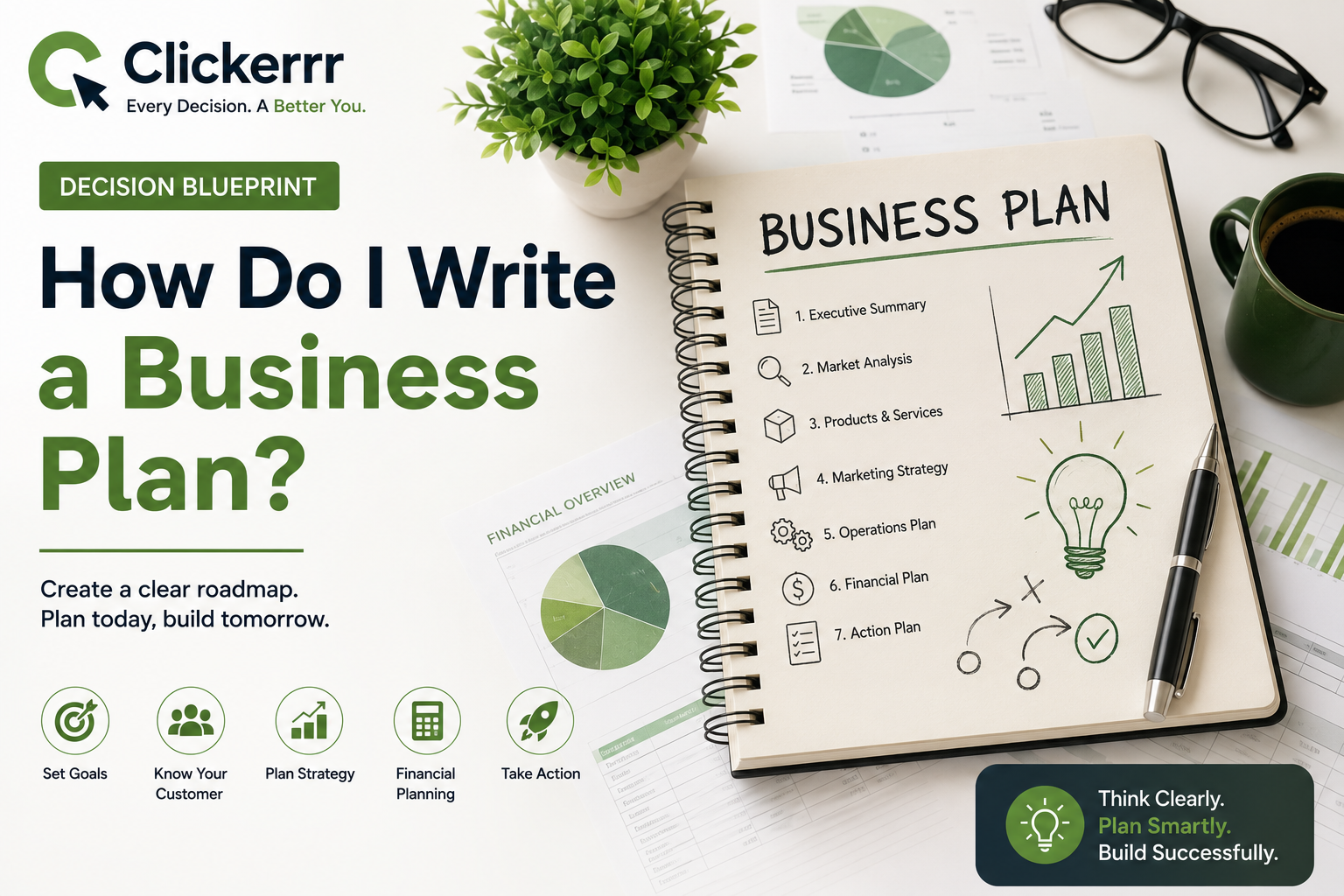
How Do I Write a Business Plan?
Turn Your Business Idea into a Practical Roadmap.
Clickerrr Decision Blueprint
Decision Category: Entrepreneurship → Business Planning → Strategy
Decision Goal: Create a business plan that helps you make better decisions—not just impress investors.
🎯 The Real Decision
Most people think the decision is
“How do I write a business plan?”
But that isn’t the real decision.
The real decision is
“Do I understand my business well enough to put it on paper?”
A business plan is not simply a document.
It is a decision framework that forces you to answer difficult questions before the market does.
Good business plans don’t create successful businesses.
Clear thinking creates successful businesses.
A business plan simply makes that thinking visible.
🚦 Decision Snapshot
| 🟢 Factor | Assessment |
|---|---|
| Decision Type | Strategic Planning |
| Difficulty | ⭐⭐⭐☆☆ |
| Time Required | 1–3 Days |
| Best For | New Businesses, Startups, Existing Businesses |
| Cost | Almost Free |
| Risk Reduction | Very High |
| Decision Confidence | 9.6 / 10 |
🧠 Before You Start Writing
Ask yourself honestly.
✅ Do I clearly understand…
- Who is my customer?
- What problem do I solve?
- Why should people choose me?
- How will I earn money?
- How much money do I need?
- What my biggest risks are
- How will I reach customers?
- What success looks like after one year?
If your answer is “No” to most of these—
Don’t write a business plan yet.
Spend more time understanding your business.
🔥 Quick Decision
Don’t write a business plan for investors.
Write it for yourself first.
Not increase paperwork.
A business plan should reduce confusion.
🧭 Decision Blueprint
Business Idea
      ↓
Customer Problem
      ↓
Market Research
      ↓
Business Model
      ↓
Revenue Plan
      ↓
Marketing Strategy
      ↓
Financial Planning
      ↓
Risk Analysis
      ↓
Action Plan
      ↓
Business LaunchAsk:
What exactly am I building?
Not
“I want to start a business.”
Instead
“I help working professionals learn English online.”
Be extremely specific.
Include
✅ Business Name
✅ Mission
✅ Vision
✅ Products
✅ Services
✅ Industry
This is the most important section.
Most businesses fail because they know their product better than their customer.
Create a customer profile.
👤 Age
📍 Location
💰 Income
❤️ Interests
😟 Problems
🎯 Goals
🛒 Buying Habits
Instead of saying
Everyone is my customer
Say
First-time entrepreneurs aged 25–40 who want practical guidance before starting a business.
Customers don’t buy products.
They buy solutions.
Ask:
- What frustrates them?
- What wastes their time?
- What costs them money?
- What are they already using?
The better you define the problem,
The easier your business becomes.
Study your market.
Research:
📈 Market Size
📉 Demand
📊 Trends
🏆 Competitors
💲 Pricing
🌎 Geography
Create a simple table.
| Competitor | Strength | Weakness |
|---|---|---|
| A | Low Price | Poor Service |
| B | Strong Brand | Expensive |
| C | Fast Delivery | Limited Options |
Then ask
Where can I be different?
Complete this sentence.
We help _______
to achieve _______
without _______.
Example:
We help first-time entrepreneurs start businesses without wasting money.
Simple.
Clear.
Powerful.
How will money come in?
Examples
🟢 Product Sales
🟢 Services
🟢 Subscription
🟢 Commission
🟢 Marketplace
🟢 Advertising
🟢 Licensing
Also answer
Average selling price
Expected monthly customers
Monthly revenue
Profit margin
How will the business actually work?
Include
Suppliers
Technology
Office
Tools
Employees
Delivery
Customer Support
Daily Workflow
Think of it as your operating manual.
One of the most critical sections.
Estimate
Startup Cost
Monthly Expenses
Revenue
Cash Flow
Profit
Break-even Point
Emergency Fund
Example
Startup Cost

Laptop
₹60,000

Website
₹15,000

Software
₹10,000

Marketing
₹40,000

Working Capital
₹75,000

Total
₹2,00,000Every business has risks.
List them honestly.
Example
| Risk | Solution |
|---|---|
| Low Sales | Improve Marketing |
| High Competition | Better Positioning |
| Cash Shortage | Reduce Fixed Costs |
| Slow Growth | Customer Feedback |
Ignoring risks doesn’t remove them.
Planning for them does.
Convert strategy into deadlines.
Example
Week 1
Market Research
Week 2
Customer Interviews
Week 3
Prototype
Week 4
Testing
Month 2
First Customers
Month 3
Launch
📊 Business Plan Checklist
☑ Executive Summary

☑ Business Description

☑ Customer Analysis

☑ Market Research

☑ Competitor Analysis

☑ Products

☑ Services

☑ Marketing Plan

☑ Sales Strategy

☑ Operations

☑ Financial Plan

☑ Risk Analysis

☑ Action Plan
🚨 Common Mistakes
❌ Copying business plans from Google
❌ Writing 100 pages nobody reads
❌ Ignoring customers
❌ Unrealistic revenue projections
❌ No marketing strategy
❌ No financial planning
❌ No risks
❌ Never updating the plan
💡 Better Alternative
Instead of creating a huge business plan,
create
One-page strategy
↓
Validate
↓
Improve
↓
Expand into a detailed plan.
Think of your business plan as a living document.
Not a school assignment.
📈 Decision Confidence Meter
█████████████████████░ 96%

Decision Confidence

9.6 / 10
Why so high?
✅ Forces clear thinking
✅ Identifies weaknesses early
✅ Helps estimate costs realistically
✅ Improves investor conversations
✅ Aligns strategy with execution
📅 Today’s Action
Write just one sentence that clearly explains:
What business are you building, who is it for, and what problem does it solve?
If you cannot answer this clearly, stop and refine your idea before writing the rest of the plan.
📆 This Week’s Action
Complete a one-page business plan with these seven sections:
- Business Idea
- Target Customer
- Problem
- Solution
- Revenue Model
- Marketing Plan
- First 90-Day Action Plan
Don’t aim for perfection. Aim for clarity.
🧰 Helpful Resources
📄 Business Model Canvas
📄 Lean Canvas
📄 Customer Persona Template
📄 SWOT Analysis Worksheet
📄 Market Research Checklist
📄 Startup Cost Calculator
📄 Break-even Calculator
📄 Cash Flow Planner
📄 Business Plan Checklist
📄 First-Year Milestone Planner
🔗 Related Decision Blueprints
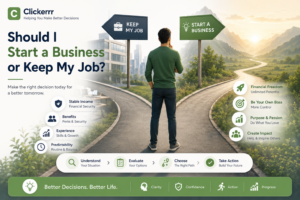
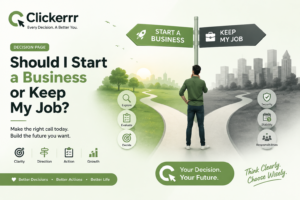
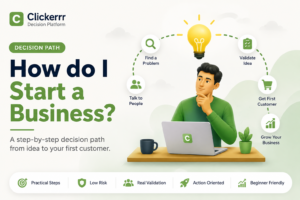
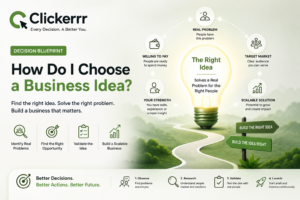
➡️ How do I know if entrepreneurship is right for me?
➡️ How do I choose a business idea?
➡️ How do I validate my business idea?
➡️ How much money do I need to start a business?
➡️ Should I start a business or keep my job?
➡️ How do I get my first customer?
➡️ When should I register my business?
➡️ Should I quit my job to become an entrepreneur?
➡️ How do I price my product or service?
🚀 Final Decision
A business plan is not about predicting the future.
It is about preparing for it.
The strongest business plans are not the longest or the most beautifully formatted—they are the ones grounded in real customer understanding, realistic assumptions, and clear next steps.
Clickerrr Decision: Start with a concise, practical business plan that answers the essential questions about your customer, problem, solution, finances, and execution. Treat it as a living blueprint that evolves as you learn from the market. Every update should reflect better decisions, not just more pages.
Better Decisions → Better Actions → Better Businesses.