What Is This Article About?
Starting an e-commerce business can be an attractive opportunity for entrepreneurs who want to sell products online and build a scalable business. With an online store, you can reach customers beyond your local area, showcase products around the clock, and manage sales through digital platforms.
However, creating an online store does not automatically make a business profitable. You need to select the right products, understand customer demand, calculate costs, choose a suitable e-commerce platform, and develop a reliable system for payments, inventory, shipping, and customer service.
A successful e-commerce business also requires effective product presentation, search engine optimization, digital marketing, and careful financial management. Every sale should contribute towards covering business expenses and generating a sustainable profit.
Whether you want to start a small online store, sell handmade products, launch a private-label brand, or build a larger online retail business, this guide explains the essential process in 10 manageable steps, with five actionable activities under each step.
The 10-Step Guide to Starting a Profitable E-Commerce Business
Choose a Profitable Product or Niche for Your E-Commerce Business

The foundation of a profitable e-commerce business is choosing products that customers actually want to purchase. A visually attractive product or a popular online trend does not necessarily guarantee business success. You need to identify products with sufficient demand, a clear customer base, manageable competition, and enough profit margin after accounting for all expenses. Consider whether you want to sell physical products, handmade items, private-label products, or specialized products for a particular customer group. Starting with a focused product category can make purchasing, branding, marketing, and inventory management easier.
- Identify your interests and product opportunities: List product categories you understand or find interesting, such as clothing, home accessories, beauty products, personal care, stationery, fitness accessories, or pet supplies.
- Research customer demand: Explore Google Trends, online marketplaces, customer discussions, product reviews, and social media to understand what people are searching for and buying.
- Look for specific customer problems: Identify products that solve practical problems, improve convenience, save time, or satisfy a clearly defined customer need.
- Evaluate competition and differentiation: Study existing sellers and identify opportunities to offer better quality, improved packaging, specialized products, useful bundles, or a more focused customer experience.
- Shortlist products with profit potential: Compare selling prices, supplier costs, shipping expenses, expected returns, and likely customer demand before selecting your initial products.
Research Your Target Customers and Competitors

Before investing in products, inventory, or website development, understand who is likely to purchase from your online store. Customer research helps you identify the needs, preferences, budgets, and buying behaviour of your potential buyers. Competitor research shows how other online sellers position their products, price their offers, present product information, and serve customers. This information can help you identify gaps in the market and develop a more attractive shopping experience. A clearly defined target audience also makes it easier to choose suitable marketing channels and communicate the right product benefits.
- Define your ideal customer: Identify the age group, location, income range, interests, lifestyle, and purchasing preferences of people most likely to buy your products.
- Understand customer needs and budgets: Research what customers expect from your product category, how much they are willing to spend, and which features influence their buying decisions.
- Study competing online stores: Examine at least five competitors and compare their product range, pricing, website design, delivery options, offers, and customer experience.
- Read customer reviews: Study positive and negative reviews on relevant marketplaces to discover product complaints, quality concerns, delivery problems, and unmet customer expectations.
- Identify your competitive advantage: Decide how your store can stand out through product selection, quality, pricing, customer service, packaging, convenience, or specialized expertise.
Prepare an E-Commerce Business Plan and Calculate Profit Margins

A practical business plan helps you understand how your e-commerce business will operate and generate revenue. Before purchasing inventory or launching advertisements, calculate the complete cost of selling each product. Your expenses may include product sourcing, packaging, shipping, payment gateway charges, marketplace commissions, advertising, returns, taxes, and website maintenance. A product that appears profitable based only on its purchase price and selling price may generate very little actual profit after all expenses are considered. Build your business plan around realistic sales estimates, cash flow requirements, and sustainable margins rather than optimistic revenue projections.
- Choose your business model: Decide whether you will operate as an inventory-based retailer, dropshipping business, private-label brand, handmade-product seller, or a combination of suitable models.
- Calculate the complete product cost: Include purchase or manufacturing cost, packaging, shipping, payment charges, marketplace fees, expected returns, and other variable expenses.
- Determine your selling price: Compare competitor prices and customer expectations while ensuring that your selling price can cover costs and contribute towards profit.
- Estimate startup investment and operating expenses: Prepare a budget for initial inventory, website development, business registration, software, marketing, packaging, and working capital.
- Calculate break-even sales: Estimate how many units you need to sell to cover your fixed expenses. Review expected profit per order and cash flow before committing to larger investments.
Find Reliable Suppliers and Decide How to Manage Inventory

Reliable product sourcing is essential for maintaining product quality, controlling costs, and fulfilling customer orders on time. Your suppliers directly influence the consistency of your products, availability of stock, packaging standards, and ability to handle increasing demand. Depending on your business model, you may purchase products from manufacturers, wholesalers, distributors, artisans, or dropshipping suppliers. Before placing large orders, verify supplier credibility and test product samples. You should also decide how much inventory to maintain and how to track stock levels so that you do not tie up too much money in unsold products.
- Identify suitable suppliers: Research manufacturers, wholesalers, distributors, local producers, and other sourcing partners who can provide the products you plan to sell.
- Verify supplier reliability: Check business credentials, product quality, references where available, delivery timelines, minimum order quantities, and communication practices.
- Order and inspect samples: Test product quality, materials, dimensions, packaging, durability, and consistency before purchasing larger quantities.
- Negotiate purchasing terms: Discuss wholesale prices, minimum order quantities, payment terms, replacement policies, lead times, and arrangements for repeat orders.
- Establish an inventory system: Record stock received, units sold, damaged products, returns, and reorder levels using suitable inventory software or a well-maintained spreadsheet.
Choose a Business Name, Register Your Business, and Build Your Brand

A recognizable brand helps customers identify your online store and distinguish it from competing businesses. Your business name, logo, colours, packaging, product presentation, and communication style should create a consistent impression. Along with branding, you must understand the legal and tax requirements applicable to your business location, product category, and selling model. In India, requirements may differ depending on the nature of the business, turnover, interstate sales, marketplace arrangements, and applicable product regulations. Completing the relevant formalities before launch can help avoid operational and compliance problems later.
- Select a memorable business name: Choose a name that is easy to pronounce, relevant to your product category, and suitable for long-term brand development.
- Check domain and trademark availability: Search for an available website domain and conduct appropriate trademark checks before investing heavily in branding and packaging.
- Create your visual identity: Develop a professional logo, brand colours, typography, packaging style, and consistent product presentation.
- Understand business registration and tax requirements: Evaluate the appropriate business structure and applicable registrations, GST requirements, invoicing rules, and product-specific compliance with qualified professional guidance.
- Prepare essential business policies: Develop clear terms and conditions, privacy policy, shipping policy, cancellation policy, and return or refund policy in accordance with applicable laws.
Build Your E-Commerce Website and Set Up Your Online Store

Your e-commerce website is the digital storefront where customers discover products, compare options, add items to their carts, and complete purchases. A professional online store should make shopping simple, secure, and convenient. Choose a platform that suits your technical skills, budget, product catalogue, payment requirements, and expected order volume. Platforms such as Shopify, WooCommerce, and other e-commerce solutions offer different levels of flexibility and management features. Focus on creating a fast-loading, mobile-friendly website with clear navigation, useful product categories, and a straightforward checkout process.
- Choose an e-commerce platform: Compare Shopify, WooCommerce, and other suitable platforms based on cost, ease of use, customization, hosting, integrations, and future scalability.
- Purchase a domain and arrange hosting: Select a professional domain name and suitable hosting or platform subscription based on your chosen e-commerce solution.
- Design your online store: Create a clean homepage, product categories, navigation menus, search functionality, shopping cart, and customer account features where appropriate.
- Build essential website pages: Add about, contact, frequently asked questions, shipping, returns, privacy, and terms pages to help customers understand your business.
- Optimize the mobile shopping experience: Test your website on smartphones and tablets, checking page speed, image display, navigation, product selection, and checkout usability.
Add Products, Create Attractive Listings, and Optimize Product Pages

Product pages play a major role in converting website visitors into paying customers. Online shoppers cannot physically inspect products before purchasing, so your listings must provide accurate information and build confidence. High-quality photographs, clear descriptions, specifications, pricing, size details, and useful product benefits help customers make informed decisions. Avoid vague descriptions and exaggerated claims. Organize products into relevant categories and make it easy for visitors to compare options, understand delivery information, and add products to their shopping carts.
- Capture high-quality product photographs: Use clear images showing different angles, important details, product dimensions, packaging, and actual product appearance.
- Write informative product descriptions: Explain the product’s features, materials, specifications, benefits, intended use, and important limitations in simple language.
- Set accurate prices and product variations: Display clear prices and organize available sizes, colours, models, quantities, and other product options correctly.
- Optimize product pages for search engines: Use relevant product keywords naturally in titles, descriptions, headings, image alt text, and page URLs.
- Include useful buying information: Display stock availability, estimated delivery information, applicable warranty details, genuine customer reviews where available, and clear return conditions.
Set Up Online Payments, Shipping, and Order Fulfilment

A successful e-commerce business needs a reliable system for accepting payments and delivering products. Customers expect secure payment options, accurate order updates, reasonable delivery timelines, and a straightforward process if something goes wrong. Depending on your market and business model, you may offer UPI, cards, net banking, digital wallets, or cash on delivery through suitable payment providers. Shipping arrangements should balance customer convenience with delivery costs and operational reliability. A well-organized order fulfilment process helps reduce delays, incorrect shipments, cancellations, and customer complaints.
- Choose a suitable payment gateway: Compare payment providers based on supported payment methods, transaction fees, settlement timelines, integration options, and security features.
- Enable relevant payment options: Offer appropriate payment methods for your target customers, such as UPI, debit and credit cards, net banking, wallets, or cash on delivery where feasible.
- Select shipping and courier partners: Compare courier services, delivery coverage, shipping rates, tracking facilities, pickup arrangements, and return-handling capabilities.
- Establish an order fulfilment process: Create a system for receiving orders, verifying payments, picking products, packing parcels, generating shipping labels, and dispatching shipments.
- Plan returns, refunds, and customer updates: Establish clear procedures for order tracking, cancellations, damaged products, delivery failures, returns, and eligible refunds.
Promote Your Online Store Through SEO, Social Media, and Digital Advertising

Launching an online store is only the beginning. You must attract relevant visitors and give them reasons to explore your products and make purchases. A well-planned e-commerce marketing strategy combines organic search visibility, useful content, social media activity, email communication, and paid advertising where appropriate. Each channel serves a different purpose. SEO can attract people searching for specific products, social media can introduce your brand to new audiences, and advertising can help generate targeted traffic. Start with manageable marketing activities, track the results, and invest more in channels that generate profitable customers.
- Develop an e-commerce SEO strategy: Research product keywords and optimize category pages, product descriptions, website structure, page titles, and technical performance.
- Build a social media presence: Select suitable platforms such as Instagram, Facebook, Pinterest, or YouTube based on your product category and target audience.
- Create useful product-related content: Publish product demonstrations, comparison guides, buying advice, tutorials, videos, and other content that helps customers make purchasing decisions.
- Test paid advertising campaigns: Consider Google Ads, shopping campaigns where available, and social media advertising with clearly defined audiences, budgets, and conversion goals.
- Build customer relationships through email: Use permission-based email communication for newsletters, product updates, relevant offers, and suitable post-purchase messages.
Launch Your E-Commerce Business, Track Performance, and Improve Profitability

Once your online store, product listings, payments, and delivery systems are ready, you can begin accepting customer orders. However, launching the website is not the final step in building a profitable e-commerce business. You need to monitor sales, product margins, website conversions, advertising expenditure, customer acquisition costs, returns, and repeat purchases. Revenue alone does not indicate whether your business is profitable. Regular performance reviews help you identify popular products, reduce unnecessary expenses, improve customer experience, and make informed decisions about inventory and marketing investments. Use actual sales and cost data to guide business expansion.
- Conduct a pre-launch test: Test product pages, website navigation, payment processing, order confirmation emails, shipping calculations, mobile display, and customer support channels.
- Launch with a focused product range: Begin with a manageable selection of products so that you can understand customer demand and improve operations before expanding the catalogue.
- Track sales and conversion performance: Monitor website traffic, orders, conversion rate, average order value, abandoned carts, and sales by product category.
- Measure actual profitability: Review product costs, shipping, payment fees, advertising expenditure, returns, refunds, operating expenses, and net profit rather than focusing only on total revenue.
- Improve and scale gradually: Identify successful products and marketing channels, improve weak product pages, manage inventory carefully, encourage repeat purchases, and expand only when the business can support growth.
Practical Tips for Starting a Profitable E-Commerce Business
- Start with a focused product range: Avoid purchasing too many products before understanding customer demand and sales patterns.
- Validate demand before investing heavily: Research customers, test product samples, and consider a small initial inventory before making large purchasing commitments.
- Calculate profit per order: Include product cost, packaging, shipping, platform fees, payment charges, returns, and advertising expenditure.
- Choose reliable suppliers: Product quality and consistent availability are essential for customer satisfaction and repeat purchases.
- Make product pages informative: Use accurate photographs, clear descriptions, specifications, prices, and delivery information.
- Prioritize mobile shopping: Ensure customers can browse products, add items to carts, and complete payments conveniently on smartphones.
- Build customer trust: Display genuine business information, transparent policies, secure payment options, and responsive customer support.
- Control inventory and cash flow: Avoid tying up too much working capital in slow-moving products or unnecessary stock.
- Do not depend entirely on paid advertising: Develop organic traffic through SEO, useful content, social media, and customer referrals alongside paid campaigns.
- Measure profit, not just revenue: Track actual costs, contribution margins, returns, customer acquisition costs, and net profit before expanding.
Conclusion
Starting a profitable e-commerce business requires more than creating a website and uploading products. It involves selecting the right product category, understanding customer demand, researching competitors, calculating costs, finding reliable suppliers, and building a convenient online shopping experience.
The 10 steps in this guide provide a practical framework for developing an e-commerce business from the initial idea to its launch and ongoing growth. Begin with product research and financial planning. Establish your brand, build your online store, create informative product listings, and organize payments, inventory, and shipping. Then attract customers through suitable marketing channels and measure the performance of your business regularly.
Remember that high sales do not automatically mean high profits. A sustainable e-commerce business depends on healthy product margins, controlled operating costs, reliable fulfilment, customer satisfaction, and repeat purchases. Start with a manageable investment, test your business model, learn from actual customer behaviour, and expand gradually as your operations and profitability improve.
10 FAQs: How to Start a Profitable E-Commerce Business
What is an e-commerce business?
An e-commerce business is a business that sells products or services through the internet. Customers can browse products, place orders, make online payments, and receive products through delivery services. Examples include online clothing stores, electronics shops, beauty product stores, and handmade product businesses.
How much money is required to start an e-commerce business?
The initial investment depends on the business model, product category, inventory requirements, website platform, packaging, and marketing budget. A small online store can start with a relatively modest investment, while inventory-based or private-label businesses may require more capital. Prepare a detailed startup budget before investing.
Which products are most profitable to sell online?
Products with consistent demand, manageable competition, reasonable sourcing costs, and healthy profit margins can offer good opportunities. Popular categories include clothing, beauty products, home accessories, fitness products, personal care items, and specialized products. However, profitability depends on product costs, customer demand, competition, and operating expenses.
Which e-commerce business model is best for beginners?
Beginners can consider inventory-based retail, dropshipping, handmade products, or private-label selling. Each model has different investment, inventory, quality-control, and fulfilment requirements. The best choice depends on your available capital, product knowledge, supplier access, and ability to manage operations.
Which platform is best for starting an e-commerce website?
Popular options include Shopify, WooCommerce, and other dedicated e-commerce platforms. Shopify provides a hosted store-building solution, while WooCommerce offers an e-commerce solution built on WordPress. Compare their costs, customization options, ease of use, payment integrations, and scalability before choosing.
How do I find reliable suppliers for my online store?
You can find suppliers through manufacturers, wholesalers, distributors, trade exhibitions, business directories, and relevant B2B platforms. Check supplier credentials, compare prices, request product samples, verify product quality, and discuss minimum order quantities and delivery terms before placing bulk orders.
Do I need GST registration to start an e-commerce business in India?
GST registration requirements depend on the business model, turnover, nature of supplies, marketplace arrangements, and applicable GST provisions. Certain exceptions and special conditions may apply. Check the latest GST rules and consult a qualified tax professional before starting sales.
How can I attract customers to my e-commerce website?
You can attract customers through search engine optimization (SEO), social media marketing, product-related content, email marketing, influencer collaborations, and paid advertising. Focus on reaching your target audience with useful content, competitive products, accurate listings, and a convenient shopping experience.
How long does it take for an e-commerce business to become profitable?
There is no fixed timeline. Profitability depends on product demand, pricing, sourcing costs, marketing effectiveness, operating expenses, competition, and repeat purchases. Some businesses may reach profitability relatively quickly, while others require considerable time to establish a customer base and optimize operations.
How can I make my e-commerce business more profitable?
Focus on improving product margins, negotiating better supplier prices, reducing unnecessary expenses, managing inventory efficiently, and minimizing returns. Improve product pages and customer service, encourage repeat purchases, and monitor customer acquisition costs. Track net profit rather than relying only on sales revenue.
More Guides from Clickerrr Guides
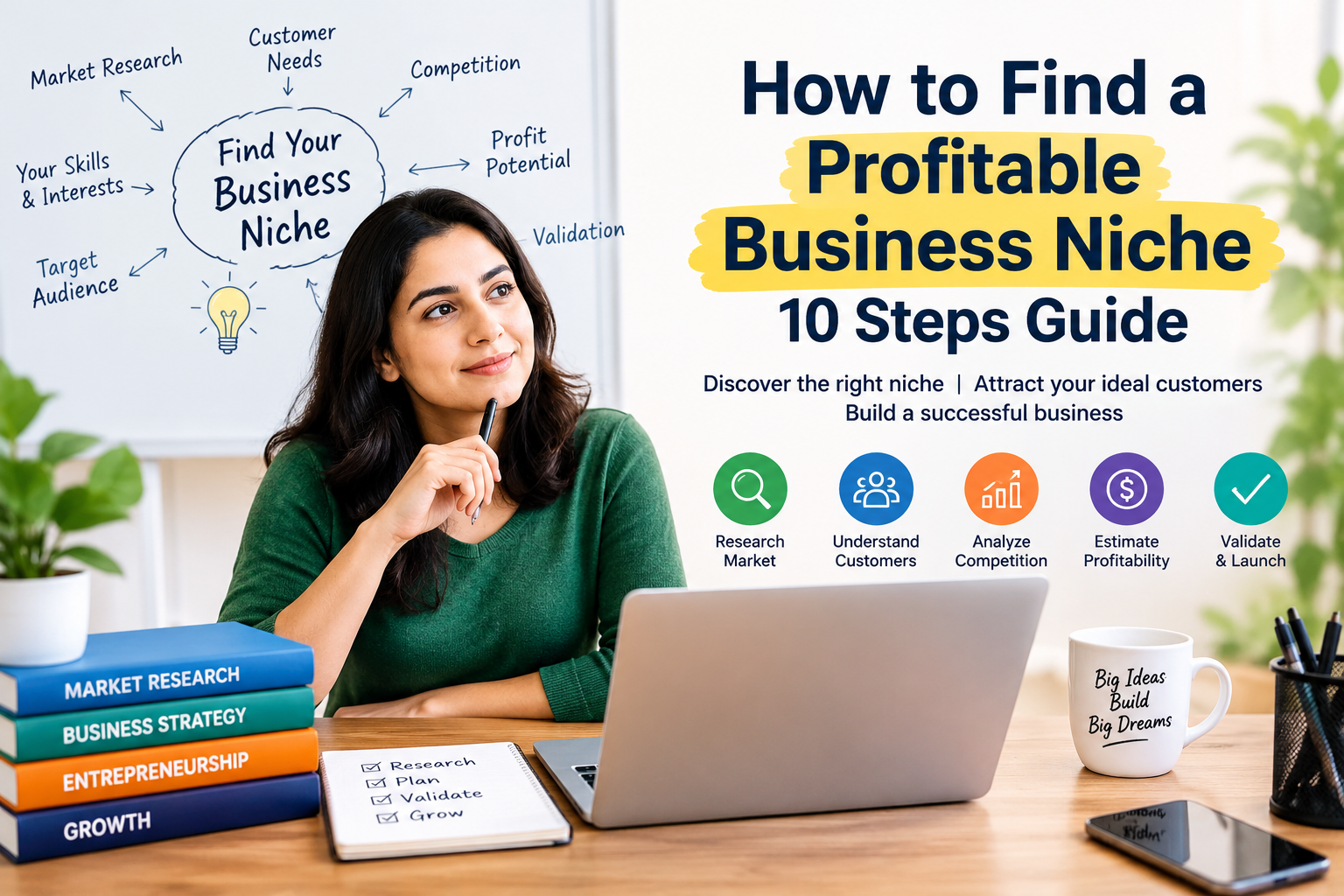
How to Find a Profitable Business Niche
Learn how to identify a profitable niche, evaluate market demand, and choose the right business opportunity.
Read the Full Guide →
How to Increase Small Business Revenue
Discover practical strategies to attract customers, increase sales, and improve your business revenue.
Read the Full Guide →
How to Start a Service-Based Business
Follow practical steps to select a service, find your first clients, and build a sustainable business.
Read the Full Guide →
How to Write a Business Plan
Understand how to prepare a business plan, define your goals, and create a practical roadmap for your business.
Read the Full Guide →
How to Find a Profitable Business Niche
Getting your first 100 customers is one of the most important milestones when starting a new business. Whether you run an online business, a local shop, a service-based company, a freelance venture, or a startup, your first customers help you turn an idea into a real business.
Read the Full Guide →
How to Use AI to Grow a Small Business
Artificial intelligence (AI) is changing the way small businesses operate, market their products, serve customers, and compete in the digital marketplace.
Read the Full Guide →
How to Start an Online Business with No Experience
Starting an online business can be an exciting way to turn your skills, knowledge, interests, or business ideas into an income-generating opportunity. Unlike many traditional businesses, an online business can often be started from home with a computer, an internet connection, and a small initial investment.
Read the Full Guide →
How to Start a Small Business
Starting a small business can be an excellent way to turn your skills, knowledge, and ideas into a source of income. Whether you want to open a local shop, provide professional services, sell products online, or start a home-based business, the right approach can help you build a strong foundation. However, starting a business requires more than having a good idea.
Read the Full Guide →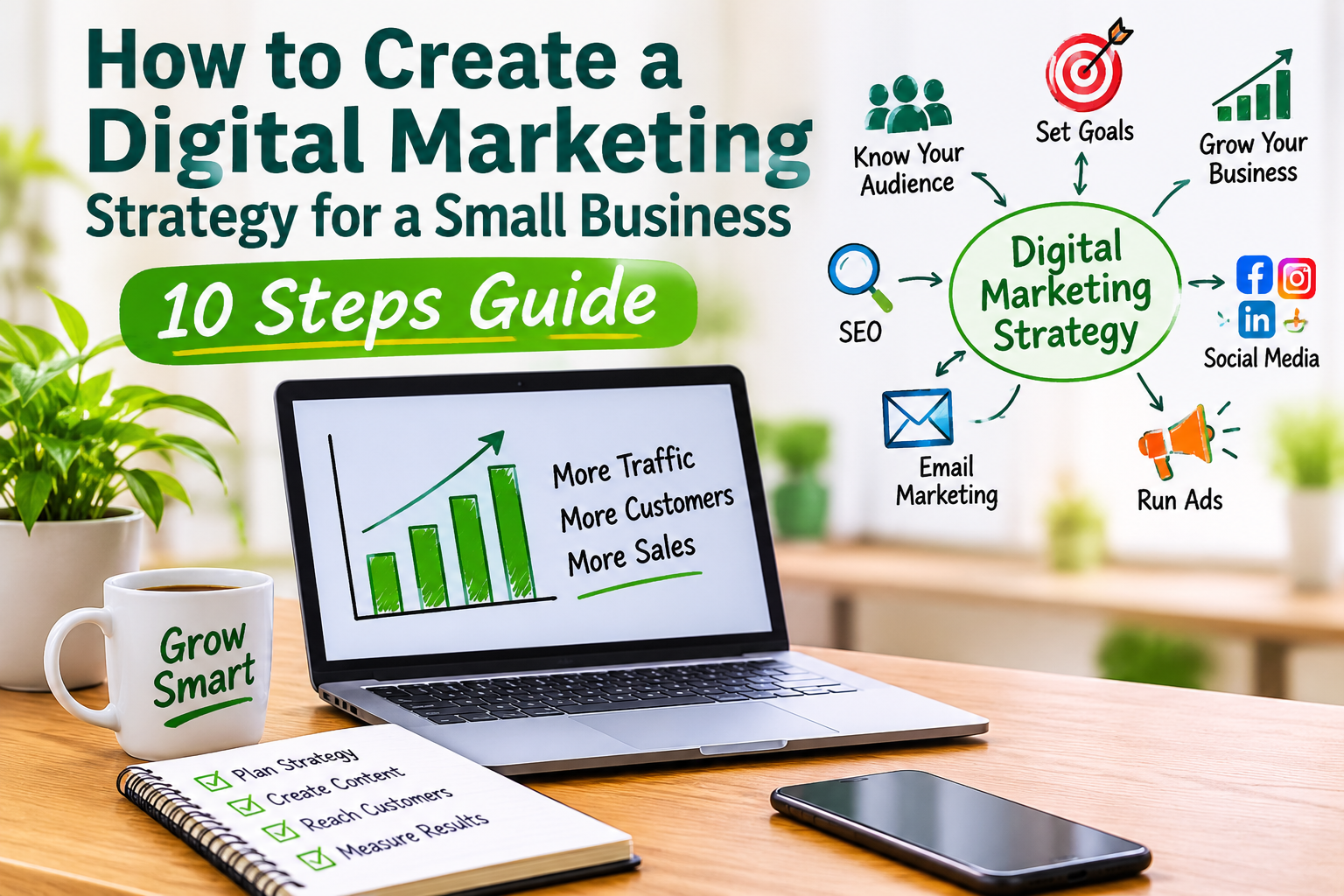
How to Create a Digital Marketing Strategy for a Small Business: 10 Steps Guide
A digital marketing strategy helps a small business attract potential customers, build brand awareness, generate enquiries, and increase sales through online channels.
Read the Full Guide →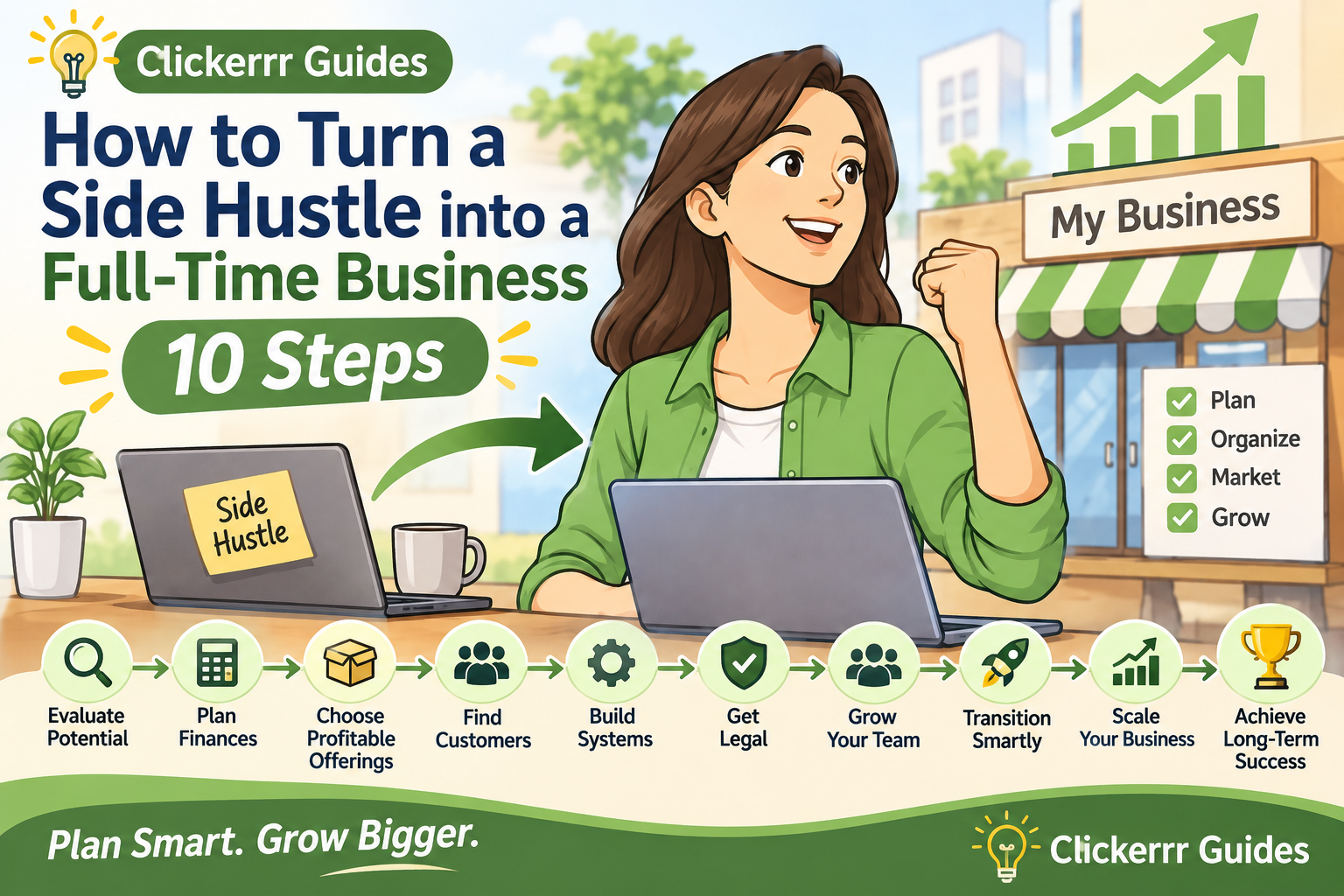
How to Turn a Side Hustle into a Full-Time Business: 10 Steps Guide
Turning a side hustle into a full-time business is an exciting opportunity to gain financial independence, build something of your own, and create a sustainable career. However, moving from a part-time activity to a full-time business requires more than simply increasing your working hours.
Read the Full Guide →
How to Grow a Small Business Faster: 10 Steps Guide
How to Grow a Small Business Faster: 10 Steps Guide? Growing a small business faster requires more than increasing sales or attracting new customers.
Read the Full Guide →
How to Start a Home-Based Business: 10 Steps Guide
Starting a home-based business is an attractive option for people who want to become entrepreneurs without investing heavily in commercial premises or maintaining a traditional office.
Read the Full Guide →