
What Is This Article About?
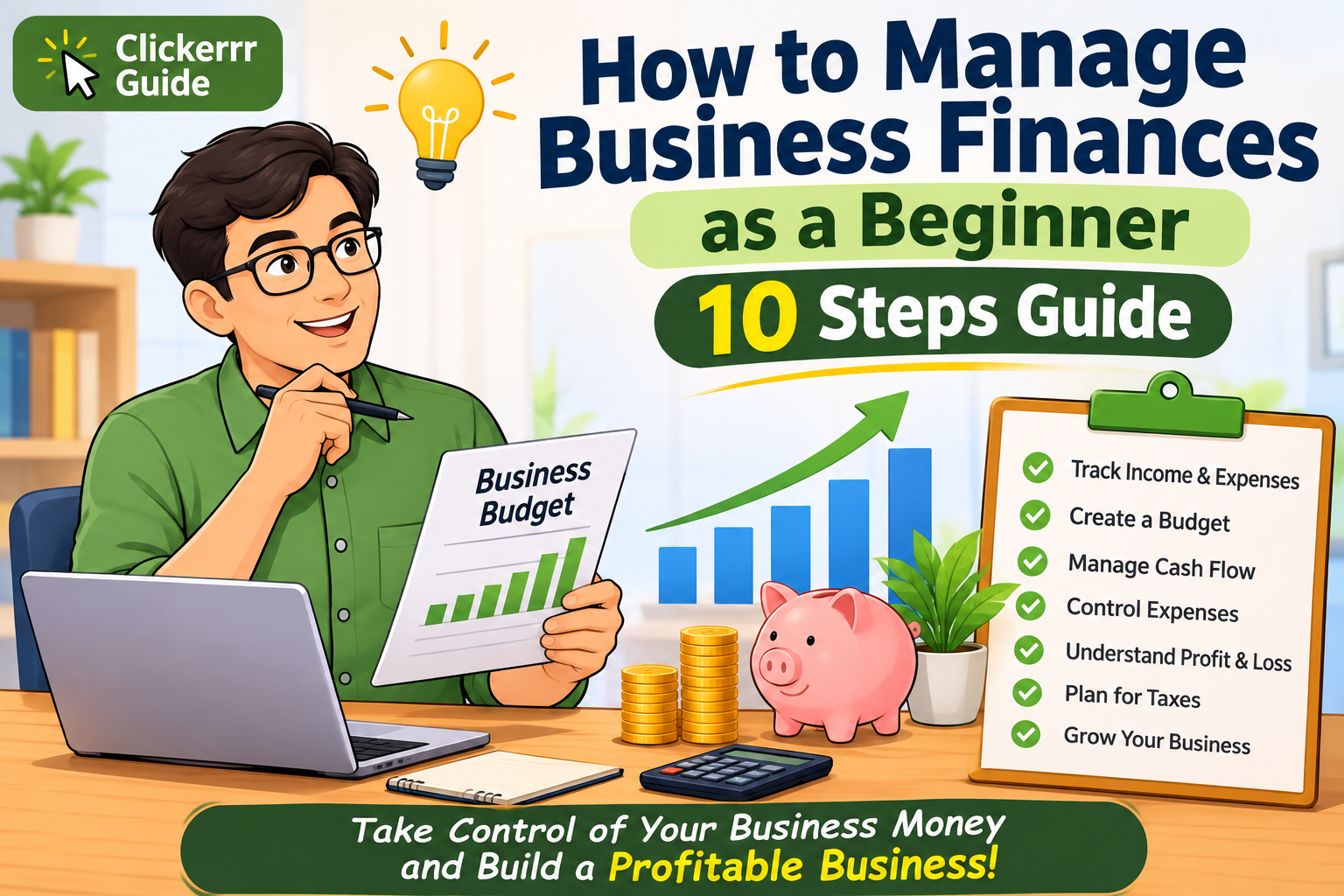
Learning how to manage business finances as a beginner is one of the most important skills for building a successful and sustainable business. Whether you operate a small shop, startup, online business, consultancy, restaurant, service company, or manufacturing unit, understanding your money is essential for making sound business decisions. Business finance management involves tracking income, controlling expenses, preparing budgets, managing cash flow, monitoring profitability, and planning for future financial requirements.
Many new entrepreneurs concentrate on generating sales but overlook important financial activities such as recording transactions, separating personal and business money, monitoring outstanding payments, and calculating actual profits. As a result, a business may experience cash shortages even when sales appear strong. Without proper financial planning, it becomes difficult to understand whether the business is performing well or simply generating revenue without retaining enough money.
Fortunately, managing small business finances does not require an advanced accounting degree or expensive financial software. Beginners can start with a basic spreadsheet, a separate business bank account, organized financial records, and a consistent system for reviewing income and expenses. Understanding a few essential financial concepts can help entrepreneurs maintain better control over their businesses.
This guide explains how to manage business finances through ten practical steps. You will learn how to separate finances, track transactions, create a business budget, manage cash flow, control expenses, understand profit and loss, maintain financial records, prepare for taxes, and plan for business growth.
How to Manage Business Finances as a Beginner: 10 Steps
Follow these ten practical steps to organize your business money, improve financial control, manage cash flow, and build a stronger financial foundation for long-term business growth.
Separate Your Personal and Business Finances
🏦
The first step in business finance management is keeping personal money separate from business money. Many beginners use the same bank account for household expenses, business purchases, customer payments, and other transactions. This creates confusion when calculating business income, expenses, and actual profits. Open a dedicated business bank account wherever appropriate for your business structure and banking requirements. Use it for business-related transactions and establish a clear system for transferring money to yourself as an owner’s draw or salary, depending on your legal structure. Separating finances makes bookkeeping easier, improves financial visibility, and helps you maintain more accurate business records.
- Open a separate business bank account: Choose a suitable account for receiving customer payments, paying suppliers, and handling routine business transactions.
- Stop mixing personal and business transactions: Avoid using your business account for household shopping, personal entertainment, and unrelated expenses.
- Choose a payment method for yourself: Establish a consistent method of withdrawing money from the business according to its legal structure and financial position.
- Use a dedicated business payment system: Where practical, maintain separate payment cards, UPI arrangements, and other transaction methods for business activities.
- Review account transactions regularly: Check bank statements and identify any personal transactions, unexplained payments, or incorrect entries.
Record Every Business Income and Expense
🧾
Accurate financial records are the foundation of effective business accounting. Every time your business receives money or makes a payment, the transaction should be recorded with its date, amount, description, and relevant category. This includes customer sales, service payments, supplier purchases, rent, salaries, electricity, transportation, advertising, and other operating costs. Without proper transaction records, you may struggle to calculate revenue, identify unnecessary spending, prepare financial statements, or understand your business performance. Beginners can start with a simple Excel or Google Sheets spreadsheet and gradually move to accounting software when transaction volumes increase.
- Record every sale: Enter all customer payments, invoices, service income, online sales, and other business receipts in your financial records.
- Document every expense: Record payments for rent, salaries, inventory, raw materials, electricity, marketing, transportation, and other business requirements.
- Collect supporting documents: Save invoices, bills, receipts, payment confirmations, bank statements, and supplier documents in an organized manner.
- Categorize transactions: Divide financial entries into suitable categories such as sales revenue, operating expenses, inventory, equipment, and loan payments.
- Update your records consistently: Enter transactions daily or at regular intervals rather than waiting until the end of the month or financial year.
Create a Realistic Business Budget
📊
A business budget is a financial plan that estimates how much money your business expects to earn and spend during a particular period. It helps beginners decide how much they can allocate to rent, salaries, inventory, marketing, equipment, utilities, and other operating requirements. A realistic budget also helps prevent unnecessary purchases and excessive spending. Instead of making financial decisions based only on available bank balances, entrepreneurs should plan their expected income and expenses in advance. Prepare a monthly budget and compare actual financial results with your original estimates. This process makes it easier to identify overspending, adjust business activities, and maintain financial discipline.
- Estimate monthly business revenue: Calculate the sales or service income you reasonably expect based on previous performance, customer demand, and business capacity.
- List fixed expenses: Identify regular costs such as rent, permanent salaries, insurance, software subscriptions, and other recurring payments.
- Estimate variable expenses: Calculate costs that change with business activity, including inventory, raw materials, packaging, delivery, and transaction charges.
- Allocate money to important priorities: Set suitable limits for essential operating expenses, marketing, equipment, emergency reserves, and planned investments.
- Compare actual results with your budget: Review monthly differences between estimated and actual income and expenditure, then revise future budgets where necessary.
Understand and Manage Business Cash Flow
💰
Cash flow management means monitoring the actual movement of money into and out of your business. It is different from profitability because a business can report profits while experiencing a shortage of available cash. For example, you may complete a large customer order and record the sale, but if the customer pays after 60 days, you may not have enough money to pay suppliers and employees in the meantime. Beginners should understand when money will be received, when payments are due, and how much cash is available to meet immediate obligations. Regular cash flow planning helps businesses avoid payment difficulties and maintain smoother day-to-day operations.
- Prepare a cash flow statement: Record cash received from customers and other sources alongside cash payments made during the selected period.
- Monitor customer outstanding payments: Maintain a list of unpaid invoices, payment due dates, and amounts expected from customers.
- Manage supplier payment schedules: Understand when supplier payments are due and coordinate them with expected customer collections.
- Maintain sufficient working capital: Keep an appropriate amount of accessible funds to support routine operating expenses and short-term business requirements.
- Forecast upcoming cash requirements: Estimate expected receipts and payments for the next 30, 60, or 90 days to identify possible cash shortages early.
Control Business Expenses and Reduce Unnecessary Costs
✂️
Controlling expenses is an essential part of managing business finances because unnecessary spending can reduce profitability and create cash flow problems. Beginners should understand the difference between essential operating costs and expenses that can be reduced, postponed, or eliminated. However, cutting costs indiscriminately can also damage product quality, customer service, employee performance, and future growth. The objective is not simply to spend less but to obtain better value from every business expenditure. Regularly review supplier prices, subscriptions, inventory purchases, utility bills, marketing expenditure, and administrative costs. Small savings across multiple expense categories can improve the overall financial performance of a business.
- Identify major expense categories: Review rent, salaries, inventory, raw materials, marketing, transportation, utilities, maintenance, and other recurring costs.
- Identify unnecessary spending: Find unused subscriptions, duplicate services, avoidable purchases, excessive inventory, and expenses that do not contribute meaningful business value.
- Compare supplier prices: Obtain quotations from multiple suppliers and evaluate pricing, product quality, delivery terms, and payment conditions.
- Improve operational efficiency: Reduce wastage, avoid unnecessary stock purchases, improve resource utilization, and simplify repetitive business processes.
- Review expenses every month: Compare current expenditure with previous months and your business budget to identify unusual increases and potential savings.
Understand Revenue, Profit, and Loss
📈
Understanding the difference between revenue, profit, and loss is fundamental to business financial management. Revenue is the income generated from selling products or providing services before deducting expenses. Profit is the amount remaining after the relevant business costs have been accounted for, while a loss occurs when expenses exceed revenue. A business with high sales is not necessarily profitable because its operating expenses, purchase costs, salaries, rent, taxes, and other financial obligations may also be high. Beginners should regularly prepare and review a profit and loss statement to understand the actual financial performance of their business and make better decisions about pricing, costs, and expansion.
- Calculate total business revenue: Add the income generated from product sales, services, and other normal business activities during the selected period.
- Calculate the cost of goods sold: Identify the direct costs associated with products sold or services delivered, using an appropriate method for your business.
- Calculate gross profit: Subtract the cost of goods sold from revenue. Gross profit helps you understand how much remains before operating expenses and other applicable costs.
- Deduct operating and other expenses: Account for salaries, rent, utilities, marketing, administration, depreciation, interest, and other relevant expenses.
- Prepare a monthly profit and loss statement: Compare revenue and expenses to understand whether the business generated a profit or incurred a loss during the period.
Set the Right Prices for Your Products and Services
🏷️
Pricing directly influences business revenue, profitability, customer demand, and competitiveness. New entrepreneurs sometimes set prices by copying competitors or selecting amounts they believe customers will accept, without calculating their actual costs. This can result in low profit margins or even losses on individual sales. A sound pricing strategy should consider direct costs, operating expenses, desired profit margins, customer value, market conditions, and competitor pricing. You should also understand the difference between markup and profit margin because they are not the same calculation. Review your pricing whenever supplier costs, salaries, market demand, or other important business conditions change.
- Calculate your product or service costs: Identify direct materials, labour, packaging, delivery, transaction charges, and other costs associated with each sale.
- Account for business overheads: Consider how rent, salaries, electricity, software, administration, and other operating expenses contribute to the overall cost of delivering your offering.
- Research competitor pricing: Compare similar products and services to understand market price ranges, customer expectations, and competitive positioning.
- Determine your desired profit margin: Set a suitable margin after considering costs, customer value, market conditions, and the financial requirements of your business.
- Review and test your prices: Monitor customer response, sales volume, contribution margins, and profitability when evaluating potential price changes.
Maintain Proper Accounting Records and Financial Reports
📚
Proper accounting records help business owners understand their financial position and maintain reliable information for decision-making. Beyond recording daily transactions, businesses need to organize invoices, customer payments, supplier bills, bank statements, inventory details, employee payments, and other relevant documents. Three important financial reports are the profit and loss statement, balance sheet, and cash flow statement. Each provides a different perspective on business performance and financial health. Beginners do not need to prepare complicated reports immediately, but they should understand what these documents represent and maintain the information required to prepare them. A qualified accountant can help establish an appropriate accounting system.
- Organize invoices and receipts: Store sales invoices, purchase bills, expense receipts, payment records, and other supporting documents systematically.
- Maintain customer and supplier records: Record amounts receivable from customers and amounts payable to suppliers, along with their due dates.
- Understand the profit and loss statement: Use this report to review revenue, costs, expenses, and the resulting profit or loss for a particular period.
- Understand the balance sheet: Review business assets, liabilities, and owner’s equity to understand the financial position at a particular date.
- Reconcile financial records: Compare accounting entries with bank statements and other supporting records to identify missing, duplicate, or incorrect transactions.
Plan for Taxes and Build an Emergency Fund
🛡️
Tax planning and financial reserves are important parts of responsible business finance management. New entrepreneurs should understand the tax obligations applicable to their business structure, turnover, activities, and location. Depending on the business, these may include income tax, GST, TDS, and other statutory requirements. Setting aside money for expected tax payments helps prevent last-minute financial difficulties. At the same time, an emergency fund provides financial protection against unexpected expenses, temporary revenue declines, equipment breakdowns, delayed customer payments, and other disruptions. Beginners should develop these financial safeguards gradually instead of using all available cash for daily operations or expansion.
- Understand your tax obligations: Identify the tax registrations, filing requirements, payment deadlines, and statutory compliance applicable to your business.
- Maintain tax-related documents: Organize invoices, expense records, purchase documents, bank statements, and other information needed for accurate tax reporting.
- Set aside money for taxes: Estimate upcoming tax liabilities with professional guidance and keep the required funds separate from routine operating money.
- Build a business emergency reserve: Gradually accumulate accessible savings to cover unexpected expenses and temporary interruptions in business income.
- Review financial risks: Evaluate suitable insurance, equipment protection, contractual safeguards, and other risk-management measures relevant to your business.
Monitor Financial Performance and Plan for Growth
🚀The final step in managing business finances is regularly reviewing financial performance and using the information to plan future growth. Recording transactions is important, but the real value comes from understanding what those numbers reveal about your business. Track key financial indicators such as monthly revenue, gross profit margin, net profit, operating expenses, cash flow, outstanding payments, and available working capital. These indicators help you identify financial problems early and determine whether the business can afford new employees, additional inventory, equipment, marketing, or expansion. Financial growth should be based on actual business performance rather than assumptions or temporary increases in sales.
- Choose important financial indicators: Track monthly revenue, gross profit, net profit, operating expenses, cash balance, and outstanding customer payments.
- Prepare monthly financial reviews: Compare current results with previous months, your business budget, and relevant performance targets.
- Identify financial strengths and weaknesses: Determine which products, services, customers, and business activities generate the strongest financial contribution.
- Evaluate expansion decisions carefully: Estimate the costs, funding requirements, cash flow implications, and expected returns before investing in new business opportunities.
- Establish financial goals: Set realistic targets for revenue growth, profitability, expense control, debt reduction where applicable, and emergency savings.
Practical Tips for Managing Business Finances as a Beginner
- Start with simple financial tools: Use a spreadsheet or basic accounting software instead of investing immediately in complicated financial systems.
- Separate personal and business money: Maintain dedicated banking and payment arrangements to avoid confusion in financial records.
- Record transactions regularly: Do not postpone bookkeeping until the end of the month or financial year.
- Prepare a monthly business budget: Plan expected income and expenses before making significant spending decisions.
- Prioritize cash flow: Monitor when money enters and leaves your business rather than focusing only on reported profits.
- Control unnecessary expenses: Review subscriptions, supplier costs, inventory, utilities, and other recurring payments.
- Understand your actual profit: Remember that business revenue is not the same as the money you earn after expenses.
- Maintain an emergency reserve: Gradually build accessible financial reserves to handle unexpected business requirements.
- Stay organized with tax documents: Maintain proper invoices, receipts, accounting records, and statutory compliance documents.
- Review your finances every month: Evaluate financial performance, identify problems, and adjust your business plans accordingly.
Conclusion
Learning how to manage business finances as a beginner is essential for building a financially stable and profitable business. Entrepreneurs who concentrate only on sales without monitoring expenses, cash flow, profitability, and financial obligations may face difficulties even when their businesses appear to be growing. Effective business finance management provides a clear understanding of where money comes from, where it goes, and how it can be used more efficiently.
The ten steps in this guide provide a practical framework for developing sound financial management habits. Start by separating personal and business finances and recording every transaction. Prepare a realistic budget, monitor cash flow, control expenses, understand revenue and profit, establish suitable pricing, and maintain accurate accounting records. Then plan for taxes, build emergency reserves, and regularly review your financial performance.
Remember that managing business finances does not require expensive software or advanced accounting knowledge when you are just starting. A dedicated bank account, an organized spreadsheet, proper invoices, regular financial reviews, and guidance from a qualified accountant can provide a strong starting point. As your business grows, you can gradually introduce more advanced accounting systems and financial reporting tools.
Start with one simple financial management system and follow it consistently. Record your income and expenses, prepare your first monthly budget, and review your cash flow. Better financial decisions today can help you build a more stable, profitable, and sustainable business in the future.
10 Frequently Asked Questions – How to Manage Business Finances as a Beginner
How can a beginner manage business finances?
A beginner can manage business finances by separating personal and business money, recording every transaction, preparing a monthly budget, monitoring cash flow, controlling expenses, and reviewing financial reports regularly. Starting with simple spreadsheets or basic accounting software can make the process easier.
Why is financial management important for a small business?
Financial management helps small businesses understand their income, expenses, profits, and financial obligations. It also helps prevent cash shortages, control unnecessary spending, prepare for taxes, and make informed business decisions.
How much money should I keep in my business account?
You should maintain enough money to cover regular operating expenses, upcoming payments, and unexpected costs. Ideally, build a cash reserve covering three to six months of essential business expenses, depending on your business model and financial stability.
What is the difference between business revenue and business profit?
Revenue is the total money a business earns from selling products or services before expenses. Profit is the amount remaining after deducting business expenses from revenue. A business can generate high revenue but still have low or negative profit.
How do I create a budget for my small business?
Start by estimating monthly revenue and listing all expected expenses, including rent, salaries, inventory, utilities, marketing, and taxes. Compare your estimated income with expenses, identify unnecessary costs, and review your budget every month.
What is cash flow management in business?
Cash flow management involves tracking the money entering and leaving a business. It ensures that sufficient cash is available to pay suppliers, employees, rent, and other operating expenses on time, even when customer payments are delayed.
Should I separate personal and business finances?
Yes. Maintaining separate bank accounts and financial records makes it easier to track business transactions, calculate profits, prepare tax returns, and understand the actual financial performance of your business.
Which accounting method is best for beginners?
Beginners can start with a simple spreadsheet to record income, expenses, invoices, and payments. As the business grows, they can use accounting software such as Zoho Books, TallyPrime, or QuickBooks, depending on their requirements and location.
How can I reduce unnecessary business expenses?
Review your monthly expenses, negotiate with suppliers, avoid unnecessary subscriptions, compare service providers, manage inventory carefully, and monitor employee and operational costs. Focus on reducing expenses without compromising product or service quality.
How often should I review my business finances?
You should record transactions regularly, review cash flow weekly, and examine your budget, profit and loss statement, outstanding payments, and financial performance every month. A quarterly review can help identify trends and plan future business growth.
More Guides from Clickerrr Guides
How to Manage Small Business Cash Flow: 10 Steps Guide
Cash flow is one of the most important aspects of running a successful small business. It represents the money moving into and out of your business during a particular period.
Read the Full Guide →
How to Start a Profitable E-Commerce Business: 10 Steps Guide
Starting an e-commerce business can be an attractive opportunity for entrepreneurs who want to sell products online and build a scalable business. With an online store, you can reach customers beyond your local area, showcase products around the clock, and manage sales through digital platforms.
Read the Full Guide →
How to Start a Service-Based Business
Follow practical steps to select a service, find your first clients, and build a sustainable business.
Read the Full Guide →
How to Write a Business Plan
Understand how to prepare a business plan, define your goals, and create a practical roadmap for your business.
Read the Full Guide →
How to Find a Profitable Business Niche
Getting your first 100 customers is one of the most important milestones when starting a new business. Whether you run an online business, a local shop, a service-based company, a freelance venture, or a startup, your first customers help you turn an idea into a real business.
Read the Full Guide →
How to Use AI to Grow a Small Business
Artificial intelligence (AI) is changing the way small businesses operate, market their products, serve customers, and compete in the digital marketplace.
Read the Full Guide →
How to Start an Online Business with No Experience
Starting an online business can be an exciting way to turn your skills, knowledge, interests, or business ideas into an income-generating opportunity. Unlike many traditional businesses, an online business can often be started from home with a computer, an internet connection, and a small initial investment.
Read the Full Guide →
How to Start a Small Business
Starting a small business can be an excellent way to turn your skills, knowledge, and ideas into a source of income. Whether you want to open a local shop, provide professional services, sell products online, or start a home-based business, the right approach can help you build a strong foundation. However, starting a business requires more than having a good idea.
Read the Full Guide →
How to Create a Digital Marketing Strategy for a Small Business: 10 Steps Guide
A digital marketing strategy helps a small business attract potential customers, build brand awareness, generate enquiries, and increase sales through online channels.
Read the Full Guide →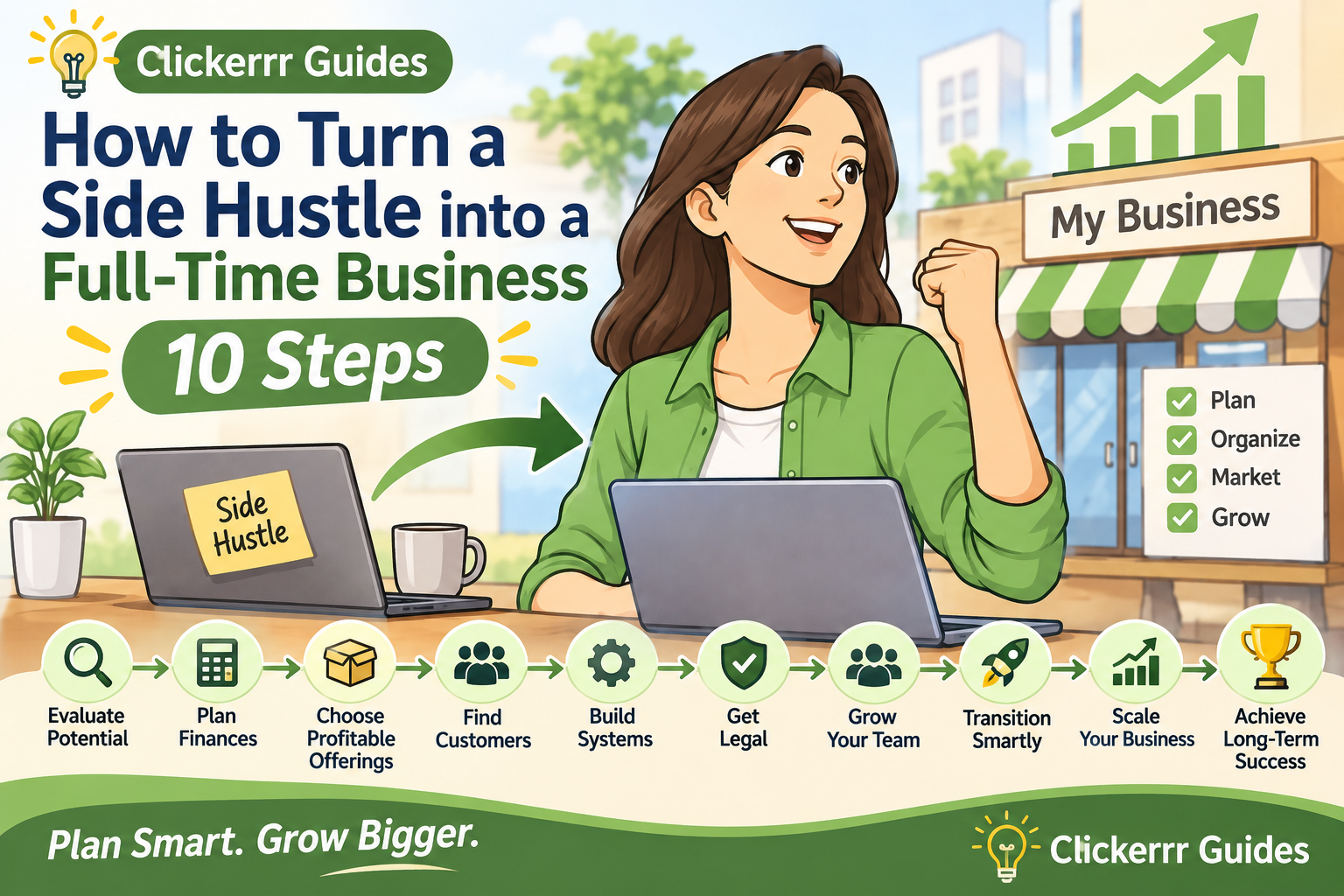
How to Turn a Side Hustle into a Full-Time Business: 10 Steps Guide
Turning a side hustle into a full-time business is an exciting opportunity to gain financial independence, build something of your own, and create a sustainable career. However, moving from a part-time activity to a full-time business requires more than simply increasing your working hours.
Read the Full Guide →
How to Grow a Small Business Faster: 10 Steps Guide
How to Grow a Small Business Faster: 10 Steps Guide? Growing a small business faster requires more than increasing sales or attracting new customers.
Read the Full Guide →
How to Start a Home-Based Business: 10 Steps Guide
Starting a home-based business is an attractive option for people who want to become entrepreneurs without investing heavily in commercial premises or maintaining a traditional office.
Read the Full Guide →