


What Is This Article About?
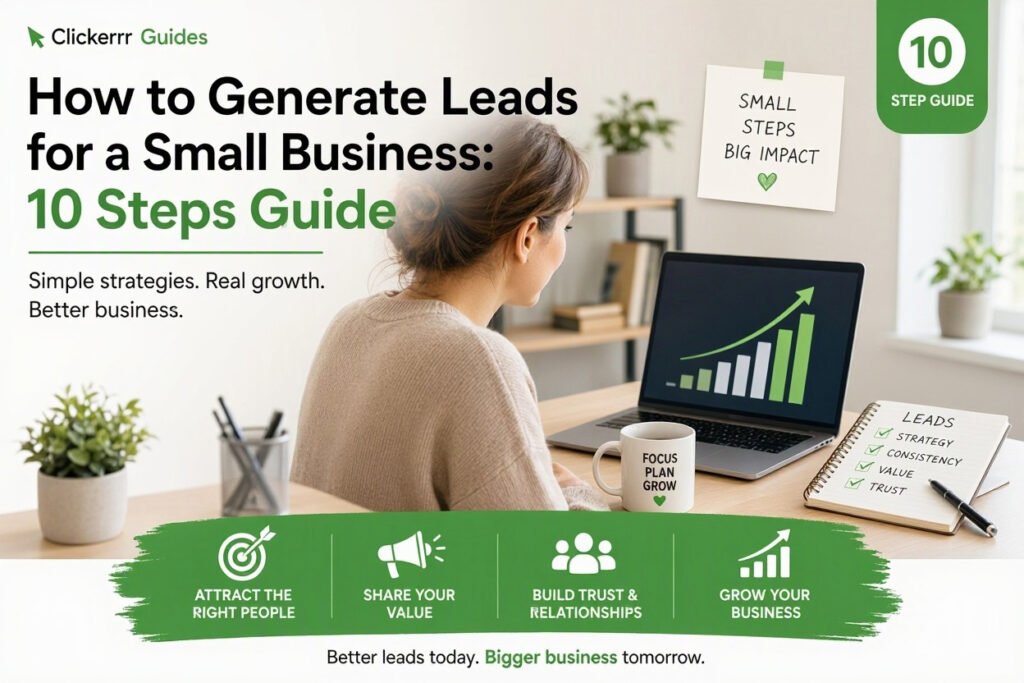
How to Generate Leads for a Small Business? Generating leads is one of the most important activities for any small business that wants to attract new customers and increase revenue. A lead is a person or organization that has shown some interest in your products or services and may become a paying customer. However, finding potential customers does not happen automatically. Small businesses need a systematic approach to identify their target audience, communicate their value, attract enquiries, and convert interest into business opportunities.
Effective small business lead generation does not always require a large advertising budget. A professional website, useful content, local search visibility, social media, referrals, email marketing, networking, and strategic partnerships can all help businesses connect with prospective customers. The key is to select suitable lead generation channels, provide relevant information, and make it easy for interested people to take the next step.
Whether you operate a retail shop, consultancy, restaurant, service business, professional practice, manufacturing unit, or online company, a consistent lead generation strategy can help you build a predictable pipeline of potential customers.
This guide explains how to generate leads for a small business through ten practical steps, including actionable activities to attract prospects, capture enquiries, nurture relationships, and improve lead conversion.
How to Generate Leads for a Small Business: 10 Steps
Follow these ten practical steps to identify potential customers, build an effective lead generation system, and create more opportunities for business growth.
Define Your Ideal Target Customers
🎯

The foundation of successful lead generation is knowing exactly whom you want to attract. If your business tries to reach everyone, your marketing messages may become too general to connect with the people most likely to purchase. Start by identifying the customers who genuinely need your products or services and have the ability and willingness to pay for them. Consider their location, age group, profession, business type, interests, purchasing behaviour, challenges, and preferences. A clear ideal customer profile helps you select the right marketing channels, create relevant content, and spend your lead generation budget more effectively.
- Study your existing customers: Examine your current customer base to identify common characteristics, purchasing patterns, locations, and requirements.
- Identify customer problems: List the specific needs, difficulties, frustrations, and challenges that your products or services can solve.
- Create customer segments: Group potential customers according to factors such as demographics, profession, industry, location, budget, and buying behaviour.
- Develop an ideal customer profile: Describe the type of customer who is most likely to benefit from your offering and become a valuable long-term customer.
- Prioritize the most promising segment: Focus initially on the customer group that has a genuine need, suitable purchasing capacity, and a strong connection with your business offering.
Create a Professional Business Website
🌐
A professional website can act as a central lead generation platform for your small business. It allows potential customers to understand what you offer, evaluate your credibility, explore your products or services, and submit enquiries. Unlike social media profiles, a website gives you greater control over your business information, content, landing pages, and enquiry forms. Your website should clearly explain who you serve, what problems you solve, and how customers can contact you. A well-organized, mobile-friendly website with useful information and visible enquiry options can turn online visitors into potential business leads.
- Register a suitable domain: Choose a memorable domain name that reflects your business identity and is easy for customers to recognize.
- Explain your products and services: Create clear pages describing your offerings, important benefits, pricing information where appropriate, and the problems you solve.
- Add enquiry forms: Provide simple forms that allow visitors to submit their name, contact details, requirements, and relevant questions.
- Make your website mobile-friendly: Ensure that pages, images, navigation, and forms work properly on smartphones, tablets, and desktop devices.
- Display trust-building information: Include your business background, experience, genuine testimonials, contact information, and other relevant credibility indicators.
Optimize Your Local SEO and Online Visibility
📍
Search engine optimization helps potential customers discover your business when they search online for relevant products or services. For small businesses serving a particular city, neighbourhood, or geographical area, local SEO can be especially valuable. Customers often search using phrases that include a product, service, or location. Your business should therefore provide accurate information across its website and relevant business listings. Local SEO is a long-term lead generation channel rather than an instant source of enquiries, but consistent optimization can improve online visibility and attract people who are already looking for what you offer.
- Create or optimize your Google Business Profile: Maintain accurate business details, categories, address, opening hours, services, and other relevant information.
- Use location-based keywords: Include relevant service and location phrases naturally in your website titles, headings, descriptions, and page content.
- Maintain consistent business information: Keep your business name, address, phone number, website, and operating details accurate across relevant online directories.
- Publish locally relevant content: Create useful pages and articles that address customer questions, local requirements, and problems related to your business category.
- Monitor search performance: Use Google Search Console and available analytics tools to understand search impressions, clicks, keywords, and website traffic.
Publish Valuable Content That Attracts Prospects
✍️
Content marketing attracts potential customers by providing useful information related to their needs and interests. Instead of relying only on advertisements, your business can publish educational articles, practical guides, videos, case studies, checklists, and frequently asked questions. Helpful content demonstrates your understanding of customer problems and gives people a reason to discover and trust your business. It can also improve search engine visibility and support your social media and email marketing activities. Focus on answering real customer questions rather than publishing promotional material repeatedly. Relevant content can attract prospects at different stages of their purchasing journey.
- Identify common customer questions: Ask your sales team and existing customers which questions, concerns, and problems arise most frequently.
- Publish educational articles: Write practical blog posts, how-to guides, comparison articles, and explanations that help potential customers make informed decisions.
- Create short informative videos: Explain useful topics, demonstrate products, answer common questions, or share relevant industry knowledge.
- Develop downloadable resources: Prepare useful checklists, templates, worksheets, or guides that interested visitors can access by submitting their contact details when appropriate.
- Include relevant next steps: Guide interested readers towards a suitable enquiry form, product page, consultation request, or other meaningful business interaction.
Use Social Media to Reach Potential Customers
📱
Social media platforms can help small businesses reach relevant audiences, communicate their offerings, and generate customer enquiries. Platforms such as Facebook, Instagram, LinkedIn, and YouTube serve different audiences and business purposes. Your choice should depend on where your potential customers spend time and how they prefer to discover products or services. Consistent posting, informative content, customer interaction, product demonstrations, and relevant community participation can increase visibility. However, simply collecting followers does not guarantee business leads. Your social media activity should encourage meaningful conversations and direct interested people towards appropriate enquiry channels.
- Select suitable platforms: Identify the social networks most commonly used by your target customers instead of trying to maintain every platform.
- Optimize your business profiles: Add a clear business description, relevant contact information, website link, services, and recognizable branding.
- Share useful and engaging content: Publish educational posts, product demonstrations, customer questions, industry updates, and relevant business information.
- Interact with your audience: Respond to comments and genuine enquiries, participate in relevant discussions, and maintain professional communication.
- Direct interested users to enquiry channels: Use appropriate profile links, messaging options, landing pages, and enquiry forms to capture genuine business interest.
Build a Referral and Word-of-Mouth System
🤝
Referrals and word-of-mouth recommendations can become valuable sources of qualified leads for small businesses. People often consider recommendations from friends, colleagues, family members, and trusted professionals when evaluating a product or service. A satisfied customer may introduce your business to others who have similar needs. However, referrals should not be left entirely to chance. Develop a consistent approach to maintaining customer relationships, requesting genuine feedback, and making it easy for satisfied customers to share your business information. A transparent referral programme may also encourage recommendations, provided its terms are clear and appropriate for your industry.
- Deliver consistently good service: Provide a reliable customer experience that gives people a genuine reason to recommend your business.
- Identify satisfied customers: Recognize customers who have expressed satisfaction, made repeat purchases, or provided positive feedback.
- Request recommendations professionally: Explain that referrals are welcome and make it easy for customers to share your website or business details.
- Develop a structured referral programme: If suitable for your business, establish transparent referral terms, eligibility conditions, and appropriate benefits.
- Maintain relationships with referrers: Acknowledge genuine introductions, communicate professionally, and maintain trust with customers who recommend your business.
Offer Lead Magnets and Useful Free Resources
🎁
A lead magnet is a useful resource or benefit offered to potential customers in exchange for their contact information or permission to continue communication. It helps turn anonymous website visitors into identifiable prospects. Examples include downloadable guides, checklists, templates, educational webinars, product demonstrations, free assessments, and introductory consultations. The resource should be closely connected to the products or services your business provides. A generic giveaway may attract people who have no genuine purchasing interest. Instead, offer something that solves a relevant problem for your target audience and creates a natural connection with your paid offering.
- Identify a useful customer resource: Select a common problem that your target audience would appreciate help solving.
- Choose the right format: Prepare a checklist, downloadable PDF, template, guide, webinar, demonstration, or another suitable resource.
- Make the resource genuinely valuable: Provide practical information that customers can use rather than creating a resource that consists mainly of advertisements.
- Create a simple landing page: Explain the resource’s benefits and provide a straightforward form for interested visitors to request it.
- Follow up appropriately: Deliver the promised resource and communicate relevant next steps only in accordance with the person’s consent and applicable privacy requirements.
Use Email Marketing and Lead Nurturing
📧
Not every potential customer is ready to purchase immediately. Some may need additional information, time to compare alternatives, or answers to specific questions before making a decision. Lead nurturing involves maintaining relevant communication with these prospects until they are ready to take the next step. Email marketing can support this process by delivering educational information, product updates, useful resources, and relevant business announcements. A well-managed email list helps your business maintain relationships with interested people without depending entirely on social media algorithms or repeated advertising. Always obtain appropriate permission, provide clear identification, and make unsubscribing straightforward.
- Build a permission-based email list: Collect email addresses through legitimate enquiry forms, registrations, subscriptions, or other consent-based methods.
- Segment your prospects: Organize contacts according to their interests, requirements, enquiry types, purchasing stage, or service preferences.
- Send useful information: Share educational content, relevant guides, product explanations, case studies, and updates that address prospect needs.
- Plan consistent communication: Establish a reasonable email schedule and avoid sending excessive or irrelevant promotional messages.
- Measure engagement: Review delivery, open rates where available, clicks, responses, enquiries, and conversions to improve future communication.
Use Paid Advertising and Strategic Partnerships
📢
Paid advertising can help a small business reach potential customers more quickly, while strategic partnerships can introduce the business to audiences it may not otherwise reach. Search advertising can target people actively looking for specific products or services, whereas social media advertising can reach selected audience segments based on relevant characteristics and interests. Partnerships with complementary businesses, professional networks, suppliers, and industry organizations can also create opportunities for qualified introductions. However, both advertising and partnerships require careful planning. Focus on audience relevance, clear messaging, measurable results, and a realistic budget rather than spending money simply to increase impressions or clicks.
- Choose suitable advertising channels: Evaluate search ads, social media advertising, and other relevant platforms according to your target customers and business objectives.
- Set a controlled advertising budget: Start with a manageable amount and define the maximum cost you can reasonably accept for a qualified lead.
- Create focused advertising messages: Communicate a specific customer problem, the benefit of your offering, and a relevant next step.
- Identify complementary businesses: Find organizations that serve similar customer groups without directly competing with your products or services.
- Develop mutually beneficial partnerships: Explore suitable referral arrangements, joint educational activities, collaborations, and other transparent ways to reach relevant prospects.
Track, Follow Up, and Convert Leads into Customers
📈
Generating enquiries is only one part of successful lead generation. Your business also needs a reliable process to record, evaluate, follow up, and convert potential customers. Without proper tracking, valuable enquiries may be forgotten, delayed, or handled inconsistently. A simple spreadsheet or customer relationship management system can help you record contact details, enquiry sources, customer requirements, follow-up dates, and sales outcomes. Regularly measure which marketing channels generate qualified leads and which produce actual customers. This information helps you improve your marketing decisions, reduce wasted expenditure, and build a more predictable sales pipeline.
- Record every genuine enquiry: Maintain a central record of prospect names, contact details, enquiry dates, requirements, and lead sources.
- Qualify your leads: Evaluate prospects according to their actual needs, purchasing capacity, interest level, and suitability for your products or services.
- Establish a follow-up process: Respond within a reasonable timeframe, record follow-up dates, and maintain professional communication without unnecessary pressure.
- Track conversion performance: Measure enquiries, qualified leads, proposals, sales, conversion rates, and the cost of acquiring customers.
- Improve your best-performing channels: Identify which lead sources generate valuable customers and allocate more attention and resources to the channels that produce sustainable results.
Practical Tips for Generating More Small Business Leads
- Focus on lead quality: A smaller number of relevant prospects can be more valuable than a large volume of enquiries from people who are unlikely to purchase.
- Understand your customers: Base your marketing messages on real customer needs, problems, preferences, and purchasing behaviour.
- Use multiple lead sources: Combine suitable online and offline methods instead of depending entirely on one marketing channel.
- Make enquiries simple: Avoid complicated forms and unnecessary steps that may discourage interested visitors.
- Respond promptly: Establish a consistent process for handling enquiries and answering customer questions.
- Build trust before selling: Provide useful information, transparent communication, and evidence of your business capabilities.
- Use a realistic budget: Test marketing activities on a manageable scale before increasing expenditure.
- Respect customer privacy: Collect and use contact information responsibly and follow applicable consent and communication requirements.
- Measure actual results: Track qualified leads, customer conversions, and acquisition costs rather than relying only on likes, views, and website visits.
- Improve continuously: Review your lead generation performance regularly and refine the channels and activities that produce meaningful business results.
Conclusion
Generating leads for a small business requires a combination of customer understanding, effective marketing, consistent communication, and systematic follow-up. Businesses that depend only on occasional promotions or word-of-mouth recommendations may find it difficult to maintain a steady flow of new opportunities. A structured lead generation strategy helps identify prospective customers, attract their attention, capture genuine enquiries, and develop relationships that can eventually lead to sales.
The ten steps in this guide provide a practical framework for building that system. Start by defining your ideal customers and establishing a professional online presence. Improve local search visibility, publish useful content, use social media, encourage referrals, and offer valuable resources. Then strengthen your lead nurturing process, explore paid advertising and partnerships, and track every important enquiry.
Remember that successful lead generation does not necessarily require expensive marketing campaigns or complicated software. Small businesses can begin with a well-maintained website, useful content, a simple enquiry form, professional customer communication, and a basic lead tracking spreadsheet. The most important factor is consistency.
Start by selecting two lead generation methods that match your target customers and implement them consistently. Monitor the enquiries they produce, improve your approach, and gradually build a reliable system that supports customer acquisition and long-term business growth.
10 FAQs – How to Generate Leads for a Small Business
-
What is lead generation for a small business?
Lead generation is the process of attracting potential customers who show interest in your products or services. It involves activities such as content marketing, SEO, social media, referrals, email marketing, and paid advertising.
-
How can a small business generate leads without spending money?
A small business can generate leads through free methods such as local SEO, social media posts, customer referrals, valuable blog content, online business directories, and networking.
-
What is the most effective way to generate leads for a small business?
The most effective approach depends on the target audience and industry. However, combining a professional website, local SEO, valuable content, social media marketing, and referrals can create a consistent lead-generation system.
-
How can a website help generate business leads?
A business website attracts visitors through search engines and provides information about products or services. Clear service descriptions, contact forms, enquiry buttons, useful content, and customer testimonials can encourage visitors to become leads.
-
How does local SEO help small businesses get more leads?
Local SEO helps a business appear in location-based search results when nearby customers look for relevant products or services. Optimizing the Google Business Profile, maintaining accurate business information, and publishing locally relevant content can improve local visibility.
-
How can social media generate leads for a small business?
Social media platforms help businesses reach potential customers through informative posts, short videos, customer stories, educational content, and relevant discussions. Consistent engagement can build trust and encourage inquiries.
-
What is a lead magnet, and how does it work?
A lead magnet is a useful free resource offered in exchange for a potential customer's contact information. Examples include e-books, checklists, templates, guides, free consultations, and educational resources.
-
Is email marketing effective for small business lead generation?
Yes. Email marketing helps businesses maintain relationships with interested prospects by sharing useful information, product updates, educational content, and relevant offers. It can gradually turn potential customers into paying customers.
-
How much should a small business spend on lead generation?
There is no fixed budget for lead generation. Businesses should begin with affordable methods such as SEO, referrals, content marketing, and social media. Once they understand which channels generate quality leads, they can allocate a suitable budget to paid advertising.
-
How can a small business convert leads into paying customers?
A business can improve lead conversion by responding promptly to enquiries, understanding customer requirements, explaining the value of its products or services, addressing objections, following up consistently, and making the purchasing process simple.
More Guides from Clickerrr Guides

How to Manage Small Business Cash Flow: 10 Steps Guide
Cash flow is one of the most important aspects of running a successful small business. It represents the money moving into and out of your business during a particular period.
Read the Full Guide →
How to Start a Profitable E-Commerce Business: 10 Steps Guide
Starting an e-commerce business can be an attractive opportunity for entrepreneurs who want to sell products online and build a scalable business. With an online store, you can reach customers beyond your local area, showcase products around the clock, and manage sales through digital platforms.
Read the Full Guide →
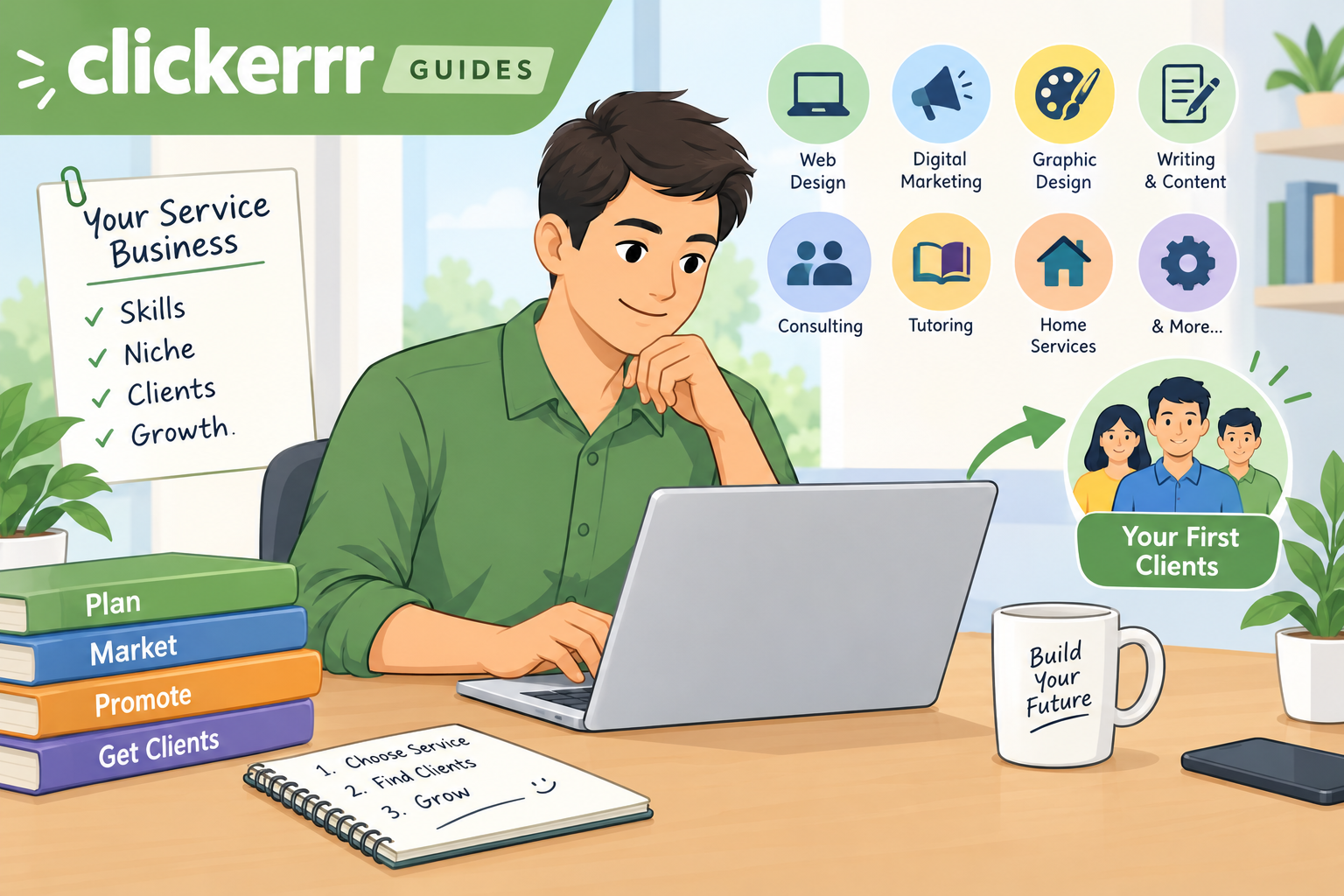
How to Start a Service-Based Business
Follow practical steps to select a service, find your first clients, and build a sustainable business.
Read the Full Guide →

How to Write a Business Plan
Understand how to prepare a business plan, define your goals, and create a practical roadmap for your business.
Read the Full Guide →

How to Find a Profitable Business Niche
Getting your first 100 customers is one of the most important milestones when starting a new business. Whether you run an online business, a local shop, a service-based company, a freelance venture, or a startup, your first customers help you turn an idea into a real business.
Read the Full Guide →

How to Use AI to Grow a Small Business
Artificial intelligence (AI) is changing the way small businesses operate, market their products, serve customers, and compete in the digital marketplace.
Read the Full Guide →

How to Start an Online Business with No Experience
Starting an online business can be an exciting way to turn your skills, knowledge, interests, or business ideas into an income-generating opportunity. Unlike many traditional businesses, an online business can often be started from home with a computer, an internet connection, and a small initial investment.
Read the Full Guide →

How to Start a Small Business
Starting a small business can be an excellent way to turn your skills, knowledge, and ideas into a source of income. Whether you want to open a local shop, provide professional services, sell products online, or start a home-based business, the right approach can help you build a strong foundation. However, starting a business requires more than having a good idea.
Read the Full Guide →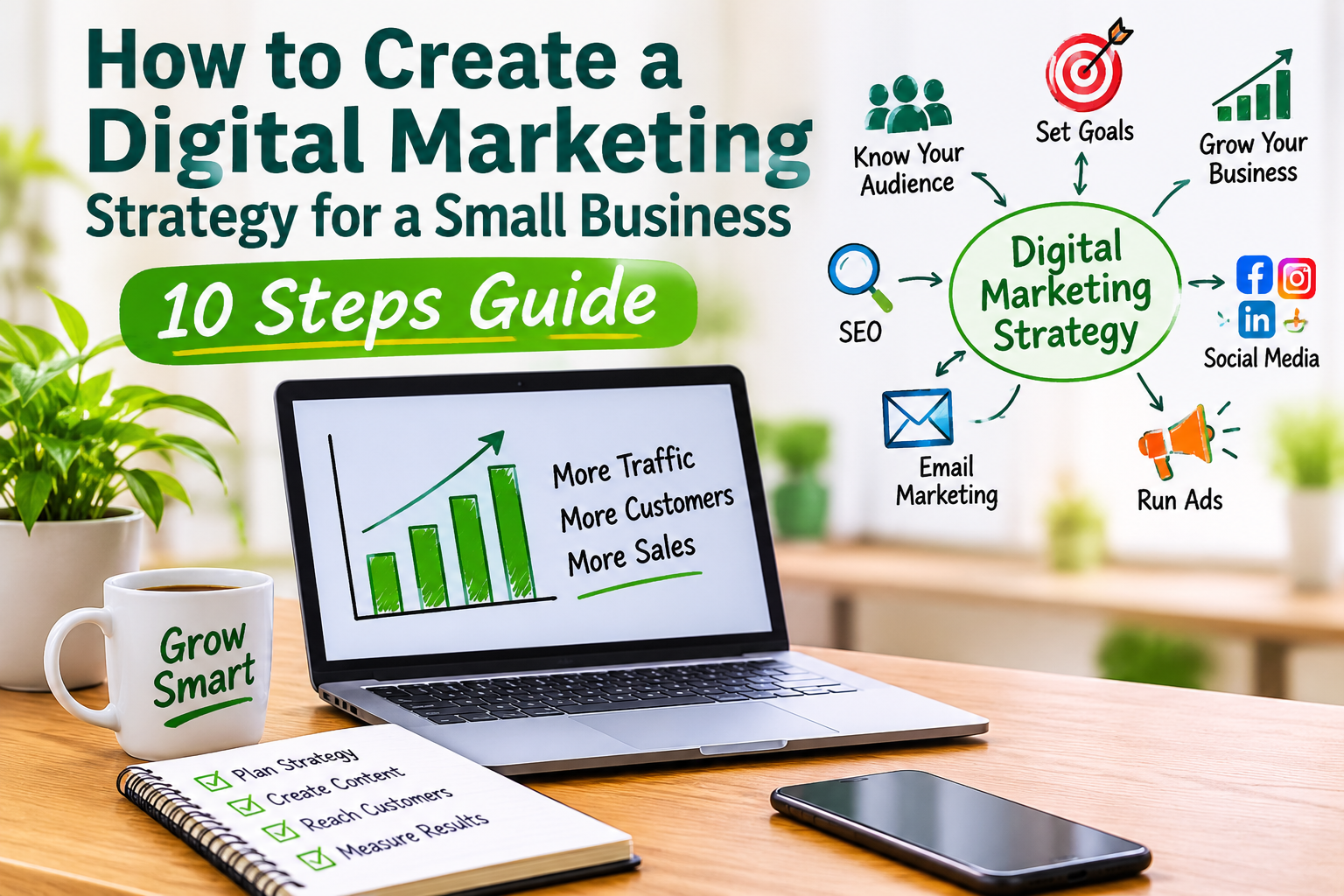
How to Create a Digital Marketing Strategy for a Small Business: 10 Steps Guide
A digital marketing strategy helps a small business attract potential customers, build brand awareness, generate enquiries, and increase sales through online channels.
Read the Full Guide →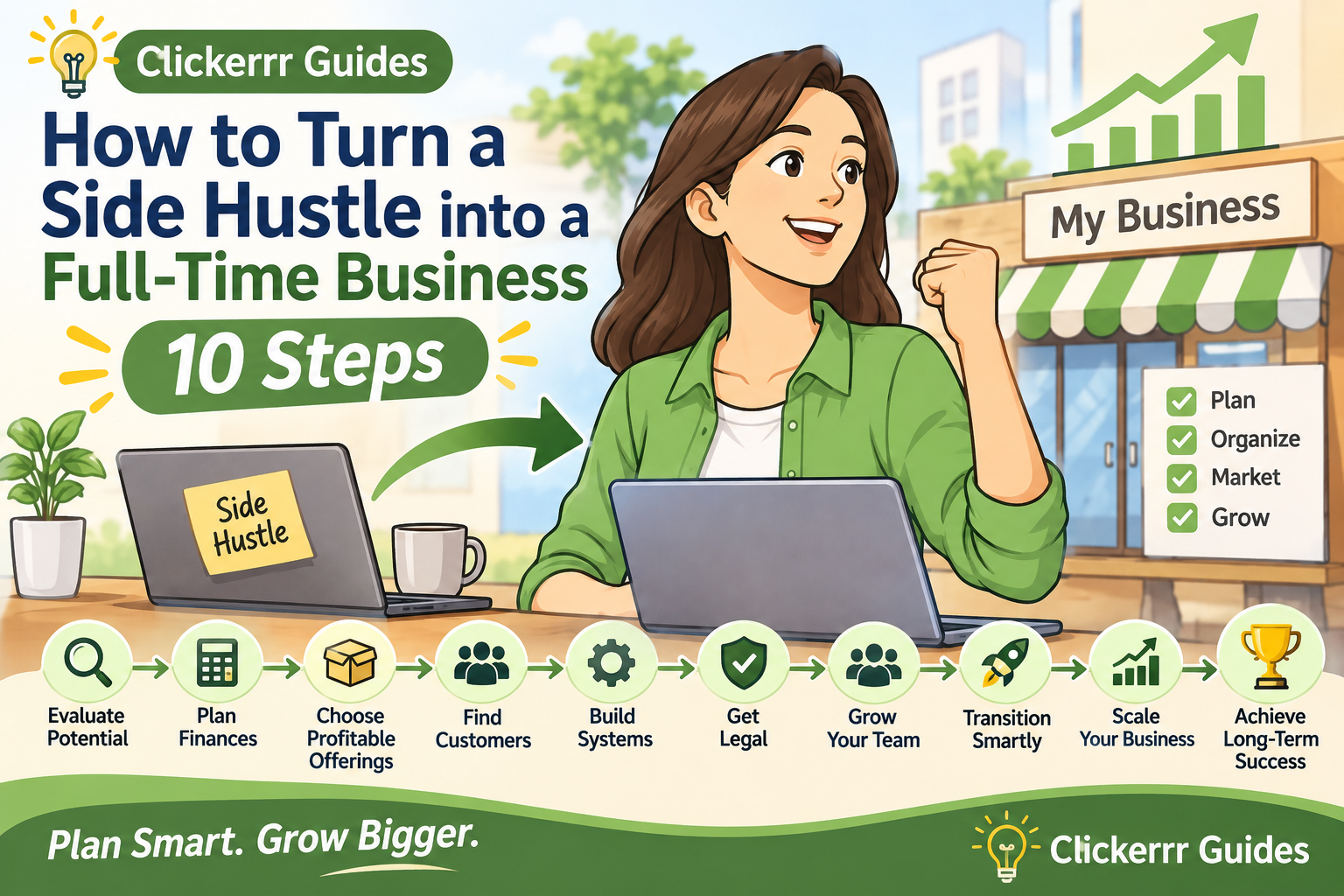
How to Turn a Side Hustle into a Full-Time Business: 10 Steps Guide
Turning a side hustle into a full-time business is an exciting opportunity to gain financial independence, build something of your own, and create a sustainable career. However, moving from a part-time activity to a full-time business requires more than simply increasing your working hours.
Read the Full Guide →
How to Grow a Small Business Faster: 10 Steps Guide
How to Grow a Small Business Faster: 10 Steps Guide? Growing a small business faster requires more than increasing sales or attracting new customers.
Read the Full Guide →
How to Start a Home-Based Business: 10 Steps Guide
Starting a home-based business is an attractive option for people who want to become entrepreneurs without investing heavily in commercial premises or maintaining a traditional office.
Read the Full Guide →