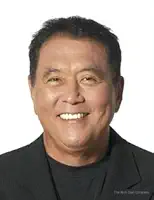
Robert T. Kiyosaki is an American businessman, author, investor, and financial educator best known for his 1997 personal-finance book Rich Dad Poor Dad: What the Rich Teach Their Kids About Money That the Poor and Middle Class Do Not.
Kiyosaki’s books and educational products focus on financial literacy, entrepreneurship, investing, real estate, cash flow, business ownership, and financial independence. His work has been particularly influential in popularizing the distinction between assets and liabilities, the concept of “the Rat Race,” and the idea that financial education should address subjects that traditional schooling may not emphasize.
Kiyosaki’s career has extended beyond books. Together with Kim Kiyosaki, he co-founded The Rich Dad Company, which has developed books, seminars, games, courses, podcasts, and other financial-education products. The company’s best-known educational game is CASHFLOW. (Rich Dad)
His ideas have attracted a large international readership but have also generated criticism and debate, particularly concerning some of his investment advice, his treatment of debt and real estate, and the distinction between his personal-finance philosophy and conventional financial planning.
Infobox
| Robert T. Kiyosaki | Details |
|---|---|
| Full name | Robert Toru Kiyosaki |
| Born | April 8, 1947 |
| Birthplace | Hilo, Hawaii, United States |
| Nationality | American |
| Occupation | Author, entrepreneur, investor, financial educator |
| Education | United States Merchant Marine Academy |
| Degree | Bachelor of Science |
| Military service | United States Marine Corps |
| Military role | Helicopter pilot |
| Best known for | Rich Dad Poor Dad |
| Major company | The Rich Dad Company |
| Co-founder | Kim Kiyosaki |
| Major educational product | CASHFLOW |
| Primary subjects | Financial literacy, investing, entrepreneurship, real estate |
| Major book | Rich Dad Poor Dad |
| First publication of major book | 1997 |
| Notable concept | Assets versus liabilities |
| Other recurring concept | Rat Race |
| Official website | RichDad.com |
Kiyosaki’s official biography identifies his education at the U.S. Merchant Marine Academy, his Marine Corps service, his work at Xerox, his entrepreneurial ventures, and his later creation of the Rich Dad educational enterprise. (Rich Dad)
Early life
Robert Toru Kiyosaki was born in Hilo, Hawaii, into a Japanese-American family.
His father, Ralph H. Kiyosaki, was an educator who held a doctorate in education. Kiyosaki later described his father as his “Poor Dad”, while his best friend’s father became the model for the fictionalized or composite “Rich Dad” in his best-known book. (Rich Dad)
The contrast between these two parental figures became the central narrative device of Rich Dad Poor Dad.
Kiyosaki portrays his biological father as highly educated and committed to conventional education and employment, while his friend’s father is presented as an entrepreneur who approached money, business, and investing differently.
The two figures represent competing philosophies rather than simply two different levels of income.
Education
Kiyosaki attended the United States Merchant Marine Academy at Kings Point, New York, where he earned a Bachelor of Science degree and received a commission as a second lieutenant in the United States Marine Corps. (Rich Dad)
His education and subsequent military career provided experiences that later became part of his account of entrepreneurship and leadership.
After graduation, he chose to serve in the Marine Corps rather than immediately entering a conventional corporate career.
Military service
Kiyosaki served in the United States Marine Corps during the Vietnam War era as a helicopter pilot.
His official biography states that he trained as a helicopter pilot and was deployed to Vietnam. His military service ended in 1973. (Rich Dad)
Kiyosaki has subsequently described military service as an important influence on his attitude toward discipline, risk, leadership, and taking responsibility.
Early business career
After leaving the Marine Corps, Kiyosaki entered the corporate world.
He worked for Xerox Corporation, where he developed sales skills.
According to his official biography, he eventually became Xerox’s top salesperson in Hawaii. (Rich Dad)
The experience was significant because selling became an important part of Kiyosaki’s later philosophy.
He has frequently argued that entrepreneurship requires skills that are not necessarily taught through traditional academic education, including:
- Sales
- Communication
- Negotiation
- Leadership
- Marketing
- Financial literacy
- Risk assessment
Entrepreneurial ventures
Kiyosaki subsequently left Xerox and began experimenting with entrepreneurship.
One of his early businesses, Rippers, was founded with his brother and marketed nylon and Velcro wallets designed for surfers. The business achieved early commercial success but eventually failed. Kiyosaki’s official biography describes this period as one involving significant financial difficulties and experiences that brought him close to bankruptcy. (Rich Dad)
This experience became an important part of his later philosophy.
Rather than portraying business failure as proof that entrepreneurship does not work, Kiyosaki interpreted it as a source of education.
Influence of Buckminster Fuller
Another important influence on Kiyosaki was architect, inventor, futurist, and humanitarian R. Buckminster Fuller.
Kiyosaki studied Fuller’s ideas and later described him as a major influence on his thinking.
Fuller’s 1983 book Grunch of Giants particularly affected Kiyosaki’s views about economics, institutions, technology, and the structure of modern society. (Rich Dad)
The influence of Fuller can be seen in Kiyosaki’s tendency to question conventional assumptions rather than simply accepting established financial practices.
The origins of Rich Dad Poor Dad
Kiyosaki’s best-known book emerged from the financial-education material he had been developing for his businesses.
According to The Rich Dad Company’s account, he and Kim Kiyosaki were developing educational products and the CASHFLOW board game when Kiyosaki began writing a large educational document.
What initially became a document of more than 700 pages eventually evolved into Rich Dad Poor Dad. (Rich Dad)
The book was self-published in April 1997, according to the company’s official history. It subsequently attracted major media attention and became an international bestseller. (Rich Dad)
Rich Dad Poor Dad
Main article: Rich Dad Poor Dad
Rich Dad Poor Dad is Kiyosaki’s best-known work.
Its subtitle is:
“What the Rich Teach Their Kids About Money That the Poor and Middle Class Do Not.”
The book is structured around the contrasting philosophies of Kiyosaki’s two father figures.
Its principal themes include:
- Financial education
- Assets and liabilities
- Cash flow
- Entrepreneurship
- Investing
- Real estate
- Taxes
- Passive income
- Financial independence
- The limitations of relying exclusively on employment income
The Rich Dad Company describes the book as challenging conventional assumptions about money and emphasizing financial education. (Rich Dad)
The “Rich Dad” and “Poor Dad” framework
The book’s central storytelling mechanism is the contrast between two approaches to money.
                MONEY
                  │
        ┌─────────┴─────────┐
        │                   │
    "Poor Dad"          "Rich Dad"
        │                   │
 Traditional path      Entrepreneurial path
        │                   │
 Education             Financial education
        │                   │
 Employment            Business ownership
        │                   │
 Salary                Assets
        │                   │
 Job security          Cash flow
The two “dads” are therefore less useful as literal economic categories than as representations of two different financial philosophies.
Assets and liabilities
Perhaps Kiyosaki’s most widely repeated financial concept is his distinction between assets and liabilities.
His simplified definition emphasizes cash flow rather than accounting classification.
Kiyosaki’s conceptual model
ASSET
      ↓
Puts money into your pocket
      ↓
Positive cash flow

LIABILITY
      ↓
Takes money out of your pocket
      ↓
Negative cash flow
This is an intentionally simplified educational framework.
In formal accounting, assets and liabilities have more precise definitions. An asset does not cease to be an asset simply because it produces expenses, and a liability is not defined solely by whether money leaves an individual’s pocket.
This distinction is important when presenting Kiyosaki’s ideas in an encyclopedia: his definitions are part of his educational framework rather than replacements for standard accounting terminology.
The Rat Race
Another major concept associated with Kiyosaki is the “Rat Race.”
In his framework, the Rat Race describes a cycle in which people:
Get a job
   ↓
Earn income
   ↓
Increase spending
   ↓
Take on financial obligations
   ↓
Need income to maintain lifestyle
   ↓
Continue working
   ↺
Kiyosaki contrasts this with what he calls the “Fast Track”, in which individuals attempt to develop assets, businesses, and investment income.
The Rich Dad Company identifies escaping the Rat Race as one of the central objectives behind its CASHFLOW educational system. (Rich Dad)
CASHFLOW
CASHFLOW is a financial-education board game created by Robert and Kim Kiyosaki.
The game is designed to teach players concepts involving:
- Income
- Expenses
- Assets
- Liabilities
- Cash flow
- Investing
- Business
- Financial statements
The educational objective is to allow players to experience financial decisions in a simulated environment.
CASHFLOW learning cycle
PLAY
 ↓
MAKE FINANCIAL DECISION
 ↓
SEE CONSEQUENCE
 ↓
REVIEW RESULT
 ↓
UNDERSTAND CASH FLOW
 ↓
TRY AGAIN
The Rich Dad Company describes CASHFLOW as having originated from the couple’s effort to create a hands-on way of teaching financial concepts. (Rich Dad)
The Rich Dad Company
Kiyosaki and Kim Kiyosaki founded The Rich Dad Company in the 1990s.
The company’s stated mission is:
“To elevate the Financial Well-Being of Humanity.” (Rich Dad)
Its products have included:
- Books
- CASHFLOW games
- Financial education programs
- Digital courses
- Coaching
- Live events
- Newsletters
- Podcasts
- Other educational materials
The company has developed into the principal platform through which Kiyosaki distributes his financial-education philosophy.
Kim Kiyosaki
Kim Kiyosaki is Robert Kiyosaki’s business partner and co-founder of The Rich Dad Company.
She is also an author, entrepreneur, speaker, and real-estate investor.
The Rich Dad Company credits Kim with co-founding the company in 1996 and creating the CASHFLOW games with Robert. (Rich Dad)
She later became associated with the Rich Woman series of books and educational products, with an emphasis on women’s financial independence.
Kiyosaki’s financial philosophy
Kiyosaki’s financial philosophy can be broadly represented by the following model:
              FINANCIAL EDUCATION
                      │
          ┌───────────┼───────────┐
          ↓           ↓           ↓
       Assets      Business    Investing
          │           │           │
          └───────────┼───────────┘
                      ↓
                 Cash Flow
                      ↓
             Financial Freedom
The philosophy places particular importance on developing income-producing assets rather than relying entirely on wages.
Four broad income categories
Kiyosaki popularized another framework through his Cashflow Quadrant concept.
The four categories are:
| Quadrant | Meaning |
|---|---|
| E — Employee | Earns primarily through employment |
| S — Self-employed | Owns a job or operates independently |
| B — Business owner | Builds a system that can operate beyond the owner’s direct labor |
| I — Investor | Generates returns from invested capital |
Cashflow Quadrant
                    ACTIVE / WORK
                         │
             ┌───────────┴───────────┐
             │                       │
             │                       │
        E — Employee          S — Self-employed
             │                       │
             │                       │
─────────────┼───────────────────────┼────────────
             │                       │
             │                       │
        B — Business             I — Investor
           Owner
             │                       │
             └───────────┬───────────┘
                         │
                   CAPITAL / SYSTEMS
The model is intended to encourage readers to think about where their income originates rather than focusing solely on the amount earned.
Entrepreneurship
Entrepreneurship occupies a central position in Kiyosaki’s philosophy.
He argues that entrepreneurs should develop skills in areas such as:
- Leadership
- Sales
- Marketing
- Accounting
- Investing
- Communication
- Negotiation
- Management
His own early business failures are frequently incorporated into his narrative as examples of learning through experience.
Real estate
Real estate investing has been an important component of Kiyosaki’s financial philosophy.
He has frequently advocated real estate as a means of generating:
- Rental income
- Capital appreciation
- Leverage
- Tax advantages
However, real-estate investing involves substantial risks, including:
- Debt obligations
- Interest-rate changes
- Vacancy
- Maintenance costs
- Property-market declines
- Liquidity constraints
- Local regulatory changes
Consequently, Kiyosaki’s real-estate philosophy should be understood as an entrepreneurial investment approach rather than a universally applicable personal-finance prescription.
Debt
Kiyosaki has taken an unconventional position on debt.
Rather than treating all debt as inherently negative, he distinguishes between debt used to purchase or control potentially income-producing assets and debt used to finance consumption.
His framework can be simplified as:
                DEBT
                  │
          ┌───────┴───────┐
          │               │
     Productive       Consumer
        debt            debt
          │               │
    Potential asset    Consumption
    / cash flow        / lifestyle
The distinction is central to his investment philosophy.
It is also one of the areas where readers need to distinguish Kiyosaki’s educational framework from conventional financial advice, because leverage can magnify losses as well as gains.
Financial education
Kiyosaki argues that conventional education often places greater emphasis on academic qualifications and employment than on financial literacy.
His preferred financial curriculum includes:
- Understanding financial statements
- Understanding cash flow
- Learning how businesses operate
- Understanding investing
- Understanding taxes
- Learning sales and communication
- Understanding risk
- Developing entrepreneurial skills
This emphasis on financial literacy has become one of the strongest themes associated with his public career.
Major books
Kiyosaki has written or co-written numerous books.
Among his best-known works are:
| Year | Book |
|---|---|
| 1997 | Rich Dad Poor Dad |
| 1998 | Cashflow Quadrant |
| 2000 | Rich Dad’s Guide to Investing |
| 2001 | Rich Dad’s Guide to Financial Freedom |
| 2003 | Rich Dad’s Prophecy |
| 2005 | Why We Want You to Be Rich |
| 2006 | Rich Dad’s Before You Quit Your Job |
| 2011 | Midas Touch |
| 2012 | Unfair Advantage |
| 2017 | Why the Rich Are Getting Richer |
| 2020 | Capitalist Manifesto |
| 2023 | The Real Book of Real Estate |
His bibliography is substantially larger when collaborative books, revised editions, and educational publications are included.
Why the Rich Are Getting Richer
In Why the Rich Are Getting Richer, Kiyosaki revisits many themes from Rich Dad Poor Dad.
The book argues that differences in financial education, taxation, investment opportunities, and use of debt contribute to differences in wealth.
The Rich Dad Company presents the book as an argument for greater financial education and a critique of conventional approaches to employment, saving, and home ownership. (Rich Dad)
Popularity and influence
Kiyosaki became one of the most recognizable names in personal finance through Rich Dad Poor Dad.
The Rich Dad Company describes the book as having sold internationally and as having become a major personal-finance title. (Rich Dad)
Its influence can be seen in the widespread adoption of several expressions associated with Kiyosaki, including:
- Rat Race
- Cashflow Quadrant
- Rich Dad / Poor Dad
- Assets versus liabilities
- Financial education
- Passive income
- Financial freedom
The book has also encouraged many readers to think about personal finance in terms of cash flow and ownership rather than salary alone.
Media and public speaking
Kiyosaki has built a substantial public-speaking and media presence around financial education.
His activities have included:
- Seminars
- Television appearances
- Radio programs
- Podcasts
- Interviews
- Conferences
- Educational courses
He also hosts the Rich Dad Radio Show, which discusses business, investing, economics, and financial education.
Controversies and criticism
Kiyosaki’s prominence has generated criticism as well as admiration.
Financial advice
Some financial professionals argue that his recommendations can oversimplify complex financial issues.
For example, the idea that a house should be classified as a liability because it generates expenses can be useful as a behavioral teaching device, but it does not correspond to the standard accounting definition of an asset.
Similarly, using leverage to acquire real estate can increase returns when investments perform well but can also increase losses and financial stress when conditions deteriorate.
Bankruptcy and business history
Kiyosaki has publicly discussed periods of financial difficulty and bankruptcy in connection with his businesses. His willingness to discuss business failures is part of his public narrative, but it also means readers should distinguish between his account of his experiences and independently verifiable financial records.
Investment philosophy
Kiyosaki has made strong claims about markets, currencies, gold, real estate, debt, taxes, and monetary policy. These views sometimes differ substantially from conventional financial-planning advice.
For an encyclopedia, his statements are best treated as documented elements of his philosophy, not as established financial facts.
Kiyosaki’s philosophy compared with conventional personal finance
| Subject | Kiyosaki’s emphasis | Conventional planning often emphasizes |
|---|---|---|
| Employment | One possible income source | Stable earned income |
| Saving | Important but insufficient alone | Emergency savings and long-term saving |
| Investing | Income-producing assets | Diversified investments |
| Debt | Can be productive or destructive | Risk-adjusted borrowing |
| Real estate | Major wealth-building tool | One component of diversification |
| Financial education | Central | Increasingly emphasized |
| Entrepreneurship | Strong route to wealth | One option among several |
| Taxes | Strategic consideration | Compliance plus tax planning |
| Financial freedom | Ownership and cash flow | Savings, investments and controlled spending |
The table describes broad tendencies rather than universal rules.
Kiyosaki’s conceptual model of financial independence
Infographic
                 FINANCIAL EDUCATION
                         │
                         ▼
                Understand Cash Flow
                         │
                         ▼
               Acquire / Build Assets
                         │
             ┌───────────┼───────────┐
             ▼           ▼           ▼
          Business    Real Estate  Investments
             │           │           │
             └───────────┼───────────┘
                         ▼
                  Income / Cash Flow
                         │
                         ▼
                Financial Flexibility
                         │
                         ▼
                 Financial Freedom
This diagram represents Kiyosaki’s conceptual framework, not a guaranteed financial pathway.
Career timeline
1947
│
├── Born in Hilo, Hawaii
│
▼
1960s
│
├── Education
│
▼
Early 1970s
│
├── Merchant Marine Academy
├── Marine Corps
└── Vietnam-era helicopter service
│
▼
1973
│
└── Leaves military service
│
▼
1970s
│
├── Xerox
└── Develops sales experience
│
▼
1980s
│
├── Entrepreneurial ventures
└── Studies ideas of R. Buckminster Fuller
│
▼
1990s
│
├── Financial education work
├── CASHFLOW
└── Rich Dad Company
│
▼
1997
│
└── Rich Dad Poor Dad
│
▼
2000s–2020s
│
├── Books
├── Seminars
├── Games
├── Media
└── Financial education
Authorial style
Kiyosaki’s writing differs considerably from academic financial literature.
His books generally use:
- Dialogue
- Anecdotes
- Contrasting characters
- Repetition
- Simple financial models
- Memorable phrases
- Strong claims
- Conversational language
This makes his work accessible to readers who may have little previous knowledge of finance.
At the same time, the simplicity that makes his books readable can sometimes obscure the complexity of actual financial decisions.
Legacy
Robert Kiyosaki occupies an unusual position in modern personal finance.
He is neither primarily an academic economist nor a conventional financial adviser. His influence has instead come from popular financial education.
His central message is that people should learn how money works rather than simply learning how to earn a salary.
The most durable elements of his philosophy are therefore less about any particular investment and more about the questions he encourages readers to ask:
- Where does my money come from?
- Where does it go?
- What assets do I own?
- What liabilities do I carry?
- How dependent am I on employment income?
- What financial skills do I lack?
- How much control do I have over my time?
- Am I building financial capacity or merely increasing consumption?
Those questions explain much of the enduring appeal of Rich Dad Poor Dad and the broader Rich Dad educational system.
References
- The Rich Dad Company — Robert Kiyosaki biography. (Rich Dad)
- The Rich Dad Company — Our Company and history. (Rich Dad)
- The Rich Dad Company — Rich Dad Poor Dad. (Rich Dad)
- The Rich Dad Company — Why the Rich Are Getting Richer. (Rich Dad)
- The Rich Dad Company — Kim Kiyosaki biography. (Rich Dad)
- Rich Dad — official financial education resources. (Rich Dad)
Read more
- Rich Dad Poor Dad
- Cashflow Quadrant
- Financial literacy
- Financial independence
- Personal finance
- Entrepreneurship
- Real estate investing
- Behavioral finance
- Investing
- Passive income
- Asset allocation
- Robert Kiyosaki
- Kim Kiyosaki
- The Rich Dad Company
- CASHFLOW
- R. Buckminster Fuller