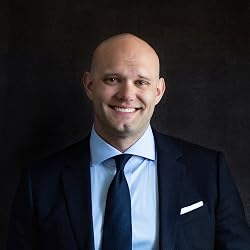

Morgan Housel is an American author, financial writer, investor, and partner at Collaborative Fund. He is best known for writing about money, investing, wealth, risk, uncertainty, psychology, and human behavior.
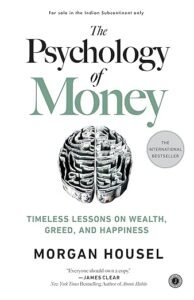
Housel became internationally known through his book The Psychology of Money: Timeless Lessons on Wealth, Greed, and Happiness, first published in 2020. Rather than presenting personal finance primarily as a mathematical discipline, the book examines the emotional, psychological, historical, and behavioral forces that influence people’s financial decisions. The book consists of 19 short stories and essays about how people think about money. (Harriman House)
His second major book, Same as Ever: A Guide to What Never Changes, was published in 2023. It expands his interest from personal finance into a broader examination of human behavior, uncertainty, risk, and the recurring patterns of history. (PenguinRandomhouse.com)
In 2025, Housel published The Art of Spending Money, a book that shifts attention from accumulating wealth to the question of how money can be used to construct a satisfying life. (PenguinRandomhouse.com)
Housel’s writing is distinguished by its use of short stories, historical anecdotes, counterintuitive observations, and simple mental models. Rather than attempting to predict markets with mathematical precision, he frequently focuses on how investors behave when confronted with uncertainty.
Infobox
| Morgan Housel | Details |
|---|---|
| Nationality | American |
| Occupation | Author, financial writer, investor |
| Known for | The Psychology of Money |
| Current role | Partner, Collaborative Fund |
| Education | University of Southern California |
| Degree | B.A. in Economics |
| Former organizations | The Motley Fool, The Wall Street Journal |
| Primary subjects | Money, investing, psychology, behavior, risk, history |
| Major books | The Psychology of Money, Same as Ever, The Art of Spending Money |
| Residence | Seattle, Washington |
| Awards | New York Times Sidney Award; two-time Best in Business Award winner; two-time Gerald Loeb Award finalist |
| Known writing style | Storytelling, behavioral finance, historical examples |
| Professional field | Behavioral finance and investing |
Current biographical information from publishers and Collaborative Fund identifies Housel as a Collaborative Fund partner and former columnist for The Motley Fool and The Wall Street Journal. (Harriman House)
Early life
Morgan Housel grew up in Lake Tahoe, California, where he was involved in competitive ski racing.
An important event in his youth influenced his later perspective on risk and uncertainty. According to an account of his career, when Housel was 17, two of his friends died in a skiing avalanche and he subsequently broke his back in a skiing accident. He eventually moved away from competitive skiing and began considering other paths for his future. (WisdomTree)
His early experience with skiing gave him a personal understanding of the difference between risk that can be measured and risk that can surprise you—a theme that later became prominent in his writing.
Education
Housel attended the University of Southern California (USC), where he studied economics and earned a bachelor’s degree.
Although his formal education was in economics, his later writing has extended well beyond conventional economics.
His work combines ideas from:
- Economics
- Finance
- Psychology
- History
- Sociology
- Decision theory
- Behavioral finance
- Investing
- Philosophy
This interdisciplinary approach became one of the defining characteristics of his career.
Early career
After college, Housel initially considered a career in investment banking.
He later explained that the culture of investment banking did not suit his preference for having time to think, investigate, and write. He subsequently moved toward financial writing. (Safal Niveshak)
His career eventually led him to The Motley Fool, where he worked for approximately nine years.
Collaborative Fund announced his arrival in 2016 and described his previous nine years at The Motley Fool, where he had written extensively about business and capital markets. (Collaborative Fund)
The Motley Fool
Housel spent much of his early professional career at The Motley Fool, where he worked as a financial writer and analyst.
His work covered subjects including:
- Stock markets
- Investing
- Business
- Economic history
- Market psychology
- Corporate behavior
- Personal finance
The period was important in establishing his reputation as a writer who could explain complicated financial subjects in ordinary language.
Instead of treating investing as purely quantitative, Housel increasingly focused on the behavior of investors.
This distinction would eventually become the foundation of The Psychology of Money.
The Wall Street Journal
Housel also became a contributor and columnist for The Wall Street Journal.
His writing during this period continued to explore the intersection between financial markets and human behavior.
His work received recognition from several journalism organizations. His publisher lists him as:
- A two-time winner of the Best in Business Award from the Society of American Business Editors and Writers
- Winner of the New York Times Sidney Award
- A two-time finalist for the Gerald Loeb Award for Distinguished Business and Financial Journalism (Harriman House)
These awards helped establish Housel not merely as a personal-finance writer but as a financial journalist with a broader interest in economic behavior and decision-making.
Collaborative Fund
In 2016, Housel joined Collaborative Fund, a venture capital firm, as a partner.
The firm announced his arrival in August 2016, describing his responsibilities as including writing and speaking about business and investing, while also sharing economic insights with investors and portfolio companies. (Collaborative Fund)
His role at Collaborative Fund created an unusual combination:
Writer + Investor + Historian + Behavioral observer
Rather than abandoning writing after entering venture capital, Housel continued publishing extensively.
Collaborative Fund’s author page contains hundreds of his essays covering investing, economics, history, psychology, business, risk, and everyday life. (Collaborative Fund)
Writing career
Housel’s writing is recognizable because he often starts with a story rather than a formula.
A typical Housel essay may follow a structure such as:
Historical Story
       ↓
Unexpected Event
       ↓
Human Behavior
       ↓
Financial Lesson
       ↓
General Principle
       ↓
Application to Modern Life
This approach allows him to discuss complicated financial ideas without requiring the reader to understand advanced mathematics.
The Psychology of Money
Main article: The Psychology of Money
Housel’s most influential work is The Psychology of Money: Timeless Lessons on Wealth, Greed, and Happiness.
The book was published in September 2020 by Harriman House and contains 19 short stories about the ways people think about money. (Harriman House)
The central proposition is straightforward:
Financial outcomes are influenced not only by what people know, but by how they behave.
Housel argues that financial decisions are shaped by:
- Personal history
- Family background
- Experiences of economic cycles
- Fear
- Greed
- Ego
- Expectations
- Social comparison
- Luck
- Risk tolerance
- Time horizon
The book’s behavioral model
Personal history
       +
Emotions
       +
Experience
       +
Social environment
       +
Expectations
       ↓
Financial behavior
       ↓
Financial outcomes
This framework is one reason the book became accessible to readers who might normally avoid conventional investment literature.
Wealth versus income
One of Housel’s recurring distinctions is between wealth and income.
Income is visible.
Wealth is often invisible.
A person driving an expensive car may have a high income, but the car itself does not demonstrate financial security.
Likewise, someone who appears financially ordinary may possess substantial savings and investments.
The concept can be represented as:
INCOME
Money coming in
      ↓
Can be spent

WEALTH
Money not spent
      ↓
Stored financial capacity
      ↓
Future freedom
This distinction became one of the most memorable themes associated with The Psychology of Money.
Compounding
Housel places considerable emphasis on compounding.
The principle applies not only to investment returns but also to:
- Knowledge
- Relationships
- Reputation
- Business
- Skills
- Writing
- Wealth
A simplified illustration is:
Small advantage
      ↓
Repeated over time
      ↓
Compounding
      ↓
Large long-term difference
The implication is that time can sometimes be more important than attempting to achieve extraordinary short-term returns.
The importance of survival
Another important idea in Housel’s writing is that successful investing requires the ability to stay in the game.
An investment strategy that produces spectacular returns but exposes an investor to a substantial probability of permanent financial ruin may be unsuitable for that investor.
His thinking can be summarized as:
Avoiding financial extinction → staying invested → allowing compounding to work
This is one of the reasons Housel frequently discusses room for error, financial flexibility, and conservative assumptions.
Luck and risk
Housel repeatedly emphasizes that outcomes cannot always be explained entirely by skill.
Two people can make similar decisions and experience dramatically different results because of:
- Timing
- Random events
- Unexpected opportunities
- Economic cycles
- Personal circumstances
He therefore encourages readers to distinguish between what happened and why it happened.
Housel’s simplified analytical framework
OUTCOME
  │
  ├── Skill
  ├── Preparation
  ├── Decisions
  ├── Luck
  ├── Timing
  └── Randomness
The framework is particularly relevant to investing because successful outcomes can sometimes produce false confidence.
Financial independence
Financial independence is another recurring theme.
For Housel, money is valuable not merely because it can purchase goods but because it can provide control over one’s time.
This creates a broader definition of wealth:
Money
  ↓
Options
  ↓
Control over time
  ↓
Independence
  ↓
Freedom
This idea moves personal finance away from a purely consumption-based definition of success.
Same as Ever
Housel’s second major book, Same as Ever: A Guide to What Never Changes, was published by Portfolio on November 7, 2023. The hardcover edition contains 240 pages. (PenguinRandomhouse.com)
The book asks a different question from The Psychology of Money.
Instead of asking:
What will change?
Housel asks:
What is unlikely to change?
The argument is that predicting the future is difficult, but certain aspects of human behavior have remained remarkably consistent.
Examples include:
- Greed
- Fear
- Envy
- Competition
- Stories
- Uncertainty
- Risk
- Incentives
- Desire for status
- Human attention
Conceptual chart
                    THE FUTURE
                        │
              ┌─────────┴─────────┐
              │                   │
          Things that         Things that
             change             persist
              │                   │
          Technology           Human nature
          Markets              Incentives
          Institutions         Emotions
          Products             Social behavior
              │                   │
              └─────────┬─────────┘
                        ↓
                 Better decisions
Penguin Random House describes the book as an examination of what “never, ever changes” and presents it as a framework for dealing with uncertainty by identifying enduring patterns. (PenguinRandomhouse.com)
The Art of Spending Money
Housel’s third major book, The Art of Spending Money, was published on October 7, 2025, by Portfolio. The hardcover and ebook editions are listed at 256 pages. (PenguinRandomhouse.com)
The book represents an important evolution in his work.
His earlier writing frequently focused on:
How to earn → save → invest → preserve money
The Art of Spending Money shifts attention toward:
How should money be used to create a good life?
The publisher describes the book as addressing the relationship between money and happiness and examining how financial resources can be used to live a more satisfying life. (PenguinRandomhouse.com)
This creates a three-book progression:
THE PSYCHOLOGY OF MONEY
        │
        ▼
How people THINK about money

        ↓

SAME AS EVER
        │
        ▼
How people behave in an uncertain world

        ↓

THE ART OF SPENDING MONEY
        │
        ▼
How money can be USED to live well
Taken together, the books form a broader exploration of the relationship between money, behavior, time, uncertainty and life satisfaction.
Housel’s major ideas
1. Money is psychological
People rarely make financial decisions using mathematics alone.
Their decisions are influenced by their experiences and emotions.
2. Time is an investment advantage
Long time horizons allow compounding to become more powerful.
3. Wealth is often invisible
Money that remains unspent may be more useful than money spent to display status.
4. Survival matters
Avoiding catastrophic losses can be more important than maximizing every possible gain.
5. Luck matters
Outcomes often contain elements that cannot be controlled.
6. Risk is personal
The same investment can represent different levels of risk for different people.
7. Enough matters
The pursuit of ever-increasing wealth can continue indefinitely unless a person defines what is sufficient.
8. Independence has value
Money can buy control over one’s time even when it cannot buy happiness directly.
9. History matters
Past events reveal recurring patterns in human behavior.
10. Behavior can matter more than intelligence
A technically sophisticated investor can still make poor decisions because of fear, greed, impatience or overconfidence.
Housel’s approach to investing
Housel’s writing does not primarily focus on stock-picking techniques.
Instead, he frequently emphasizes behavioral principles such as:
- Long-term thinking
- Diversification
- Patience
- Saving
- Avoiding excessive leverage
- Maintaining liquidity
- Understanding personal risk tolerance
- Avoiding catastrophic losses
- Keeping expectations realistic
His work is therefore closer to behavioral finance and investment psychology than to conventional securities analysis.
CAA describes him as a behavioral-finance and investing expert whose speaking focuses on financial independence, control over time, and spending priorities rather than technical complexity. (CAA)
Storytelling as a financial tool
Perhaps the most distinctive feature of Housel’s writing is his use of stories.
Instead of saying:
“Investors are affected by uncertainty.”
he may begin with a historical event, an investor, an entrepreneur, a family, or an unexpected economic episode.
The reader first becomes interested in the story.
The financial principle comes afterward.
Housel’s storytelling formula
Story
 ↓
Curiosity
 ↓
Surprise
 ↓
Human reaction
 ↓
Financial principle
 ↓
General lesson
This technique has helped make behavioral finance accessible to a general audience.
Awards and recognition
Housel has received several awards for his financial journalism.
According to his publishers and professional biographies, these include:
- New York Times Sidney Award
- Two-time Best in Business Award from the Society of American Business Editors and Writers
- Two-time Gerald Loeb Award finalist
- Inclusion in the Columbia Journalism Review’s Best Business Writing 2012 anthology (Harriman House)
His work has also received recognition within the investment and financial-writing community.
Morgan Housel and behavioral finance
Housel’s work sits within the broader field of behavioral finance, which examines how psychological factors influence economic and financial decisions.
Traditional financial models often begin with assumptions about rational decision-making.
Behavioral finance asks a different question:
What do people actually do?
Housel’s contribution as a popular writer has been to translate this academic and professional field into stories understandable to general readers.
His work frequently touches on concepts such as:
- Loss aversion
- Overconfidence
- Herd behavior
- Social comparison
- Recency bias
- Incentives
- Risk perception
- Narrative bias
- Time preference
- Survivorship bias
He generally presents these ideas through examples rather than academic exposition.
Relationship between money and happiness
A central theme in Housel’s work is that money and happiness have a complicated relationship.
Money can provide:
- Security
- Flexibility
- Choice
- Privacy
- Time
- Independence
But increased spending can also create:
- Lifestyle inflation
- Status competition
- Higher expectations
- Greater financial commitments
This produces a distinction between having more money and using money well.
The idea becomes especially important in The Art of Spending Money.
Personal life
Housel lives in Seattle, Washington, with his wife and two children, according to his publisher biographies. (PenguinRandomhouse.com)
He has generally kept his public profile focused on his professional work rather than celebrity-oriented personal publicity.
Professional timeline
| Year | Career development |
|---|---|
| Early career | Studies economics at USC |
| Early professional period | Explores investment banking |
| 2000s | Begins financial journalism |
| 2007 onward | Works at The Motley Fool |
| 2010s | Writes for The Wall Street Journal |
| 2016 | Joins Collaborative Fund |
| 2020 | Publishes The Psychology of Money |
| 2023 | Publishes Same as Ever |
| 2025 | Publishes The Art of Spending Money |
The Collaborative Fund’s 2016 announcement confirms his move from a roughly nine-year career at The Motley Fool to the venture-capital firm. (Collaborative Fund)
Bibliography
Books
The Psychology of Money: Timeless Lessons on Wealth, Greed, and Happiness
2020
Housel’s first major book. It explores financial behavior through 19 stories covering wealth, investing, risk, greed, happiness, and decision-making. (Harriman House)
Same as Ever: A Guide to What Never Changes
2023
A book about identifying enduring patterns in human behavior and using them to make better decisions in an uncertain future. (PenguinRandomhouse.com)
The Art of Spending Money
2025
A book focused on the psychology and philosophy of spending and the relationship between money and a satisfying life. (PenguinRandomhouse.com)
Selected writing
Housel has published hundreds of essays through Collaborative Fund.
Notable themes and articles include:
- Getting Rich vs. Staying Rich
- The Psychology of Money
- Stories vs. Statistics
- The Lifecycle of Greed and Fear
- The Laws of Investing
- Five Investing Powers
- Wealth vs. Getting Wealthier
- A Few Laws of Getting Rich
- Cumulative vs. Cyclical Knowledge
- Risk and Regret
- Expectations and Reality
- Compounding Optimism
His Collaborative Fund archive demonstrates that his interests extend beyond personal finance into history, business, technology, psychology, culture, and human behavior. (Collaborative Fund)
Morgan Housel’s intellectual framework
Infographic
                     MORGAN HOUSEL
                           │
          ┌────────────────┼────────────────┐
          │                │                │
        MONEY            PEOPLE           HISTORY
          │                │                │
      Investing         Psychology       Past events
      Saving            Behavior         Patterns
      Wealth            Incentives       Cycles
          │                │                │
          └────────────────┼────────────────┘
                           │
                           ▼
                  BETTER DECISION-MAKING
                           │
             ┌─────────────┼─────────────┐
             │             │             │
          Patience       Flexibility    Awareness
             │             │             │
             └─────────────┼─────────────┘
                           ▼
                       LONG TERM
Influence
Housel has helped popularize a particular way of discussing personal finance: less emphasis on financial complexity and more emphasis on human behavior.
His books have reached readers who may have little formal financial education because his explanations rely heavily on stories and everyday experiences.
His influence is therefore not primarily based on introducing a new financial theory. Rather, it comes from communicating established and emerging ideas about behavior, investing and uncertainty in a memorable form.
This distinction is important when evaluating his work. Housel is primarily a writer, investor and interpreter of financial behavior, rather than an academic economist conducting original experimental research.
Critical perspective
Housel’s approach has several obvious strengths as popular financial writing: accessibility, memorable storytelling, historical context, and emphasis on behavior.
At the same time, readers should distinguish between useful behavioral principles and individualized financial advice.
A principle such as maintaining a margin of safety can be broadly useful, but its practical meaning varies according to a person’s income, age, obligations, assets, liabilities, tax system, country, and risk capacity.
Similarly, historical examples can illuminate a principle without proving that the same outcome will occur in the future.
Housel’s work is therefore best read as a collection of mental models and behavioral observations, rather than as a mechanical investment strategy.
Legacy
Morgan Housel’s career represents an increasingly important intersection between financial journalism, behavioral finance, investing, and popular nonfiction.
His most enduring idea is arguably that financial success is not simply a question of knowing more.
It is also a question of:
How you behave when the future is uncertain.
His body of work has gradually expanded from the psychology of investing to a larger question about what money is ultimately for.
That progression can be summarized as:
UNDERSTAND MONEY
       ↓
UNDERSTAND BEHAVIOR
       ↓
UNDERSTAND RISK
       ↓
UNDERSTAND TIME
       ↓
UNDERSTAND WHAT DOESN'T CHANGE
       ↓
UNDERSTAND HOW TO USE MONEY
       ↓
BUILD A LIFE YOU VALUE
In that sense, Housel’s work sits somewhere between financial education and philosophy of everyday life.
References
- Collaborative Fund — Morgan Housel author profile and writing archive. (Collaborative Fund)
- Collaborative Fund — “Welcoming Morgan Housel,” August 29, 2016. (Collaborative Fund)
- Harriman House — The Psychology of Money. (Harriman House)
- Penguin Random House — Same as Ever. (PenguinRandomhouse.com)
- Penguin Random House — The Art of Spending Money. (PenguinRandomhouse.com)
- Penguin Random House — Morgan Housel author profile. (PenguinRandomhouse.com)
- U.S. Securities and Exchange Commission — Morgan Housel professional biography. (SEC)
- CAA Speakers — Morgan Housel biography and professional profile. (CAA)
- Fortune — profile on Housel’s move from The Motley Fool to Collaborative Fund. (Fortune)
- WisdomTree — profile/interview concerning Housel’s early life and career. (WisdomTree)
Read more
- Behavioral finance
- Personal finance
- Investment psychology
- Risk management
- Compound interest
- Financial independence
- Wealth management
- Decision-making
- Economic history
- Investor behavior
- The Motley Fool
- Collaborative Fund
- The Psychology of Money
- Same as Ever
- The Art of Spending Money
Suggested encyclopedia navigation
Morgan Housel
→ The Psychology of Money
→ Same as Ever
→ The Art of Spending Money
→ Behavioral Finance
→ Investing Psychology
→ Financial Independence
→ Risk and Uncertainty
→ Compound Interest
→ Collaborative Fund
This structure would work particularly well for your encyclopedia because Morgan Housel can become a hub page linking three book pages and several concept pages, rather than being just another standalone author biography.