



Man’s Search for Meaning is a book by Austrian psychiatrist and neurologist Viktor E. Frankl, first published in German in 1946 under the title Ein Psycholog erlebt das Konzentrationslager (“A Psychologist Experiences the Concentration Camp”). The English-language edition, published in 1959, combined Frankl’s account of his experiences as a prisoner in Nazi concentration camps during the Second World War with an introduction to his psychotherapeutic approach, logotherapy.
The book is simultaneously a work of Holocaust testimony, memoir, existential psychology and philosophical reflection. Its central proposition is that human beings are motivated by a fundamental desire to find meaning in life, even under conditions of extreme suffering. Frankl argues that although circumstances can radically restrict a person’s freedom, individuals retain a limited but significant capacity to choose their attitude toward those circumstances.
Frankl identifies several avenues through which meaning may be discovered, including creating or accomplishing something, experiencing love or beauty, and adopting a meaningful attitude toward unavoidable suffering.
The book became an international bestseller and one of the most widely read works associated with existential psychology. Beacon Press, its English-language publisher, reports that it has sold more than 16 million copies and has been translated into more than 50 languages. A 1991 reader survey conducted for the Library of Congress and the Book-of-the-Month Club placed it among the ten most influential books in the United States.
Book information
| Item | Details |
|---|---|
| Author | Viktor E. Frankl |
| Original German title | Ein Psycholog erlebt das Konzentrationslager |
| English title | Man’s Search for Meaning |
| Country | Austria |
| Language | German |
| Subject | Holocaust, psychology, existentialism, psychotherapy, meaning in life |
| Genre | Memoir, psychology, philosophy |
| Original publication | 1946 |
| English publication | 1959 |
| Original publisher | Verlag für Jugend und Volk |
| English-language publisher | Beacon Press |
| Psychological school | Logotherapy / existential analysis |
| Original English title | From Death-Camp to Existentialism |
| ISBN of current Beacon Classics edition | 978-0-8070-1883-5 |
| Major themes | Meaning, suffering, freedom, responsibility, love, hope, human dignity |
| Author’s field | Psychiatry and neurology |
The original German work was published in 1946. The English edition appeared in 1959 and eventually became known as Man’s Search for Meaning: An Introduction to Logotherapy.
Background

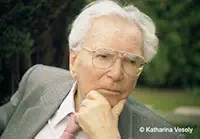
Viktor Emil Frankl was born in Vienna on March 26, 1905. He studied medicine at the University of Vienna and developed an early interest in psychiatry and psychology. As a young man he corresponded with Sigmund Freud and became involved with the Adlerian school of individual psychology before developing his own approach, later known as logotherapy.
Frankl worked extensively with psychiatric patients, including people at risk of suicide. He eventually became head of the neurological department of the Vienna Polyclinic Hospital and developed a therapeutic approach centered on the human search for meaning.
His life changed radically after the Nazi annexation of Austria in 1938.
During the Holocaust, Frankl was deported with members of his family and spent years imprisoned in Nazi concentration camps, including Auschwitz and camps associated with Dachau. His parents, brother and first wife died during the Holocaust.
After liberation, Frankl returned to Vienna and reconstructed his professional and intellectual life. In 1946, he dictated the manuscript that became Man’s Search for Meaning over a period of approximately nine days.
Structure
The book is generally divided into two principal parts:
- An autobiographical account of Frankl’s experiences in Nazi concentration camps
- An introduction to logotherapy
The memoir occupies the first and most emotionally intense portion. Frankl describes imprisonment, forced labor, hunger, fear, disease, humiliation, death and the psychological transformations experienced by prisoners.
The second portion moves from personal testimony toward psychological theory. Frankl explains how his observations of suffering, together with ideas developed before and after the war, informed logotherapy.
The combination is central to the book’s identity.
It is not simply a Holocaust memoir, and it is not simply a psychology textbook. It is an attempt to connect extreme historical experience with a theory of human meaning.
Part I: Experiences in the concentration camps
Arrival
Frankl describes the psychological shock experienced by prisoners upon entering the concentration-camp system.
The prisoner is suddenly separated from ordinary life.
Family, occupation, possessions, social status and personal identity can disappear almost instantaneously.
The psychological sequence Frankl describes can be represented as:
NORMAL LIFE
     ↓
ARREST / DEPORTATION
     ↓
ARRIVAL
     ↓
SHOCK
     ↓
LOSS OF IDENTITY
     ↓
UNCERTAINTY
     ↓
ADAPTATION
The prisoner must then learn a new set of rules governing survival.
The world becomes radically narrower.
Food, shelter, physical safety, illness, work assignments and the behavior of guards become immediate concerns.
Psychological stages of imprisonment
Frankl identifies broad psychological reactions among prisoners.
These can be summarized as:
1. Shock
The initial confrontation with the concentration camp produces disbelief, fear and psychological disorientation.
2. Apathy
As imprisonment continues, emotional numbness can develop.
Repeated exposure to suffering and death can diminish the ability to react emotionally.
3. Psychological liberation
Following liberation, prisoners may experience another complex psychological state.
Freedom does not necessarily produce immediate emotional normality.
Frankl describes the difficulty of psychologically returning to ordinary life after prolonged captivity.
Emotional numbness
One of Frankl’s observations is that prisoners could become emotionally desensitized.
This was not necessarily a sign of cruelty or moral failure.
Instead, emotional withdrawal could function as a psychological defense against overwhelming suffering.
The prisoner who witnessed death every day could not remain emotionally shattered by every individual event and continue functioning.
Frankl therefore describes a movement from:
Shock → emotional reaction → habituation → apathy
This psychological adaptation is one of the darker aspects of the memoir.
The concentration camp as a psychological environment
Frankl’s account is concerned not only with physical deprivation but also with the destruction of psychological security.
Prisoners experienced:
- hunger;
- exhaustion;
- cold;
- disease;
- forced labor;
- violence;
- humiliation;
- uncertainty;
- separation from family;
- loss of possessions;
- loss of privacy;
- fear of death;
- arbitrary punishment.
The cumulative effect was to reduce human existence to an immediate struggle for survival.
Yet Frankl argues that something remained beyond the complete control of the camp system:
the individual’s inner response.
Freedom of inner attitude
One of the most famous philosophical propositions associated with the book is Frankl’s argument that even when external freedoms are removed, a limited inner freedom remains.
He does not mean that prisoners were free in any ordinary political or physical sense.
Rather, he distinguishes between:
External freedom
and
Inner freedom.
The distinction can be visualized as:
                 CONCENTRATION CAMP
                         │
          ┌──────────────┴──────────────┐
          │                             │
          ▼                             ▼
   EXTERNAL CONTROL              INNER RESPONSE
          │                             │
          ├─ Movement                  ├─ Attitude
          ├─ Food                      ├─ Values
          ├─ Work                      ├─ Memory
          ├─ Possessions               ├─ Hope
          └─ Physical freedom          └─ Meaning
This distinction became one of the foundations of Frankl’s later philosophy.
Meaning and survival
Frankl observed that prisoners differed in how they responded psychologically to their circumstances.
Some appeared to lose their psychological connection with the future.
Others maintained a reason to continue living.
That reason could take many forms:
- a loved one;
- unfinished work;
- a future responsibility;
- religious faith;
- a creative project;
- a hope of reunion;
- a commitment to another person;
- a belief that one’s suffering could eventually be transformed into something meaningful.
Frankl’s conclusion was not that meaning guarantees physical survival.
Rather, he argued that having a future-oriented purpose could influence how a person psychologically confronted suffering.
“Why” and “how”
A central idea associated with Frankl’s interpretation of the camps is that people who possessed a reason to live could sometimes endure extraordinary circumstances.
The conceptual model is:
              A REASON TO LIVE
                     │
                     ▼
              FUTURE ORIENTATION
                     │
                     ▼
             PSYCHOLOGICAL RESOLVE
                     │
                     ▼
              CAPACITY TO ENDURE
Frankl famously connected this idea with a quotation from Friedrich Nietzsche concerning the relationship between a “why” and a “how.”
The idea became one of the most recognizable formulations associated with Frankl’s philosophy:
A meaningful “why” can influence how a person confronts hardship.
It is important, however, not to interpret this as a claim that those who died in concentration camps lacked meaning or willpower. Holocaust scholarship has raised substantial objections to interpretations that make survival appear primarily dependent on psychological attitude.
Love
Love occupies a particularly important place in Frankl’s account.
He describes how memories of a loved one could become a source of inner freedom.
Physical separation did not necessarily eliminate psychological connection.
A person could remember:
- a spouse;
- a child;
- a parent;
- a friend;
- a person they hoped to see again.
In Frankl’s interpretation, love could therefore become a form of transcendence.
The body could be imprisoned while the mind remained capable of contemplating another person.
Beauty and nature
Frankl also describes moments in which prisoners encountered beauty despite their circumstances.
A landscape, sunset, piece of music or memory could momentarily interrupt the psychological reality of the camp.
These experiences were significant because they demonstrated that the human capacity to experience beauty had not been completely destroyed.
The contrast can be represented as:
EXTREME SUFFERING
       │
       ├─────────────┐
       │             │
       ▼             ▼
  PHYSICAL WORLD   INNER WORLD
       │             │
       ▼             ▼
  Hunger / Fear     Memory
  Violence          Love
  Exhaustion        Beauty
  Death             Hope
Frankl uses such experiences to illustrate the capacity of consciousness to move beyond immediate circumstances.
Humor
One of the more surprising observations in the book concerns humor.
Even under extreme conditions, prisoners sometimes attempted to create moments of humor.
For Frankl, humor demonstrated another form of psychological distance.
A person could momentarily step outside a painful situation and look at it from another perspective.
Humor did not eliminate suffering.
It created a temporary psychological space within it.
The psychology of the prisoner
Frankl’s account is particularly interested in the transformation of the individual.
The prisoner initially arrives with a personal identity.
The camp attempts to reduce that identity to a number, a labor unit or a body subject to control.
Frankl’s psychological argument is that the human person cannot be understood entirely in those terms.
The prisoner continues to possess:
- memory;
- imagination;
- values;
- relationships;
- beliefs;
- choices;
- interpretations;
- aspirations.
This internal dimension becomes central to Frankl’s understanding of meaning.
Liberation
Liberation does not immediately restore psychological normality.
Frankl describes prisoners who had difficulty emotionally processing freedom.
After years of captivity, ordinary life could appear unreal.
The liberated prisoner might experience:
- emotional numbness;
- disbelief;
- difficulty experiencing joy;
- anger;
- disorientation;
- psychological exhaustion;
- difficulty reconnecting with society.
This part of the book is important because it prevents the story from ending artificially at liberation.
Physical freedom and psychological recovery are different processes.
Return to ordinary life
The return from extreme suffering creates its own psychological challenge.
Frankl suggests that survivors must gradually learn to live again.
The survivor may ask:
How should I live now?
This question leads directly into the philosophical concerns of the second part of the book.
The problem is no longer merely survival.
It becomes:
What should life mean after survival?
Part II: Logotherapy
The second major section of Man’s Search for Meaning introduces logotherapy, Frankl’s system of psychotherapy.
The term derives from the Greek word logos, which Frankl associates with meaning.
Logotherapy is often described as a form of existential psychotherapy.
Frankl considered it the Third Viennese School of Psychotherapy, following the psychoanalytic tradition of Freud and Alfred Adler’s individual psychology.
Its central proposition is that the search for meaning is a fundamental human motivation.
The three Viennese schools
Frankl’s intellectual position is often presented in relation to:
| School | Major figure | Central emphasis |
|---|---|---|
| Psychoanalysis | Sigmund Freud | Pleasure / drives |
| Individual psychology | Alfred Adler | Power, competence, social context |
| Logotherapy | Viktor Frankl | Meaning |
This simplified comparison should not be treated as a complete representation of any of the three traditions, but it illustrates how Frankl positioned his work within Viennese psychotherapy.
The will to meaning
According to Frankl, human beings are not motivated exclusively by pleasure or power.
They also seek meaning.
This is the concept he calls the will to meaning.
The model can be represented as:
              HUMAN BEING
                   │
        ┌──────────┼──────────┐
        │          │          │
        ▼          ▼          ▼
     Pleasure     Power     Meaning
        │          │          │
        │          │          ▼
        │          │      PURPOSE
        │          │          │
        └──────────┴──────────┘
                   │
                   ▼
             HUMAN ACTION
For Frankl, meaning is not necessarily something abstract or universal.
It can be highly personal.
What gives one person’s life meaning may be irrelevant to another person.
Meaning is not the same as happiness
One of Frankl’s important distinctions is between meaning and happiness.
He does not argue that people should constantly pursue happiness.
Instead, he proposes that happiness can emerge as a consequence of living meaningfully.
The distinction is:
Happiness as the primary goal
versus
Meaning as the primary orientation.
In the latter framework:
MEANING
   ↓
RESPONSIBILITY
   ↓
PURPOSEFUL ACTION
   ↓
ENGAGEMENT WITH LIFE
   ↓
POSSIBILITY OF FULFILLMENT
This idea became particularly influential in later discussions of existential psychology and purpose.
The three sources of meaning
Frankl identifies three principal ways through which meaning can be discovered.
1. Creating or accomplishing something
Meaning can be found through:
- work;
- creative activity;
- professional achievement;
- contribution to society;
- completing a task;
- creating something valuable.
A person’s work can therefore become a source of purpose.
2. Experiencing something or encountering someone
Meaning may also be discovered through:
- love;
- relationships;
- beauty;
- nature;
- art;
- music;
- human connection.
Love is particularly important because Frankl sees it as a way of perceiving the unique value of another person.
3. The attitude toward unavoidable suffering
When suffering cannot be removed, Frankl argues that a person may still choose an attitude toward it.
This does not mean that suffering should be deliberately sought.
Nor does it mean that all suffering is meaningful.
Rather:
When unavoidable suffering is already present, the person’s response to it can itself become meaningful.
This distinction is essential.
The three paths to meaning
                  MEANING
                     │
       ┌─────────────┼─────────────┐
       │             │             │
       ▼             ▼             ▼
   CREATION      EXPERIENCE     ATTITUDE
       │             │             │
       ▼             ▼             ▼
      Work          Love        Unavoidable
      Art           Beauty       suffering
      Service       Nature       approached
      Achievement   Relationships with dignity
This three-part model is one of the most useful frameworks in Man’s Search for Meaning.
Freedom and responsibility
Frankl’s philosophy places freedom and responsibility together.
If human beings possess some freedom to choose their response, then they also possess responsibility for that response.
This does not mean that individuals are responsible for everything that happens to them.
Rather, Frankl distinguishes between:
What happens to us
and
how we respond to what happens.
The distinction forms a central part of his existential approach.
The existential vacuum
Frankl describes a condition he calls the existential vacuum.
This occurs when a person experiences life as empty, directionless or meaningless.
A person may have:
- material security;
- education;
- employment;
- social status;
and still experience a profound lack of purpose.
The existential vacuum therefore cannot be solved simply by increasing material comfort.
Existential frustration
The search for meaning can itself produce frustration.
A person may know that life should have purpose but not know what that purpose is.
Frankl calls this form of tension existential frustration.
He does not necessarily regard such tension as pathological.
Some psychological tension can be normal and even constructive if it directs a person toward meaningful action.
Noögenic neurosis
Frankl distinguishes certain psychological problems arising from conflicts involving meaning and values from neuroses traditionally understood in purely psychological or biological terms.
He uses the term noögenic neurosis for difficulties associated with existential or spiritual conflicts.
The term noös refers broadly to the mind or spirit.
Frankl therefore places questions of meaning within psychotherapy rather than treating them as irrelevant philosophical questions.
The meaning of life
For Frankl, the question:
“What is the meaning of life?”
does not have one universal verbal answer.
Instead, the question is reversed.
Rather than asking:
“What does life mean?”
a person should ask:
“What meaning does life demand from me now?”
Meaning is therefore situational and personal.
Different circumstances call for different responsibilities.
Meaning as responsibility
Frankl’s concept of meaning is closely connected with responsibility.
A person discovers meaning not simply by thinking about life but by responding to life’s demands.
The process can be expressed as:
LIFE PRESENTS A SITUATION
          ↓
     A QUESTION ARISES
          ↓
   "WHAT IS REQUIRED OF ME?"
          ↓
      RESPONSIBILITY
          ↓
       ACTION
          ↓
       MEANING
This is one of the book’s most important philosophical reversals.
Life is not merely something from which we demand answers.
Life also asks something of us.
The “last human freedom”
Frankl’s concept of inner freedom is often described as one of the book’s central ideas.
External circumstances may severely restrict choice.
Yet Frankl argues that an individual can retain a degree of freedom concerning:
- attitude;
- interpretation;
- values;
- inner response.
This concept became one of the foundations of his understanding of human dignity.
Tragic optimism
Although the term is developed more explicitly in Frankl’s later writings, the concept of tragic optimism is closely related to the ideas in Man’s Search for Meaning.
It refers to maintaining a “yes” to life despite:
- pain;
- guilt;
- mortality.
The concept is not simple positive thinking.
It is an attempt to affirm life without denying tragedy.
Positive thinking versus Frankl’s philosophy
Frankl’s philosophy is sometimes reduced to the modern slogan:
“Think positively.”
That interpretation misses an important part of his argument.
Frankl does not deny:
- death;
- grief;
- suffering;
- injustice;
- trauma;
- uncertainty.
His position is closer to:
Reality may be tragic, but human beings can still search for meaning within reality.
This distinction is important when reading the book as psychological literature rather than as motivational writing.
Death and mortality
Death is an unavoidable part of Frankl’s existential framework.
Because human life is finite, individual choices acquire significance.
A limited lifespan means that time cannot simply be recovered.
For Frankl, awareness of mortality can therefore intensify responsibility.
The question becomes:
What will I do with the time that remains?
Suffering and meaning
One of the most frequently discussed aspects of the book is Frankl’s treatment of suffering.
His argument should be understood carefully.
He does not argue:
Suffering is always good.
He argues:
When suffering cannot be avoided, it is still possible to find meaning in one’s response to it.
This is a substantial difference.
Frankl does not recommend passively accepting preventable suffering.
Where suffering can be eliminated, it should generally be confronted and reduced.
Meaning becomes especially relevant when suffering cannot be escaped.
Hope
Hope in Man’s Search for Meaning is not presented simply as optimism about future events.
It is connected to purpose.
A person may endure uncertainty because there is something worth moving toward.
This gives hope an active dimension.
PURPOSE
   ↓
FUTURE ORIENTATION
   ↓
HOPE
   ↓
ACTION
   ↓
CONTINUED ENGAGEMENT WITH LIFE
Humor, imagination and psychological distance
Frankl’s observations about humor, imagination and memory illustrate a broader principle.
Human consciousness can create distance from immediate circumstances.
A person may:
- remember another place;
- imagine another future;
- recall someone they love;
- laugh at an absurd situation;
- contemplate beauty;
- reflect on a philosophical question.
These mental activities do not change external reality.
But they can change the person’s relationship with that reality.
The importance of the future
Frankl repeatedly emphasizes future orientation.
The prisoner who has a reason to expect something meaningful from the future has a psychological relationship with time that differs from the person who sees no future at all.
This leads to one of the book’s recurring contrasts:
WITHOUT FUTURE PURPOSE
        ↓
    PRESENT DOMINATES
        ↓
    DESPAIR / APATHY

WITH FUTURE PURPOSE
        ↓
    PRESENT HAS CONTEXT
        ↓
    ENDURANCE / ACTION
Again, this should not be interpreted as a universal explanation of survival. The historical reality of Holocaust survival was enormously complex.
The individual and the collective
Frankl’s emphasis is strongly individual.
He argues that meaning is not something that can simply be handed to a person by society.
A society can create conditions that encourage meaning, but each person must ultimately respond to life individually.
This creates a tension between:
Universal human dignity
and
individual meaning.
All people possess dignity, but the specific meaning of a person’s life is unique.
Human uniqueness
Frankl’s concept of meaning is based partly on the uniqueness of each person.
Two individuals can experience the same external circumstances yet have different responsibilities and sources of meaning.
Meaning therefore cannot be reduced to a universal formula.
There is no single occupation, relationship, belief or achievement that automatically makes a life meaningful.
The book’s philosophical influences
Frankl’s thought developed within the intellectual environment of early and mid-20th-century Vienna.
Important influences and points of comparison include:
- Sigmund Freud;
- Alfred Adler;
- existential philosophy;
- phenomenology;
- Jewish philosophical traditions;
- Christian existential thought;
- Nietzsche;
- Martin Heidegger and broader European existentialism.
Frankl’s relationship to Freud and Adler was especially important because he initially interacted with both psychoanalytic and individual-psychological traditions before establishing logotherapy as an independent school.
Frankl and Freud
Freud emphasized the role of unconscious drives and the pursuit of pleasure within psychoanalytic theory.
Frankl believed this was insufficient as a complete account of human motivation.
He argued that people could endure considerable discomfort for the sake of something they considered meaningful.
Thus:
Pleasure can motivate.
But:
Meaning can also motivate people to sacrifice pleasure.
Frankl and Adler
Alfred Adler’s individual psychology emphasized concepts such as inferiority, compensation, striving and social interest.
Frankl developed his own framework partly in dialogue with Adlerian thought.
Where Frankl differed was his emphasis on meaning as a fundamental human motivation.
The role of religion
Religion appears in Frankl’s thought, but logotherapy is not restricted to a particular religious tradition.
Frankl was Jewish and his Holocaust experience profoundly shaped his thinking.
At the same time, he presented logotherapy as a psychotherapy that could be used with religious and nonreligious patients.
His conception of meaning therefore remains open to individual belief.
The title
The English title Man’s Search for Meaning emphasizes the book’s central philosophical problem.
The original German title was much more literal:
“A Psychologist Experiences the Concentration Camp.”
The difference between the titles is significant.
The German title emphasizes experience.
The English title emphasizes meaning.
Together they capture the book’s two dimensions:
What happened to Frankl
and
what he believed those experiences revealed about human existence.
Publication history
Frankl dictated the original manuscript in 1946, shortly after the end of the war. The book was published in German that same year.
The English-language version appeared in 1959.
The English edition was originally associated with the title:
From Death-Camp to Existentialism
It later became widely known as:
Man’s Search for Meaning: An Introduction to Logotherapy.
Subsequent editions added forewords, afterwords and supplementary material.
Beacon Press remains the principal English-language publisher.
A 2025 Beacon Classics edition lists a foreword by Harold S. Kushner and a biographical afterword by William J. Winslade.
Sales and translations
The book became one of the most widely distributed works of Holocaust literature and popular psychology.
According to Beacon Press, the book has sold more than 16 million copies and has been translated into more than 50 languages.
Frankl’s official institute states that by the time of his death in 1997, the book had sold more than 10 million copies in 24 languages.
Publication reach
1946
│
├── Original German publication
│
1959
│
├── English-language publication
│
1970s–1990s
│
├── International expansion
│
1991
│
├── Library of Congress / Book-of-the-Month
│   influential-books survey
│
1997
│
├── 10+ million copies
│
2020s
│
└── 16+ million copies
    50+ languages
Reception
The book received considerable acclaim from psychologists, psychiatrists, philosophers, educators and general readers.
Psychologist Carl Rogers described it as one of the outstanding contributions to psychological thought of its period. Harold S. Kushner later called it “one of the great books of our time.” The New York Times has characterized it as enduring survival literature.
Its influence extends beyond psychology.
The book has been read in:
- psychology courses;
- philosophy courses;
- theology programs;
- medical education;
- Holocaust studies;
- leadership programs;
- counseling;
- personal development.
Frankl’s official institute notes that the book became a standard text in high school and university courses in psychology, philosophy and theology.
Library of Congress recognition
In a 1991 survey conducted for the Library of Congress and Book-of-the-Month Club, readers were asked to identify books that had made a difference in their lives.
Man’s Search for Meaning appeared among the ten most influential books in America in that survey.
This recognition helped establish the book not only as Holocaust literature but also as a major work of twentieth-century psychological and philosophical writing.
Critical reception and controversies
Despite its popularity, Man’s Search for Meaning has not been universally accepted without criticism.
The principal criticisms concern:
- Frankl’s interpretation of survival.
- His treatment of suffering.
- His use of Holocaust experience to support a psychological theory.
- The degree to which his memoir represents the broader concentration-camp experience.
- The risk of implying that psychological attitude determined survival.
Criticism of the survival argument
Some scholars have argued that Frankl’s emphasis on purpose and attitude can unintentionally suggest that prisoners who died lacked the psychological resources possessed by survivors.
This is a serious problem if the book is read as a literal causal theory of Holocaust survival.
Survival depended on countless factors, including:
- arbitrary selection;
- age;
- health;
- work assignment;
- camp location;
- timing;
- food availability;
- relationships;
- luck;
- Nazi policy;
- access to resources;
- physical circumstances.
A person’s psychological attitude could not guarantee survival.
The Holocaust was fundamentally a system of mass persecution and murder, not a psychological experiment.
Lawrence L. Langer and Holocaust scholarship
Holocaust scholar Lawrence L. Langer strongly criticized aspects of Frankl’s interpretation.
Langer argued that Frankl’s emphasis on meaning and personal attitude could distort the historical and psychological reality of Auschwitz by imposing a redemptive interpretation on an experience characterized by radical dehumanization.
Historian Timothy Pytell examined these criticisms in the academic journal Holocaust and Genocide Studies, arguing that Frankl’s interpretation of Auschwitz and the development of his theory require critical examination.
These criticisms do not erase Frankl’s status as a Holocaust survivor or the importance of his testimony. Rather, they demonstrate why the memoir should be read simultaneously as:
personal testimony
and
a later philosophical interpretation of that testimony.
Memory and historical testimony
Memoirs are not identical to archival histories.
A memoir represents experience through:
- memory;
- selection;
- interpretation;
- narrative structure;
- later reflection.
This does not make memoirs historically worthless.
On the contrary, personal testimony provides access to aspects of historical experience that statistics and administrative documents cannot provide.
But readers should distinguish between:
“This is what Frankl experienced and remembered.”
and
“This is a scientifically established explanation of how all prisoners responded.”
The distinction is essential.
The danger of overgeneralization
Perhaps the most important limitation of Man’s Search for Meaning is the temptation to transform Frankl’s personal experience into a universal formula.
The book is strongest when read as:
One survivor’s profound attempt to understand human existence after unimaginable suffering.
It is weaker when reduced to:
People survive hardship if they have a strong enough purpose.
The second statement is much more deterministic than Frankl’s memoir can legitimately support.
Why the book remains influential
The continuing influence of Man’s Search for Meaning can be attributed to several factors.
1. The historical testimony
Frankl writes as a physician and prisoner who personally experienced Nazi concentration camps.
2. The psychological dimension
The book asks what happens to the human mind under extreme deprivation.
3. The philosophical question
It asks whether life can remain meaningful when suffering appears overwhelming.
4. The practical dimension
It asks readers to consider their own sources of meaning and responsibility.
5. Its brevity
The book is relatively short, making its ideas accessible to a broad audience.
6. Its universal question
The question “What makes life worth living?” extends beyond any particular historical period.
Major themes
| Theme | Frankl’s central idea |
|---|---|
| Meaning | Human beings have a fundamental need to find meaning |
| Freedom | Some inner freedom can remain despite external constraints |
| Responsibility | Meaning is discovered through one’s response to life’s demands |
| Love | Love can become a source of meaning and transcendence |
| Work | Creative accomplishment can provide meaning |
| Suffering | Unavoidable suffering can be approached meaningfully |
| Hope | Future-oriented purpose can sustain engagement with life |
| Death | Mortality gives urgency to existence |
| Choice | Human beings retain some capacity to choose their attitude |
| Human dignity | A person cannot be reduced completely to circumstances |
The three dimensions of Frankl’s philosophy
Frankl’s thought can be summarized through three interconnected ideas:
                 MEANING
                    │
          ┌─────────┴─────────┐
          │                   │
          ▼                   ▼
       FREEDOM            RESPONSIBILITY
          │                   │
          └─────────┬─────────┘
                    ▼
                 ACTION
                    │
                    ▼
                PURPOSE
Freedom without responsibility becomes arbitrary.
Responsibility without freedom becomes impossible.
Frankl therefore connects the two through the search for meaning.
The Frankl model of a meaningful life
A simplified interpretation of the book can be expressed as:
              LIFE
               │
               ▼
        CIRCUMSTANCES
               │
        ┌──────┴──────┐
        │             │
        ▼             ▼
   CHANGEABLE      UNAVOIDABLE
        │             │
        ▼             ▼
     ACTION        ATTITUDE
        │             │
        └──────┬──────┘
               ▼
          RESPONSIBILITY
               │
               ▼
             MEANING
               │
               ▼
             PURPOSE
This is not a formal diagram from Frankl’s book but a conceptual synthesis of its principal arguments.
Man’s Search for Meaning as a book about choice
At its deepest level, the book is concerned with a question of human agency.
Frankl asks what remains when almost everything else has been taken away.
The answer he develops is not unlimited freedom.
It is a limited interior freedom: the capacity to interpret, choose and respond.
That distinction makes the book less a celebration of positive thinking than an examination of human responsibility under extreme conditions.
Man’s Search for Meaning and modern life
Although the book emerged from the Holocaust, many readers encounter it while dealing with very different problems:
- career uncertainty;
- grief;
- loneliness;
- failure;
- aging;
- illness;
- existential anxiety;
- loss of direction;
- professional burnout;
- uncertainty about the future.
The situations are obviously not equivalent to concentration-camp imprisonment.
That distinction must never be erased.
Yet Frankl’s broader question remains applicable:
What makes a life worth continuing to live and work toward?
Contemporary relevance
Modern societies can provide enormous material opportunities while leaving individuals uncertain about purpose.
A person may have:
- education;
- employment;
- technology;
- entertainment;
- financial resources;
- social media;
- physical comfort;
and nevertheless experience emptiness.
Frankl’s concept of the existential vacuum offers one explanation for this phenomenon.
His proposed response is not simply to acquire more possessions or pleasures, but to discover meaningful responsibilities.
Meaning versus comfort
A particularly important implication of Frankl’s thought is that a meaningful life is not necessarily a comfortable life.
Comfort and meaning are different dimensions.
                 LIFE
                  │
       ┌──────────┴──────────┐
       │                     │
       ▼                     ▼
     COMFORT               MEANING
       │                     │
       ▼                     ▼
   Ease / pleasure       Purpose /
                         responsibility
A person can have comfort without meaning.
A person can experience hardship while still experiencing meaning.
Frankl’s own life became the extreme example through which he developed this distinction.
Influence on psychology and psychotherapy
Frankl’s logotherapy became an important existential approach to psychotherapy.
Its concepts have influenced discussions of:
- existential psychotherapy;
- meaning-centered therapy;
- grief;
- end-of-life care;
- trauma;
- counseling;
- addiction;
- depression;
- resilience;
- palliative care.
Modern meaning-centered therapeutic approaches have developed beyond Frankl’s original system, but his emphasis on purpose and values remains an important reference point.
Author
Viktor Emil Frankl
Viktor Emil Frankl (1905–1997) was an Austrian neurologist, psychiatrist and Holocaust survivor.
He was born in Vienna on March 26, 1905. He studied medicine at the University of Vienna and received both medical and doctoral degrees.
As a young man, Frankl developed interests in psychology and psychiatry. He corresponded with Sigmund Freud and became associated for a period with Alfred Adler’s individual psychology. He subsequently developed his own therapeutic system, logotherapy.
After the Nazi takeover of Austria, Frankl’s Jewish background placed him and his family in danger. He was eventually deported to concentration camps during the Holocaust.
After the war, Frankl returned to Vienna and became a major figure in psychiatry and existential psychotherapy.
He served for 25 years as head of the Vienna Neurological Polyclinic and later held academic positions in Europe and the United States.
His professional work included numerous books and lectures on logotherapy, existential analysis, psychiatry and the meaning of life.
Frankl died in Vienna in 1997 at the age of 92.
Frankl’s major works
Frankl wrote numerous works beyond Man’s Search for Meaning.
Important titles include:
- The Doctor and the Soul
- The Will to Meaning
- The Unheard Cry for Meaning
- Man’s Search for Ultimate Meaning
- The Feeling of Meaninglessness
- Yes to Life: In Spite of Everything
- The Unconscious God
The Viktor Frankl Institute maintains a bibliography of Frankl’s works and related publications.
Frankl’s professional legacy
Frankl’s official biography describes logotherapy and existential analysis as the “Third Viennese School of Psychotherapy.” He held professorships at institutions including Harvard, Stanford, Dallas and Pittsburgh and received numerous honorary degrees and professional honors.
His work subsequently influenced psychologists, psychiatrists, counselors, educators, philosophers and writers interested in human purpose.
Major concepts at a glance
┌─────────────────────────────────────────────┐
│          VIKTOR FRANKL'S KEY IDEAS          │
├─────────────────────────────────────────────┤
│                                             │
│  1. WILL TO MEANING                         │
│     Meaning is a fundamental human drive.   │
│                                             │
│  2. INNER FREEDOM                           │
│     Some freedom of response can remain.    │
│                                             │
│  3. RESPONSIBILITY                          │
│     Life demands individual responses.      │
│                                             │
│  4. THREE SOURCES OF MEANING                │
│     Creation • Experience • Attitude        │
│                                             │
│  5. EXISTENTIAL VACUUM                      │
│     Lack of meaning can produce emptiness.  │
│                                             │
│  6. FUTURE ORIENTATION                      │
│     Purpose can connect us to the future.   │
│                                             │
│  7. UNAVOIDABLE SUFFERING                   │
│     Response can become meaningful.         │
│                                             │
└─────────────────────────────────────────────┘
Central lessons
The principal ideas of Man’s Search for Meaning can be condensed into several propositions:
Meaning is personal
There is no single answer that makes every life meaningful.
Meaning is discovered through action
Purpose is not necessarily found through abstract thinking. It emerges through engagement with life.
Freedom and responsibility are connected
Having some freedom to respond creates responsibility.
Love can transcend circumstances
Human connection can remain psychologically powerful even when physical connection is impossible.
Suffering should not be romanticized
Unavoidable suffering can be given meaning, but preventable suffering should not be glorified.
Happiness cannot be forced
Meaning is a deeper orientation than the pursuit of pleasant feelings.
Life continues to ask questions
Instead of continually demanding that life provide an answer, people can ask what life requires from them.
Infographic: Frankl’s three paths to meaning
                    ┌─────────────┐
                    │   MEANING   │
                    └──────┬──────┘
                           │
          ┌────────────────┼────────────────┐
          │                │                │
          ▼                ▼                ▼
   ┌─────────────┐  ┌─────────────┐  ┌─────────────┐
   │   CREATE    │  │ EXPERIENCE  │  │   RESPOND   │
   └──────┬──────┘  └──────┬──────┘  └──────┬──────┘
          │                │                │
       Work            Love / Art       Unavoidable
       Service         Nature           suffering
       Creativity      Relationships    with dignity
          │                │                │
          └────────────────┼────────────────┘
                           ▼
                    MEANINGFUL LIFE
Infographic: From suffering to meaning
             SUFFERING
                 │
        ┌────────┴────────┐
        │                 │
        ▼                 ▼
    AVOIDABLE          UNAVOIDABLE
        │                 │
        ▼                 ▼
    CHANGE IT         RESPOND TO IT
        │                 │
        │                 ▼
        │             ATTITUDE
        │                 │
        └────────┬────────┘
                 ▼
          RESPONSIBILITY
                 │
                 ▼
              MEANING
The diagram represents Frankl’s distinction between suffering that can be changed and suffering that cannot. It should not be interpreted as an argument that people should passively accept abuse, injustice or preventable suffering.
Infographic: The psychological journey described in the book
       BEFORE THE CAMPS
              │
              ▼
       NORMAL IDENTITY
              │
              ▼
          DEPORTATION
              │
              ▼
            SHOCK
              │
              ▼
       LOSS / DEPRIVATION
              │
              ▼
          ADAPTATION
              │
              ▼
     SEARCH FOR INNER SPACE
              │
              ▼
          LIBERATION
              │
              ▼
       DISORIENTATION
              │
              ▼
       RECONSTRUCTION
              │
              ▼
          NEW PURPOSE
Legacy
Man’s Search for Meaning occupies a distinctive position at the intersection of Holocaust literature, memoir, existential philosophy and psychology.
Its historical significance comes from Frankl’s testimony as a concentration-camp survivor.
Its psychological significance comes from the development and popularization of logotherapy.
Its philosophical significance comes from its examination of meaning, freedom, responsibility, suffering and mortality.
Its popular significance comes from the remarkable reach of a relatively short book that asks one of the oldest human questions:
Why continue?
Frankl’s answer is not that life is always pleasant, fair or understandable.
His answer is that life can still contain meaning, and that meaning is discovered through the ways individuals respond to the particular circumstances and responsibilities placed before them.
Conclusion
Man’s Search for Meaning is ultimately a book about the relationship between suffering and human purpose.
Its first half confronts one of the darkest realities of modern history: the Nazi concentration-camp system and the destruction of millions of human lives.
Its second half asks what those experiences might reveal about the human capacity to find meaning.
Frankl’s central contribution is not the promise that meaning will remove suffering. It is the more difficult proposition that a meaningful life does not require the absence of suffering.
Meaning may be found through work, creation, love, experience, responsibility and, when suffering cannot be avoided, through the attitude with which one confronts it.
That proposition explains both the enduring appeal and the continuing controversy of the book.
For many readers, Man’s Search for Meaning is a book about hope.
For historians and Holocaust scholars, it is also a personal testimony that must be read critically within the larger historical record.
For psychologists and philosophers, it is an influential statement of existential psychotherapy.
And for ordinary readers, perhaps its most enduring question is also its simplest:
What is life asking of me now?
References
- Frankl, Viktor E. Man’s Search for Meaning: An Introduction to Logotherapy. Beacon Press. Originally published in German in 1946; English edition published in 1959.
- Frankl, Viktor E. Man’s Search for Meaning. Beacon Classics edition, 2025. ISBN 978-0-8070-1883-5.
- Viktor Frankl Institute. “About Viktor Frankl.” Biography and historical chronology.
- Viktor Frankl Institute. “Viktor Frankl: Standard Biography.”
- Viktor Frankl Institute. “Viktor Frankl: Biography.”
- Viktor Frankl Institute. “Books by Viktor Frankl.” Bibliographical information and publication history.
- Viktor Frankl Institute. “Standard Publication List.” Bibliography of Frankl’s works.
- Pytell, Timothy E. “Redeeming the Unredeemable: Auschwitz and Man’s Search for Meaning.” Holocaust and Genocide Studies, vol. 17, no. 1, 2003, pp. 89–113.
- Beacon Press. Man’s Search for Meaning. Publisher information, editions, sales and translations.
- Penguin Random House. Man’s Search for Meaning — Beacon Classics. Bibliographical and edition information.
Further reading
Works by Viktor Frankl
- The Doctor and the Soul: From Psychotherapy to Logotherapy
- The Will to Meaning: Foundations and Applications of Logotherapy
- The Unheard Cry for Meaning: Psychotherapy and Humanism
- Man’s Search for Ultimate Meaning
- Yes to Life: In Spite of Everything
- The Unconscious God
Frankl’s official bibliography provides a more comprehensive list of his works.
Related subjects
- Holocaust literature
- Holocaust memoirs
- Existential psychotherapy
- Logotherapy
- Existentialism
- Viktor Frankl
- Meaning of life
- Philosophy of suffering
- Psychology of trauma
- Resilience
- Humanistic psychology
- Jewish philosophy
- Concentration camps
- Holocaust testimony
See also
- Viktor Frankl
- Logotherapy
- Existential psychotherapy
- Meaning of life
- Existentialism
- Holocaust
- Holocaust literature
- Holocaust survivors
- Psychotherapy
- Humanistic psychology
- Trauma psychology
- Resilience
- Positive psychology
- Sigmund Freud
- Alfred Adler
- The Doctor and the Soul
- Man’s Search for Ultimate Meaning
External links
- Viktor Frankl Institute — biographical information, bibliography and resources concerning Frankl and logotherapy.
- Beacon Press — Man’s Search for Meaning — official English-language publisher information and editions.
- Penguin Random House — Man’s Search for Meaning — current edition and bibliographical information.
Article classification
Type: Book article
Author: Viktor E. Frankl
Original title: Ein Psycholog erlebt das Konzentrationslager
First published: 1946
English publication: 1959
Country: Austria
Language: German (original)
Genre: Memoir, psychology, philosophy
Subject: Holocaust, existential psychology, meaning in life
Principal psychological theory: Logotherapy
Major themes: Meaning, freedom, responsibility, suffering, love, hope, mortality and human dignity