


Introduction
How to Take Care of Our Eyes? Eyecare is not a single habit but a lifelong practice built from small, consistent decisions. More than one billion people worldwide live with some form of visual impairment, yet experts estimate that over 90% of cases could be prevented, treated, or improved through appropriate care and early detection . The choices we make daily—what we eat, how we manage screens, whether we wear sunglasses, and when we see a professional—collectively determine the trajectory of our vision over decades.
Read More from Clickerrr Guides: https://clickerrr.com/how-to-build-a-healthy-lifestyle-10-steps-guide/
The modern environment presents unique challenges for eyecare. Screens dominate work and leisure, air conditioning dries out offices, and ultraviolet radiation exposure accumulates silently over years. Meanwhile, conditions like glaucoma and diabetic retinopathy often develop without noticeable symptoms until significant damage has occurred . This means that effective eyecare cannot rely on waiting for problems to appear; it must be proactive, informed, and routine.
This guide presents ten evidence-based steps for comprehensive eyecare. Each step addresses a distinct dimension of eye health, from nutrition and screen habits to professional examinations and protective measures. Together, they form a practical framework that anyone can adopt, regardless of age or current eye health status. The goal is not perfection but consistency: small, repeated actions that compound into lasting protection for one of our most precious senses.
Read More from Clickerrr Guides: https://clickerrr.com/how-to-improve-immunity-10-steps-guide/
How to Take Care of Our Eyes: 10 Steps Guide
Step
1
Nourish Your Eyes with the Right Nutrients

Eyecare begins from within. The eyes are metabolically demanding organs, relying on a constant supply of oxygen and nutrients through delicate blood vessels . A diet rich in specific vitamins, minerals, and fatty acids can protect retinal tissue, support tear film health, and reduce the risk of age-related conditions such as macular degeneration and cataracts. The good news is that the same dietary pattern that supports heart health—rich in colorful vegetables, fruits, whole grains, and fish—also supports vision. Rather than seeking miracle foods, the focus should be on building a varied, nutrient-dense eating pattern that delivers eye-protective compounds consistently.
- Prioritize lutein and zeaxanthin for macular protection. These carotenoids concentrate in the retina’s macula, where they help filter harmful blue light and protect against oxidative damage. Leafy greens like kale, spinach, and collard greens are exceptional sources, as are broccoli, asparagus, and colorful fruits such as raspberries and papaya . Aim to include at least one serving of leafy greens daily.
- Include vitamin C-rich foods for antioxidant defense. Vitamin C is highly concentrated in the fluid surrounding the eye’s lens and is thought to be a key antioxidant for preventing age-related cataracts . Citrus fruits, strawberries, tomatoes, red and green peppers, and broccoli all deliver substantial amounts.
- Choose vitamin E sources to protect fatty eye tissues. Vitamin E protects critical fatty acids in the eyes from oxidation. Almonds, sunflower seeds, olive oil, and avocados are reliable sources that can be incorporated into snacks or meals easily .
- Eat oily fish for omega-3 fatty acids. Omega-3s support the structure of cell membranes in the eyes and possess anti-inflammatory properties that may alleviate dry eye symptoms. Salmon, trout, sardines, and mackerel are among the best sources. For those following a Mediterranean-style diet, the reduction in progression of late-stage age-related macular degeneration is significant .
- Adopt a Mediterranean dietary pattern overall. This eating style—high in plant foods, olive oil as the primary fat, seafood as the main animal protein, and moderate dairy and red meat—has been associated with a 25% or greater reduction in the rate of macular degeneration progression among those at risk . It also supports brain and cardiovascular health, making it a holistic eyecare strategy.
- Stay hydrated to support tear film quality. Drinking adequate water helps maintain a healthy tear film, which is essential for comfort and clear vision. Dehydration can worsen dry eye symptoms, particularly in air-conditioned or heated environments.
- Be cautious with supplements. For most people, food sources are sufficient and preferable. However, individuals with intermediate to advanced age-related macular degeneration may benefit from AREDS2-formulated supplements, which have been shown to slow progression. These should only be taken under medical guidance.
- Limit processed foods and excess sugar. Diets high in refined carbohydrates and sugar can contribute to inflammation and poor metabolic health, indirectly affecting eye health. For people with diabetes or prediabetes, blood sugar management is a critical component of eyecare, as uncontrolled glucose damages retinal blood vessels.
- Make dietary changes sustainable rather than restrictive. The goal is not a temporary “eye diet” but a permanent pattern of eating that supports whole-body health. Small swaps—adding spinach to a smoothie, choosing almonds over chips, having fish twice a week—accumulate into meaningful protection over time.
Step
2
Manage Digital Screen Time to Prevent Eye Strain

Digital eye strain, sometimes called computer vision syndrome, has become one of the most common eyecare challenges of the modern era. When we stare at screens, we blink less frequently—dropping from a normal rate of 15 to 20 times per minute to as few as 5 to 7—which leads to dry, irritated eyes . The constant refocusing required by pixelated text and changing images also fatigues the eye’s accommodative muscles. While digital eye strain does not cause permanent vision damage according to the American Academy of Ophthalmology, the discomfort, headaches, and blurred vision it produces are real and can significantly affect quality of life and productivity . Effective eyecare in a screen-dominated world requires deliberate strategies to rest, moisturize, and protect the eyes throughout the day.
- Apply the 20-20-20 rule consistently. Every 20 minutes, look at something approximately 20 feet away for at least 20 seconds. This simple practice relaxes the focusing muscles and reduces accommodative strain. Set a timer or use an app if reminders are helpful .
- Blink consciously and completely. When engaged with screens, remind yourself to blink fully and frequently. A simple exercise—closing the eyes gently, pausing for a moment, then opening—can restore moisture and reduce the gritty sensation that develops during prolonged screen use .
- Position your screen at the correct distance and height. The center of the screen should be slightly below eye level, approximately 20 to 26 inches from your face. This positioning reduces the exposed surface area of the eye and lessens tear evaporation .
- Adjust screen brightness and room lighting to match. The brightness of your screen should roughly equal the ambient light in the room. Avoid using a bright screen in a dark room or a dim screen in a brightly lit space, as both create unnecessary contrast that strains the eyes .
- Reduce glare from windows and overhead lights. Position your screen perpendicular to windows, use matte screen filters if needed, and adjust overhead lighting to prevent reflections on the screen surface .
- Take longer breaks away from all screens. Beyond the 20-20-20 micro-breaks, step away from your desk every hour or two for a few minutes. Avoid substituting one screen for another during these breaks—look out a window, stretch, or walk briefly .
- Use artificial tears judiciously. Preservative-free lubricating eye drops can provide relief when natural tears are insufficient, particularly in dry office environments. Use them as needed, but avoid over-reliance; two applications per day is a reasonable limit for most people .
- Consider computer glasses if you wear corrective lenses. Standard glasses or contacts may not be optimized for the intermediate distance of a computer screen. A dedicated pair of computer glasses, prescribed for the specific working distance, can reduce strain significantly .
- Stop screen use well before bedtime. The recommendation is to cease using electronic devices at least two hours before sleep. This allows the eyes to relax and supports the natural melatonin cycle, which is disrupted by light exposure at night .
Step
3
Protect Your Eyes from Ultraviolet Radiation

Ultraviolet radiation from the sun is a silent contributor to numerous eye conditions, including cataracts, macular degeneration, and photokeratitis—essentially a sunburn of the eye’s surface . The World Health Organization estimates that approximately 10% of cataract-related blindness is associated with prolonged UV exposure . Unlike skin damage, which becomes visible relatively quickly, UV damage to the eyes accumulates invisibly over decades. This makes consistent protection essential, not just during summer or at the beach, but year-round and in a variety of conditions. Sunglasses are not merely a fashion accessory; they are a fundamental eyecare tool.
- Choose sunglasses that block 99% to 100% of UVA and UVB rays. The specific label matters more than the price or darkness of the lens. Look for “UV400” or “100% UV protection” on the tag. Dark lenses without UV protection can actually be worse than no sunglasses, as they dilate the pupil and allow more UV radiation to reach the retina .
- Wear sunglasses year-round, not just in summer. UV radiation penetrates clouds and reflects off surfaces like snow, water, and pavement. Winter sports enthusiasts and those who spend time near water are particularly vulnerable to reflected UV exposure .
- Add a wide-brimmed hat for comprehensive protection. A hat with a brim of at least three inches blocks roughly half of the UV radiation that would otherwise reach the eyes. Combining a hat with sunglasses provides layered defense .
- Protect children’s eyes consistently. Children’s eyes transmit more UV radiation to the retina than adult eyes, and cumulative exposure begins early in life. Encourage sunglasses from a young age and model the behavior yourself .
- Never look directly at the sun. This includes during solar eclipses, when the temptation is greatest. Direct viewing of the sun can cause solar retinopathy, permanent damage to the macula .
- Be aware of UV exposure during peak hours. UV levels are highest between 10 a.m. and 4 p.m., particularly in the summer months. While outdoor activity is beneficial, plan for shade and eye protection during these hours.
- Consider photochromic lenses if you wear prescription glasses. These lenses darken automatically in response to UV exposure, providing seamless protection without the need for a separate pair of sunglasses.
- Check medications that increase UV sensitivity. Certain drugs, including some antibiotics, acne treatments, and diuretics, can make the eyes more sensitive to UV radiation. If you take such medications, be especially diligent about protection .
- Do not rely on contact lenses for UV protection alone. Some contact lenses offer UV blocking, but they do not cover the entire eye surface. They should be used in conjunction with sunglasses, not as a substitute .
- Choose wraparound styles for maximum coverage. Sunglasses that wrap around the sides of the face prevent UV radiation from entering from peripheral angles, offering superior protection compared to flat-front styles.
Step
4
Maintain Proper Eye Lubrication and Hygiene

Dry eye is among the most common reasons people seek eyecare advice. It occurs when the tear film—a delicate three-layer structure of oil, water, and mucus—becomes unstable or insufficient, leading to discomfort, redness, and a gritty sensation . Environmental factors like air conditioning, wind, and dry climates worsen the problem, as does the reduced blinking that accompanies screen use. Simultaneously, eye hygiene practices, particularly for contact lens wearers, are critical for preventing infections that can threaten vision. This step addresses both the moisture and cleanliness dimensions of eyecare, recognizing that comfort and safety are intertwined.
- Wash hands thoroughly before touching the eyes or handling contact lenses. The hands encounter countless surfaces throughout the day, harboring bacteria and viruses that can easily transfer to the sensitive mucous membranes of the eyes. This simple act prevents a significant proportion of eye infections .
- Use artificial tears when environmental conditions are dry. Air-conditioned offices, heated homes in winter, and windy outdoor conditions all accelerate tear evaporation. Preservative-free artificial tears provide relief without the cumulative irritation that preservatives can cause with frequent use .
- Avoid rubbing your eyes, even when they itch. Rubbing can introduce dirt and microorganisms, worsen inflammation, and in extreme cases, contribute to corneal thinning or deformation. If itching is persistent, consult an eyecare professional rather than rubbing .
- Maintain a humidifier in dry indoor spaces. Keeping indoor humidity between 40% and 70% supports tear film stability and reduces the discomfort of dry eyes, particularly during winter months or in air-conditioned environments .
- Follow proper contact lens hygiene without exception. Wash and dry hands before handling lenses, use fresh solution for storage (never water), replace lenses according to the prescribed schedule, and never sleep in lenses unless specifically approved by an eyecare professional. Contact lens-related infections can progress rapidly and cause permanent damage .
- Keep glasses clean and in good repair. Smudged or scratched lenses force the eyes to work harder to see clearly, contributing to strain. Clean lenses with appropriate cloths and solutions, and replace scratched lenses promptly .
- Remove eye makeup completely before sleep. Residual mascara and eyeliner can clog oil glands along the eyelid margin, leading to styes and blepharitis. Gentle cleansing of the eyelid area is an often-overlooked component of eyecare.
- Be cautious with over-the-counter eye drops for redness. Products that “get the red out” can cause rebound redness with prolonged use. Lubricating drops are safer for regular use; redness-relieving drops should be used sparingly, if at all .
- Avoid air blowing directly into the eyes. Position car vents, fans, and hair dryers so that airflow is directed away from the face. This simple adjustment reduces tear evaporation and eye discomfort .
- Address persistent dry eye symptoms professionally. If artificial tears and environmental adjustments do not provide adequate relief, an eyecare professional can evaluate for underlying causes such as meibomian gland dysfunction, autoimmune conditions, or medication side effects.
Step
5
Cultivate Protective Lifestyle Habits

Eyecare cannot be separated from overall lifestyle. Smoking, poor sleep, physical inactivity, and inadequate hydration all exert measurable effects on eye health, often through mechanisms that connect the eyes to broader systems in the body . The eyes are among the most vascularized tissues in the body, and anything that compromises blood flow, increases inflammation, or disrupts cellular repair affects them. This step addresses the foundational habits that either support or undermine eye health, recognizing that sustainable eyecare requires attention to the whole person, not just the eyes in isolation.
- Stop smoking, or never start. Smoking doubles or triples the risk of developing macular degeneration, the leading cause of severe vision loss in older adults. It also increases cataract risk and compromises the cardiovascular system that supplies the eyes with oxygen and nutrients .
- Prioritize quality sleep for eye recovery. During sleep, the eyes repair minor damage, replenish tear film, and relax the muscles that have been working all day. Poor sleep is associated with dry eye, eye twitching, and difficulty focusing. Aim for seven to nine hours of quality sleep per night .
- Engage in regular moderate physical activity. Exercise improves blood flow throughout the body, including to the eyes, delivering oxygen and nutrients while helping maintain healthy eye pressure. Walking, yoga, and strength training are all beneficial. Aiming for approximately 7,000 steps per day may lower glaucoma risk for some people .
- Manage chronic conditions that affect eye health. Diabetes, high blood pressure, and high cholesterol all increase the risk of eye disease. Keeping these conditions well-controlled through diet, exercise, and medication as prescribed is a critical, though often overlooked, form of eyecare .
- Stay adequately hydrated throughout the day. Even mild dehydration can affect tear production and worsen dry eye symptoms. Water is the best choice; caffeinated and alcoholic beverages can contribute to dehydration if consumed excessively .
- Protect eyes during high-risk activities. Sports, home repairs, chemical handling, and yard work all present injury risks. Appropriate protective eyewear—safety glasses or goggles that meet relevant standards—prevents the vast majority of eye injuries .
- Be mindful of eye strain from non-screen close work. Reading, sewing, woodworking, and other tasks requiring sustained close focus can fatigue the eyes just as screens do. Apply the same principles of regular breaks and adequate lighting .
- Wear prescribed glasses or contact lenses as directed. Using an outdated prescription forces the eyes to strain to compensate, leading to fatigue and discomfort. If you notice changes in your vision, update your prescription promptly .
- Maintain a healthy weight. Obesity increases the risk of diabetes and other conditions that affect vision. Weight management, while not directly an “eye” habit, is a legitimate component of long-term eyecare .
- Create an eye-friendly workspace. Position your desk to minimize glare, use appropriate task lighting, keep screens clean, and arrange your chair for good posture. Small environmental adjustments reduce cumulative daily strain .
Step
6
Schedule Regular Professional Eye Examinations

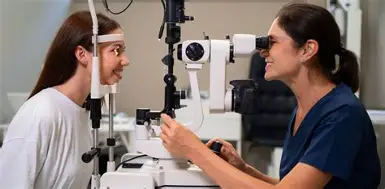
Many serious eye conditions—glaucoma, diabetic retinopathy, and macular degeneration among them—develop silently, producing no noticeable symptoms until significant and often irreversible damage has occurred . This is why regular professional eye examinations are not optional for anyone who values their vision. An eyecare professional can detect problems at their earliest, most treatable stages, often before the individual notices any change in vision. The frequency of examinations depends on age, risk factors, and whether symptoms are present, but the principle remains constant: prevention and early detection are far more effective than waiting for problems to announce themselves.
- Establish a baseline examination schedule based on your age and risk profile. For adults under 40 with low risk, a complete eye exam every five to ten years is generally sufficient. From ages 40 to 54, every two to four years is recommended. From 55 to 64, every one to three years, and from 65 onward, every one to two years .
- Know your personal risk factors and adjust frequency accordingly. African Americans face higher glaucoma risk. People with diabetes need annual eye exams. Those with a family history of eye disease, high blood pressure, or previous eye surgery may need more frequent monitoring .
- Do not skip examinations because your vision seems fine. Many eyecare conditions are asymptomatic in their early stages. An examination can reveal elevated eye pressure, retinal changes, or early cataract formation that you cannot perceive yourself .
- Choose the right type of eyecare professional for your needs. Optometrists provide comprehensive eye exams, prescribe corrective lenses, and screen for eye disease. Ophthalmologists are medical doctors who specialize in eye disease and surgery. For routine care, an optometrist is often the appropriate starting point; for complex conditions, an ophthalmologist may be needed .
- Prepare for your examination by bringing relevant information. Know your family history of eye disease, bring a list of medications you take, and be prepared to describe any symptoms you have noticed, even if they seem minor .
- Discuss any changes in vision or comfort at every visit. Flashes of light, new floaters, persistent redness, pain, or changes in visual clarity should be mentioned to your eyecare professional. Some symptoms warrant immediate attention rather than waiting for a scheduled appointment .
- Update your prescription as recommended. Wearing an incorrect prescription is not merely inconvenient; it can cause eye strain, headaches, and fatigue. If your eyecare professional recommends a new prescription, follow through .
- Ask about screening for specific conditions if you have risk factors. If you have diabetes, ask about dilated eye exams to screen for retinopathy. If you have a family history of glaucoma, ask about pressure checks and optic nerve evaluation .
- Remember that eye exams can reveal systemic health issues. During an eye exam, signs of diabetes, high blood pressure, and even certain cancers can be detected. The eyes are often called the window to the body’s health for good reason .
- Set reminders and treat eye exams as non-negotiable appointments. Life gets busy, and eye exams are easy to postpone. Scheduling them at regular intervals—perhaps around your birthday or another annual milestone—ensures they do not fall by the wayside.
Step
7
Create an Eye-Friendly Work and Home Environment

The environments in which we spend our days—offices, homes, classrooms, and workshops—shape our eye health in ways both obvious and subtle. Poor lighting causes strain, dry air depletes tear film, glare from windows and screens creates discomfort, and improper ergonomics force the eyes into awkward or sustained positions . Eyecare in the modern world requires not only personal habits but also attention to the spaces we inhabit. Small adjustments to lighting, humidity, screen placement, and seating can dramatically reduce daily eye fatigue and make long hours of visual work more comfortable and sustainable
- Optimize lighting to reduce both glare and strain. The ideal is soft, indirect light that illuminates the task without shining directly into the eyes or reflecting off screens. Position lights to the side rather than directly in front or behind, and use blinds or shades to control window glare .
- Position screens to minimize reflections and glare. Face screens away from windows so that daylight does not reflect off the surface. If overhead lights cause glare, adjust their angle or use a matte screen filter .
- Maintain appropriate humidity levels. Dry air—whether from air conditioning in summer or heating in winter—accelerates tear evaporation. A humidity level of 40% to 70% supports eye comfort. A simple hygrometer can help monitor indoor humidity .
- Arrange your workstation for proper ergonomics. Sit with feet flat on the floor, arms supported, and the screen positioned at the correct height and distance. Good posture reduces neck and shoulder tension that can indirectly contribute to eye strain .
- Use task lighting for close work. When reading, sewing, or doing detail work, a dedicated lamp that illuminates the task directly reduces the burden on the eyes. Adjustable lamps allow you to direct light precisely where it is needed .
- Keep the air clean and free of irritants. Dust, smoke, and chemical fumes all irritate the eyes. Adequate ventilation and regular cleaning reduce airborne particles that can trigger discomfort and allergic reactions.
- Take visual breaks that change your focal distance. Looking out a window at a distant object gives the eyes a genuine rest from the sustained close focus that most indoor work demands. Position your desk so that a window or distant view is accessible, or step outside briefly .
- Reduce screen clutter and visual noise. A cluttered desktop—both physical and digital—increases visual processing demands. A clean, organized workspace is easier on the eyes and the mind.
- Wear appropriate eye protection in hazardous environments. If your work or hobbies involve chemicals, flying particles, or intense light sources, protective eyewear is non-negotiable. Safety glasses and goggles are designed for specific hazards; choose the right type for the task .
- Reassess your environment periodically. Changes in seasons, furniture, or work patterns alter the demands placed on your eyes. A workspace that was comfortable in winter may need adjustment in summer, and a setup that worked for paper-based work may need revision for screen-heavy tasks.
Step
8
Know Your Family History and Genetic Risk

Many eye conditions have a hereditary component, and knowing your family history is a form of eyecare that costs nothing but can be profoundly informative. Glaucoma, age-related macular degeneration, and certain retinal dystrophies all cluster in families . For example, individuals with a parent or sibling who has macular degeneration face a significantly elevated risk, and those with a family history of glaucoma are four to nine times more likely to develop the condition . This knowledge does not mean that disease is inevitable, but it does allow for earlier screening, more vigilant monitoring, and proactive lifestyle adjustments. Eyecare that ignores genetic risk is incomplete.
- Ask relatives directly about their eye health history. Many people do not volunteer this information, but asking specifically about glaucoma, macular degeneration, cataracts, and diabetic eye disease can reveal patterns you would otherwise miss .
- Record and share your family eye history with your eyecare professional. A simple written record—who had what condition and at approximately what age—helps your provider assess your risk and tailor screening recommendations accordingly .
- Understand that family history affects screening schedules. If you have a first-degree relative with glaucoma or macular degeneration, you may need earlier and more frequent examinations than someone without that history .
- Recognize that some conditions are more common in certain populations. African Americans have a higher risk of glaucoma, and Hispanic Americans have elevated risk of diabetes-related eye disease. Knowing your demographic risk factors is part of a complete eyecare picture .
- Discuss genetic testing if you have a strong family history of rare eye disease. For conditions like retinitis pigmentosa or certain inherited retinal dystrophies, genetic counseling and testing may provide clarity and guide monitoring.
- Do not assume that a lack of family history means no risk. Many eye conditions occur in people without known family history. A negative family history is reassuring but not a guarantee; regular examinations remain important .
- Share your family history with your primary care provider as well. Eye health is connected to systemic health, and your primary care provider can factor eye disease risk into broader health planning .
- Encourage family members to share information with each other. A family conversation about health history benefits everyone. Older relatives may have information about grandparents or great-aunts and uncles that younger generations lack.
- Update your family history as new information emerges. As relatives age and receive diagnoses, your own risk profile may change. Revisit the topic periodically rather than treating it as a one-time conversation.
- Use family history as motivation, not fatalism. Knowing you are at higher risk is an opportunity to be more proactive with the other steps in this guide—diet, smoking avoidance, UV protection, and regular screening. Genetics loads the gun, but lifestyle and monitoring influence whether it fires.
Step
9
Recognize Warning Signs and Respond Promptly

Most eyecare is preventive, but there are moments when immediate action is necessary. Certain symptoms—sudden vision changes, flashes of light, a curtain-like shadow across the visual field, or severe eye pain—can indicate conditions that require urgent professional attention . Distinguishing between routine discomfort and a potential emergency is an essential eyecare skill. While this guide emphasizes prevention, knowing when to seek immediate help is equally important. Delaying care for a retinal detachment or acute angle-closure glaucoma can result in permanent vision loss that might have been prevented with prompt treatment.
- Seek immediate care for sudden vision loss or dramatic changes. A sudden loss of vision in one or both eyes, or a rapid onset of blurriness, warrants emergency evaluation. Time is critical for conditions like retinal artery occlusion or detachment .
- Treat new flashes of light or a sudden increase in floaters as urgent. These symptoms can indicate a retinal tear or detachment, particularly when accompanied by a curtain-like shadow across the vision. Prompt treatment can prevent permanent vision loss .
- Recognize severe eye pain as a warning sign. Conditions such as acute angle-closure glaucoma cause intense pain, headache, nausea, and blurred vision. This is a medical emergency requiring immediate attention.
- Monitor for signs of infection after eye injury or surgery. Increasing redness, swelling, discharge, or pain following an injury, contact lens wear, or procedure should be evaluated promptly .
- Distinguish between routine dry eye and something more serious. Mild dryness and irritation are common and manageable with lifestyle measures. However, persistent pain, significant redness, or sensitivity to light that does not improve warrants professional evaluation.
- Be aware of the symptoms of diabetic retinopathy. These can include floaters, blurred vision, fluctuating vision, and dark spots. Because early diabetic retinopathy is often asymptomatic, regular dilated exams are essential for people with diabetes .
- Know the signs of cataracts and macular degeneration. Gradual clouding of vision, increased sensitivity to glare, and fading colors suggest cataracts. Macular degeneration may cause distortion of straight lines or a blurred or dark area in central vision. These are not emergencies but should prompt a prompt appointment.
- Do not ignore eye pain or redness in contact lens wearers. Contact lens-related infections can progress rapidly. Remove lenses immediately and seek care if pain, redness, or sensitivity to light develops .
- Keep a list of emergency eyecare contacts. Know where to go for urgent eye care—whether an emergency department, an urgent care center with ophthalmology coverage, or your regular eyecare provider’s after-hours line.
- Trust your instincts. If something feels wrong with your vision, it is better to be evaluated and reassured than to wait and risk permanent damage. Eyecare professionals would rather see you for a false alarm than treat a preventable loss of sight.
Step
10
Make Eyecare a Lifelong Practice
The final step is perhaps the most important: integrating eyecare into the fabric of daily life so that it becomes automatic rather than effortful. The preceding nine steps describe specific actions—wearing sunglasses, eating leafy greens, taking screen breaks, scheduling exams—but their power lies in consistency over time. Eyecare is not a regimen to be followed for a few weeks and then abandoned; it is a lifelong practice that evolves as you age and as your circumstances change. The goal is not perfection but direction: a consistent trajectory toward protecting your vision, year after year, decade after decade.
- Start with one or two changes rather than attempting everything at once. Sustainable habits are built incrementally. Choose the step from this guide that feels most immediately relevant—perhaps the 20-20-20 rule or a dietary adjustment—and practice it until it becomes automatic before adding another .
- Create environmental cues that support eyecare. Keep sunglasses by the door, place a water bottle on your desk, set a screen-break reminder, or store artificial tears where you work. Cues reduce reliance on willpower .
- Reassess your eyecare practices at natural transition points. A new job, a move to a different climate, the onset of middle age, or a diagnosis of a chronic condition are all moments to revisit your eye health routines and adjust as needed.
- Stay informed about new research and recommendations. Eyecare science evolves. What was recommended a decade ago may have been refined or revised. Reliable sources include professional organizations, academic medical centers, and your own eyecare provider .
- Model good eyecare for children and family members. Children learn habits from observation. Wearing sunglasses, taking screen breaks, and eating a varied diet are behaviors that benefit the whole family, not just the individual .
- Do not let cost be a barrier to essential care. Many communities offer low-cost or subsidized eye examinations and glasses. Delaying care to save money often leads to more expensive problems later. Investigate resources if cost is a concern.
- Reframe eyecare as an investment rather than a chore. The time and attention required—minutes per day, a few appointments per decade—are small compared to the value of preserved vision. This reframing helps sustain motivation over the long term.
- Be patient with gradual results. Unlike fixing a broken bone, eyecare does not produce visible results quickly. The benefits are cumulative and often invisible: the cataract that does not develop, the macular degeneration that does not progress, the decades of clear vision that might otherwise have been compromised.
- Celebrate the sense of sight. In the busyness of daily life, it is easy to take vision for granted. Periodically pause to appreciate the colors, faces, and details that sight brings. Gratitude is a powerful motivator for continued care.
- Return to this guide periodically as a checklist. Life gets busy, and even well-intentioned habits can slip. Reviewing these ten steps every few months serves as a gentle reset and a reminder of what matters.
Conclusion
Eyecare is not a single intervention but a web of interconnected habits, each reinforcing the others. The person who wears sunglasses consistently is also more likely to schedule regular examinations. The person who eats for eye health is also supporting cardiovascular health, which in turn protects the eyes. The person who takes screen breaks is also likely to sleep better, which supports tear film recovery and reduces strain. This interconnectedness is the central insight of comprehensive eyecare: the eyes are not isolated organs but integral parts of a whole person, and what benefits the whole benefits the eyes.
The ten steps in this guide—nutrition, screen management, UV protection, lubrication and hygiene, lifestyle habits, professional examinations, environmental design, genetic awareness, symptom recognition, and lifelong practice—form a complete framework. No single step is sufficient on its own, and none is so burdensome that it cannot be incorporated into a busy life. The key is consistency: small actions repeated over years and decades, accumulating into a lifetime of clearer, more comfortable vision.
Vision is often ranked among the most feared losses, yet it is also among the most preventable. The vast majority of visual impairment worldwide could be prevented, treated, or improved with appropriate care . This is both a responsibility and an opportunity. The responsibility is to take the steps within our control—the sunglasses, the leafy greens, the screen breaks, the appointments. The opportunity is to preserve, for as long as possible, the sense that connects us most directly to the world around us. Eyecare, practiced consistently, is an act of stewardship for a gift we often forget we are holding.
Frequently Asked Questions (FAQs)
-
How often should I actually get a professional eye exam?
The answer depends on your age and risk factors. For adults under 40 with no symptoms or risk factors, the American Academy of Ophthalmology suggests a complete exam every 5 to 10 years . Between ages 40 and 54, every 2 to 4 years is reasonable; from 55 to 64, every 1 to 3 years; and at 65 or older, every 1 to 2 years . If you have diabetes, a family history of glaucoma, high blood pressure, or wear contact lenses, you likely need exams every year or as advised by your eyecare professional . The key point: many serious eye diseases like glaucoma have no early symptoms, so waiting until you notice a problem is not a safe strategy .
-
Does staring at screens in the dark really damage my eyes?
It can be a trigger for a serious condition in susceptible people. In a dark environment, your pupils dilate. For individuals with certain anatomical predispositions—such as shallow anterior chambers or narrow angles, more common in middle-aged and older adults or those with farsightedness—this dilation can block fluid drainage and cause a sudden, dangerous spike in eye pressure. A recent case report from Fujian, China described a 60-year-old woman who developed acute angle-closure glaucoma after scrolling on her phone in the dark for about six months . This is not a guarantee that everyone will develop glaucoma, but it is a significant risk factor that eyecare professionals advise avoiding. If you must use your phone at night, keep a dim light on to reduce the contrast between screen and surroundings .
-
Can eye exercises improve my vision or eliminate the need for glasses?
For the vast majority of refractive errors—nearsightedness, farsightedness, astigmatism—the answer is no. Harvard Health states clearly that eye exercises will not improve or preserve vision, help eye health, or reduce the need for glasses, because vision depends on the physical shape of your eyeball and the health of eye tissues, neither of which can be significantly altered by exercises . However, brief relaxation techniques like palming or looking at a distant object (the 20-20-20 rule) are valuable for reducing accommodative strain and discomfort during prolonged near work—they just won’t change your prescription.
-
Are carrots really the key to good eyesight?
Carrots are helpful but not magical. They are rich in beta-carotene, which the body converts to vitamin A, essential for corneal health and low-light vision . However, no single food can correct refractive errors or prevent all eye disease. The more comprehensive eyecare approach is a Mediterranean-style dietary pattern rich in leafy greens (for lutein and zeaxanthin), citrus fruits (vitamin C), nuts and seeds (vitamin E), and oily fish (omega-3s). This pattern has been associated with a meaningful reduction in the progression of age-related macular degeneration . Carrots are a fine addition, but they are one piece of a larger nutritional picture.
-
Do I need to wear sunglasses on cloudy days?
Yes. Ultraviolet radiation penetrates clouds and reflects off surfaces like water, snow, and pavement. Cumulative UV exposure accelerates cataract formation and increases the risk of pterygium and other eye surface problems . The label matters more than the darkness of the lens: look for “100% UV protection” or “UV400.” Dark lenses without UV blocking can actually be worse than no sunglasses, because they dilate the pupil and allow more UV radiation to reach the retina. A wide-brimmed hat adds another layer of protection.
-
What is the 20-20-20 rule, and does it actually work?
The 20-20-20 rule is a simple eyecare habit: every 20 minutes, look at something approximately 20 feet away for at least 20 seconds. It works by giving the focusing muscles inside your eyes (the ciliary muscles) a genuine rest from the sustained contraction required for close-up screen work. Digital eye strain is real—it causes dry eyes, headaches, blurred vision, and neck discomfort . The rule does not prevent eye disease, but it significantly reduces the daily discomfort and fatigue that accumulate during screen-heavy days. Pair it with conscious blinking, since blink rates drop dramatically during screen use, leading to tear film instability .
-
Are over-the-counter reading glasses from the pharmacy good enough?
They can help with mild age-related near vision changes (presbyopia), but they are not a substitute for a proper eye exam and prescription. Drugstore readers do not correct astigmatism, and they do not ensure that the optical centers of the lenses align with your pupils . More importantly, skipping a professional exam means missing the opportunity to screen for conditions like glaucoma or macular changes that may be developing silently. If you find yourself needing reading glasses, that is a good moment to schedule a comprehensive exam rather than simply picking up a pair at the store.
-
Can I use redness-relief eye drops every day?
It is not recommended. Drops that “get the red out” contain vasoconstrictors, which constrict blood vessels temporarily. With prolonged use, they can cause rebound redness—your eyes become redder when the drops wear off, leading to a cycle of dependence . For routine dryness or irritation, preservative-free lubricating artificial tears are a safer choice. If you find yourself reaching for redness-relief drops constantly, that is a signal to see an eyecare professional about the underlying cause of your eye discomfort, which may be dry eye disease, allergies, or another treatable condition.
-
What symptoms mean I should stop what I’m doing and see an eye doctor immediately?
Certain symptoms are red flags that warrant urgent attention. Seek immediate care for: sudden vision loss or a dramatic change in clarity; a sudden onset of new floaters or flashes of light, especially if accompanied by a curtain-like shadow across your vision (possible retinal tear or detachment); severe eye pain with headache, nausea, or seeing halos around lights (possible acute angle-closure glaucoma); or increasing redness, swelling, or discharge after an eye injury, surgery, or contact lens wear . For contact lens wearers specifically, pain, redness, or light sensitivity should prompt immediate lens removal and professional evaluation. Trust your instincts—it is far better to be evaluated and reassured than to delay care for a preventable loss of vision.
-
Is smoking really that bad for my eyes?
Yes. Smoking is one of the most significant modifiable risk factors for serious eye disease. People who smoke are approximately five times more likely to develop age-related macular degeneration, the leading cause of severe vision loss in older adults . Smoking also increases cataract risk and compromises the cardiovascular system that supplies oxygen and nutrients to the eye tissues. The good news is that stopping smoking—at any age—reduces these risks over time. Eyecare is not just about what you do to your eyes directly; it is also about the systemic health habits that determine how well your eyes are supported from within.